
Trew Landscape Blog
Artificial Grass for Dogs: A Practical Owner's Guide
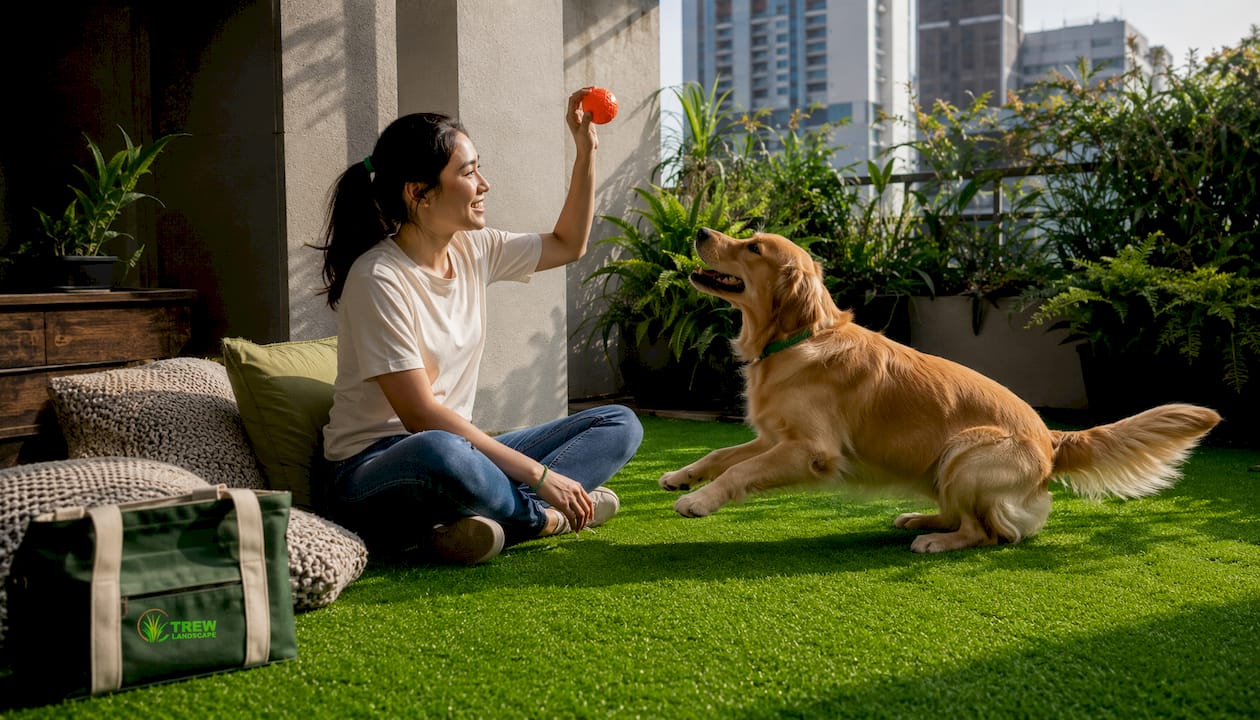
Artificial Grass for Dogs: A Practical Owner's Guide ! Woman playing fetch with dog on artificial grass Pet-specific artificial turf is a genuinely good choice for most dog owners, provided you select a product built for pet use and have it installed correctly.
Artificial Grass for Dogs: A Practical Owner’s Guide
Pet-specific artificial turf is a genuinely good choice for most dog owners, provided you select a product built for pet use and have it installed correctly. The key word is pet-specific. Turf engineered for dogs uses flow-through backing, polyethylene or polypropylene yarns that resist moisture absorption, and a tuft bind of at least 10–12 lbs to handle the punishment active dogs deliver. Trewlandscape installs pet turf in Kansas City yards and can walk you through drainage design and sub-base specs before you commit to anything.
Bottom line: If you pick a pet-grade product with a flow-through backing, a tuft bind of 10–12+ lbs, and a properly compacted sub-base, artificial grass for dogs outperforms natural grass on every practical measure that matters to a dog owner: mud, odor, durability, and maintenance time.
Before reading further, here are the three things worth confirming with any installer:
- What is the tuft-bind value of the specific product they plan to install?
- What backing type does it use, and what is the permeability rate?
- What sub-base depth and compaction standard will they use for Kansas City’s freeze-thaw conditions?
Table of Contents
- What makes pet turf better than natural grass for dogs?
- How to clean, control odor, and maintain artificial grass for dogs
- What professional installation looks like
- How do you choose the right pet turf for your yard?
- Is artificial pet turf safe for dogs?
- How well does pet turf hold up to active dogs?
- What does pet turf installation cost, and is it worth it?
- Installer-grade checks: what separates a quality install from a problem one
- Key Takeaways
- What I see most often on pet turf installs in Kansas City
- Trewlandscape installs pet turf in Kansas City yards
- Sources and further reading
What makes pet turf better than natural grass for dogs?
The case for artificial grass over a natural lawn is strongest for dog owners, not despite the dogs, but because of them. Natural grass in a dog yard rarely stays natural for long. Urine burns patches, paws churn wet soil into mud, and keeping a treated lawn free of pesticides and fertilizers while also managing weeds is a constant compromise.
Pet-specific synthetic turf eliminates pesticide and fertilizer exposure entirely. There is nothing to treat, nothing to spray, and no chemical residue on the surface your dog rolls across. That matters more than most owners realize, especially for dogs that spend time licking their paws after outdoor play.
Mud is the other big win. A properly installed turf system drains surface water through the backing and into the sub-base, so there is no standing water and no soft soil for paws to churn up. Kansas City gets its share of heavy spring rain, and a compacted aggregate sub-base with a flow-through backing handles those events without turning your yard into a mud pit.
The surface stays consistent year-round. No bare patches in high-traffic zones, no dormant brown grass in winter, no ruts from repeated running paths. For dog owners who want a backyard for dogs that actually holds up to daily use, that consistency is the practical payoff.
Additional benefits at a glance:
- No mowing, no watering, no seasonal reseeding
- Reduced tracked-in bacteria compared to natural soil
- Predictable drainage even after heavy rain
- Year-round usability regardless of weather
How to clean, control odor, and maintain artificial grass for dogs
Odor is the concern most owners raise first, and it is a legitimate one. The good news: a pet turf system with the right backing and a consistent cleaning routine stays fresh without much effort.
Daily and weekly habits
- Pick up solid waste immediately, just as you would on any surface.
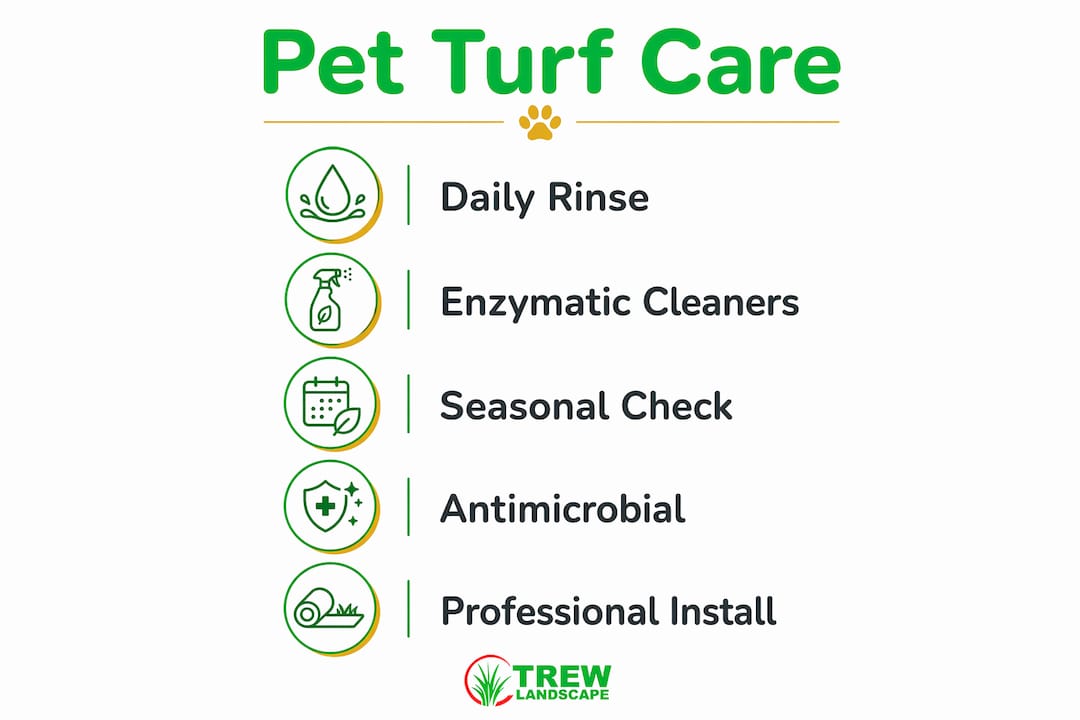
- Rinse high-use areas with a garden hose after your dog urinates. A quick flush pushes liquid through the backing and into the sub-base before it can concentrate.
- Brush the fibers upright with a stiff-bristle broom or power brush every week or two, especially in high-traffic zones where the pile flattens.
- Remove leaves, debris, and organic matter regularly. Decomposing organic material is a bigger odor source than urine in well-drained systems.
Enzymatic cleaners: when and how
Plain water handles most daily maintenance. For persistent odors or problem spots, enzymatic cleaners are the right tool. These products use biological enzymes to break down urine compounds at the molecular level rather than masking them. Dilute according to the product label, apply to the affected area, and allow the recommended contact time before rinsing. Monthly enzymatic treatments on high-use zones keep odor from building up over time.
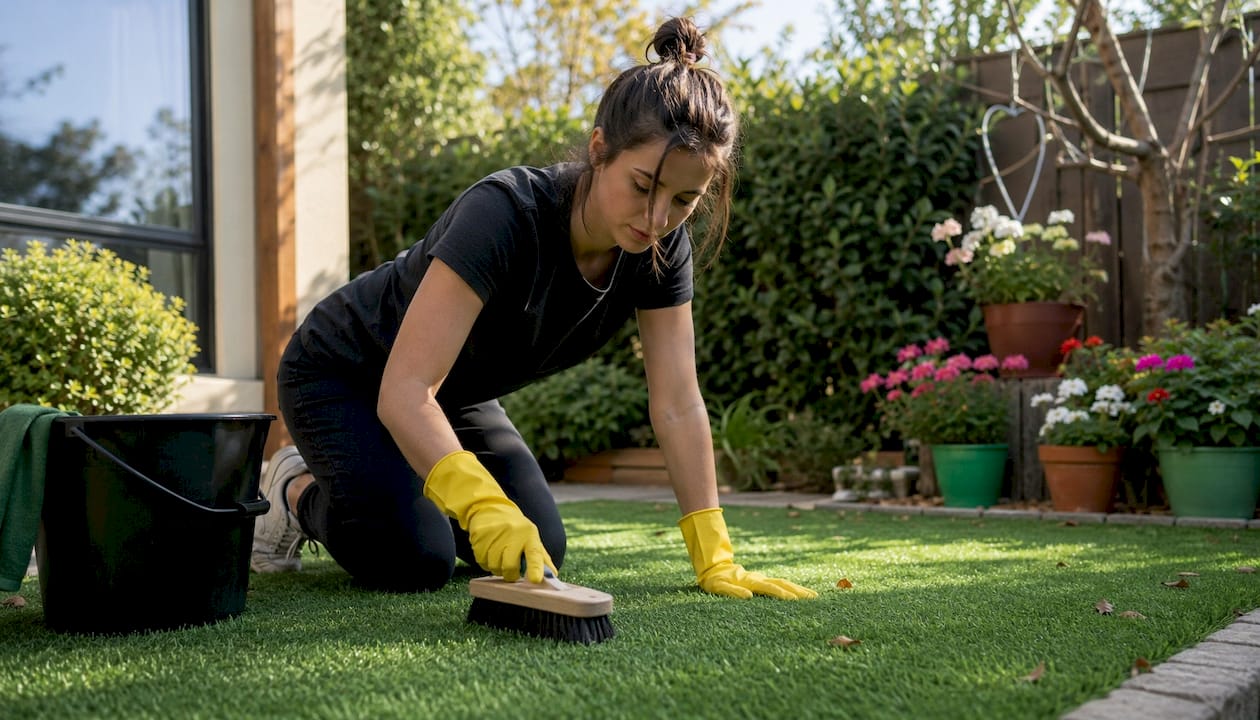
Some pet turfs incorporate antimicrobial treatments built into the fibers, which reduce odor-causing bacteria between cleanings. These are a useful supplement, not a substitute for rinsing.
Pro Tip: If odor persists after rinsing and enzymatic treatment, the problem is usually the backing, not the surface. A layered latex or polyurethane backing traps urine between layers. Flow-through or knitted backings drain completely and are far easier to keep odor-free.
Seasonal care
In Kansas City winters, frozen ground temporarily slows drainage, but the surface itself requires no special treatment. Clear ice and snow normally. In fall, stay on top of leaf removal since wet leaves mat down and block drainage. Plan an infill refresh every one to two years if your system uses infill, and schedule a deep enzymatic flush each spring.
What professional installation looks like
The difference between a pet turf system that smells fine after two years and one that becomes a problem at six months almost always comes down to installation quality, not the turf itself. Here is what a proper install involves:
- Site preparation: Remove existing grass, roots, and organic material down to mineral soil. Organic material left under the base decomposes and creates odor.
- Grading: Slope the sub-grade away from structures to direct drainage. Flat or reverse-sloped sites need additional drainage planning.
- Edge restraints: Install bender board, concrete curbing, or steel edging around the perimeter to hold the turf in place and prevent edge lifting.
- Compacted aggregate sub-base: Lay crushed aggregate (typically 3–4 inches for residential pet areas, deeper for high-traffic zones) and compact it in lifts. This is the most critical step for drainage and long-term stability. Kansas City’s freeze-thaw cycles make compaction especially important.
- Geotextile layer (if used): A weed barrier between the sub-grade and aggregate prevents organic intrusion without blocking drainage.
- Turf installation: Roll out and cut the turf, align seams with the grain running the same direction, and secure edges.
- Seam sealing: Bond seams with seam tape and adhesive. Poorly sealed seams are the most common failure point in residential installs.
- Infill application (if applicable): Spread and brush in infill to the specified depth. Some pet systems use no infill by design.
- Final grooming: Power-brush the pile upright and inspect drainage by running water across the surface.
Timeline: A typical residential backyard install runs one to two days for the turf work itself. Site demolition and base prep can add a day depending on existing conditions. Larger or more complex yards with drainage tie-ins take longer.
Pile heights for durable pet systems typically fall in a moderate range suitable for pet traffic, with face weights that indicate density and wear resistance for high-traffic applications. Ask your installer to confirm these specs for the specific product they are quoting.
Questions to ask during any quote:
- What is the sub-base depth and compaction standard?
- What drainage design are you using, and where does water exit the system?
- What seam method do you use, and what is the seam warranty?
- What are the tuft-bind and permeability numbers for this product?
How do you choose the right pet turf for your yard?
Not all artificial grass is built the same, and landscape turf often lacks the drainage and antimicrobial backing that pet use requires. Buying a general-purpose product and expecting it to perform like pet turf is the most common and expensive mistake owners make.
Specs that separate pet turf from general turf:
- Tuft bind: Target 10–12+ lbs. This measures how firmly individual tufts are anchored in the backing. Lower values mean fibers pull out under active dogs.
- Pile height: 1–1.25 inches is the typical sweet spot for pet systems. Taller piles trap debris; shorter piles wear faster.
- Face weight: 60–89 oz/yd² for durable, high-traffic pet applications.
- Yarn type: Polyethylene and polypropylene blends outperform nylon for pet use. Nylon is hygroscopic, meaning it absorbs moisture and holds odors. PE and PP resist both.
- Backing type: Flow-through or knitted backings drain completely. Layered latex or polyurethane backings trap urine between layers and are a persistent odor source.
- Permeability rate: Ask for the actual number. A well-designed pet backing drains at rates that handle heavy rain and repeated urination without pooling.
Infill choices
Some pet systems are designed with no infill, which simplifies cleaning and eliminates a debris-trapping layer. If infill is used, silica sand is the most common option. Avoid crumb rubber infill in pet areas due to heat retention and potential ingestion concerns.
Spec checklist to bring to a quote:
| Spec | What to ask for | Why it matters |
|---|---|---|
| Tuft bind | 10–12+ lbs (ASTM D1335 test data) | Prevents fiber pullout under active dogs |
| Pile height | 1–1.25 inches | Balances cleanability and durability |
| Face weight | 60–89 oz/yd² | Indicates density and wear resistance |
| Yarn type | PE or PP blend | Resists moisture and odor retention |
| Backing type | Flow-through or knitted | Enables complete drainage |
| Permeability | Actual rate in inches/hour | Confirms drainage under real conditions |
| Warranty | Written, covering tuft retention and seams | Protects your investment |
Pro Tip: Request the manufacturer’s ASTM test data sheet, not just a verbal claim. ASTM D1335 covers tuft-bind testing. If an installer cannot produce test data, that is a signal to keep looking.
Is artificial pet turf safe for dogs?
Safety questions fall into four categories: heat, chemicals, ingestion, and bacteria. Each has a real answer.
Heat
Artificial turf gets hotter than natural grass in direct sun. This is a legitimate concern for Kansas City summers. Some manufacturers offer cooling yarns or infill systems that reduce surface temperatures by up to approximately 15%, though results vary by product and conditions. Practical mitigations that work regardless of product: install shade structures or shade sails over the turf area, run a sprinkler or hose over the surface before your dog goes out on hot days, and schedule outdoor time in the morning or evening during peak summer heat.
Chemical safety
Polyethylene and polypropylene yarns are the safer choice. Both are non-toxic and do not off-gas under normal conditions. If you want additional assurance, ask for lead-safe and PFOA-free certification documentation from the manufacturer. Reputable pet turf products carry these certifications.
Ingestion risk
Dogs that chew or dig at turf edges present the main ingestion risk. Proper edge restraints and secured perimeter installation reduce this significantly. If your dog is a persistent chewer, discuss edge treatment options with your installer. Consult your vet if you observe your dog ingesting turf fibers.
Bacterial risk
Flow-through backing and regular rinsing are the primary controls. A surface that drains completely and dries quickly does not give bacteria the standing moisture they need to multiply. Antimicrobial treatments built into the fibers add a secondary layer of protection between cleanings.
- Choose PE or PP yarn over nylon for lower moisture retention
- Confirm PFOA-free and lead-safe certifications before purchase
- Use shade and water cooling on hot summer days
- Secure all edges to minimize chewing access
- Rinse regularly to prevent bacterial buildup
How well does pet turf hold up to active dogs?
Durability is where pet-specific turf earns its price premium over general landscape products. The two structural features that matter most are tuft bind and seam integrity.
Tuft bind and tuft-lock
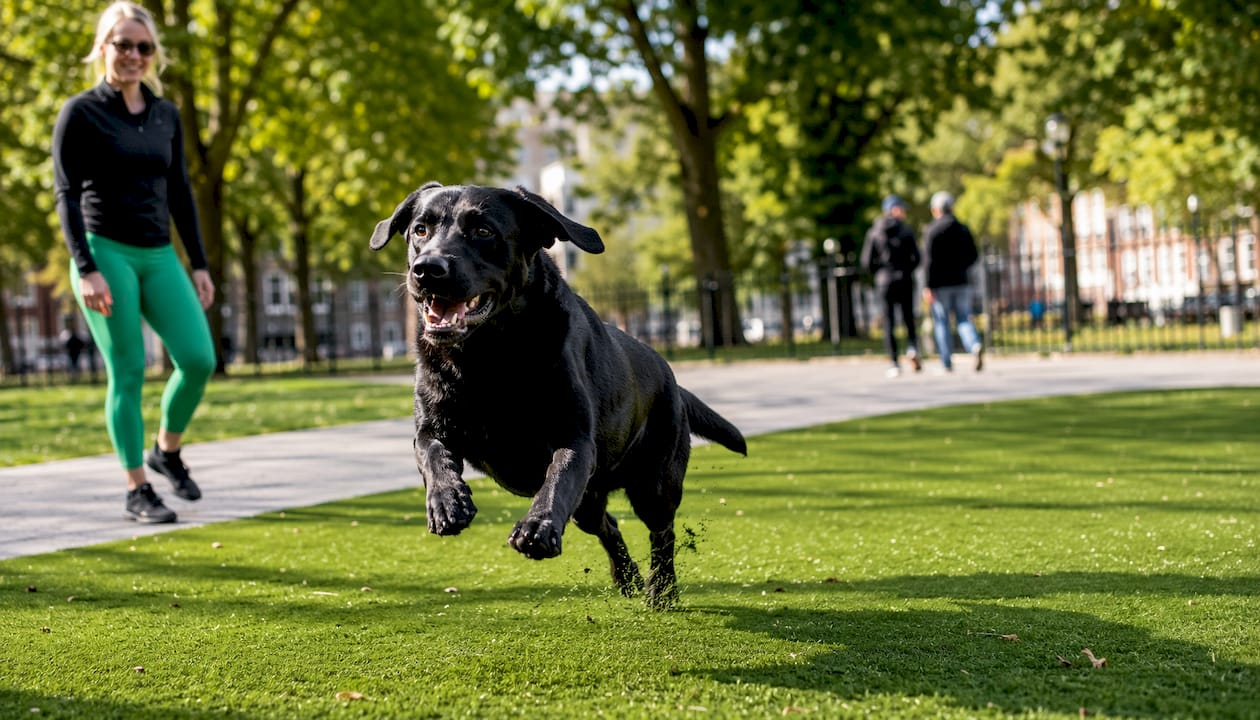
A tuft bind of 10–12+ lbs means individual fibers resist being pulled out during zoomies, sharp turns, and digging attempts. General landscape turf often tests below this threshold. Over time, low tuft-bind products thin out in high-traffic zones, creating bare patches that are expensive to repair.
Seam strength and edge restraint
Seams are the most common failure point in residential installs. Properly bonded seams with quality seam tape and adhesive hold up to years of pet traffic. Edge restraints prevent the perimeter from lifting, which is both a tripping hazard and an invitation for dogs to peel back the turf and dig underneath.
Lifespan
Well-specified and properly installed pet turf in a residential yard typically lasts 10–15 years. Factors that shorten lifespan include UV exposure without UV-stabilized yarn, chemical exposure from harsh cleaners, inadequate drainage that keeps the backing wet, and heavy digging concentrated in one area. Factors that extend it: consistent maintenance, shade over the highest-use zones, and enzymatic cleaning rather than bleach-based products.
Warranty checklist:
- Does the warranty cover tuft retention and fiber loss?
- Are seams covered, and for how long?
- Does the warranty require specific maintenance practices to remain valid?
- Is the warranty transferable if you sell the property?
- What is the claims process, and who handles it locally?
Durable pet systems from established manufacturers typically carry long-term warranties. Get the warranty terms in writing before signing any installation contract.
What does pet turf installation cost, and is it worth it?
Cost ranges for pet turf installation vary by yard size, site conditions, drainage complexity, and product grade. The figures below reflect typical residential ranges in the Kansas City market; your actual quote will depend on site-specific factors.
| Installation tier | Typical cost range | What’s included |
|---|---|---|
| Basic pet turf (small yard, simple site) | $8–$12 per sq. ft. installed | Standard aggregate base, basic drainage, entry-level pet turf |
| Pro-grade pet system (mid-size yard) | $12 per sq. ft. installed | Deeper base, flow-through backing, higher face weight, seam warranty |
| Premium drainage-ready install | — | Full drainage design, drain tile tie-in, premium product, extended warranty |
Site demolition (removing existing lawn), drainage tie-ins, and edge work are the main cost drivers beyond the turf itself. A yard with significant grade changes or existing hardscape to work around will cost more than a flat, open space.
The ROI case
The upfront cost looks large until you account for what it replaces. Natural grass in a dog yard requires regular overseeding, fertilizing, and weed control. Water bills for irrigation add up over a Kansas City summer. Mud cleanup, both in the yard and inside the house, takes real time. A pet turf system eliminates most of those recurring costs. Over a 10-year lifespan, the math often favors turf, especially for owners with multiple dogs or large breeds that destroy natural grass quickly.
Financing and payment
Ask any installer about payment plans or financing options during the quote process. Many landscaping contractors offer phased payment structures tied to project milestones. Confirm what is included in the quoted price and what triggers additional charges before work begins.
For a broader look at how to plan your outdoor space around a pet turf install, backyard landscaping ideas can help you think through layout and design before your first installer conversation.
Installer-grade checks: what separates a quality install from a problem one
The most common installation mistakes are not visible on the day of completion. They show up six months later as odor, drainage failure, or seam separation.
Common installer mistakes to watch for:
- Inadequate base compaction, which leads to settling, pooling, and uneven surface wear
- Using layered latex or polyurethane backings that trap urine rather than flow-through systems
- Insufficient seam bonding, which causes seams to open under pet traffic
- Poor edge restraint installation, leaving perimeter edges vulnerable to lifting and dog access
- Skipping geotextile separation, which allows organic material to migrate into the base over time
Installer-grade checks to request before signing:
- Permeability rate for the specific backing (ask for the number, not just “good drainage”)
- Tuft-bind test data, ideally referencing ASTM D1335 or equivalent
- Base material specification: aggregate type, depth, and compaction standard
- Seam method: tape type, adhesive, and overlap dimension
- Post-install drain test: ask the installer to run water across the finished surface and confirm drainage before final payment
Acceptance criteria to require before final payment:
- No visible seam gaps or lifting edges
- Water drains visibly through the surface within seconds of application
- Pile is uniform and upright across the full installation area
- All edges are secured and flush with adjacent hardscape or soil
Proper sub-base design for Kansas City’s climate must account for freeze-thaw cycles and heavy spring rain events. Base depth, geotextile separation, and drain routing all determine whether the system performs in February as well as it does in July. Trewlandscape’s landscape drainage installation work addresses exactly these conditions for local yards.
For a broader maintenance planning framework once your system is installed, a landscape maintenance plan helps you build consistent habits that protect the investment over time.
Key Takeaways
Pet-specific artificial turf is a durable, low-maintenance, and hygienic surface for dogs when you specify the right product and insist on a quality installation with a flow-through backing, a tuft bind of 10–12+ lbs, and a properly compacted sub-base.
| Point | Details |
|---|---|
| Tuft bind is the key durability spec | Request 10–12+ lbs (ASTM D1335 data) to handle active dogs without fiber loss. |
| Backing type determines odor control | Flow-through or knitted backings drain completely; layered backings trap urine and cause persistent odor. |
| Sub-base quality drives long-term performance | Compacted aggregate base, correct depth, and proper drainage routing are non-negotiable for Kansas City’s climate. |
| Maintenance is simple but must be consistent | Daily rinsing of high-use areas and monthly enzymatic treatment prevent odor buildup in any pet turf system. |
| Trewlandscape is the local installer to call | Trewlandscape handles pet turf installation in Kansas City, including drainage design and sub-base work. |
What I see most often on pet turf installs in Kansas City
The owners who are happiest with their pet turf are almost always the ones who asked the right questions before the job started, not after. The spec conversation matters. A yard that drains properly, with a product that actually holds up to a 70-pound dog running the same path every morning, look and smell fine two years in. The ones that don’t usually have one thing in common: the installer used a general landscape product and skipped the drainage conversation entirely.
Kansas City’s weather adds a wrinkle that installers in milder climates don’t always account for. Freeze-thaw cycles stress the base, and spring rain events can be intense. A base that was compacted correctly and sized for those conditions holds up. One that wasn’t starts to show problems at the seams and edges within a season or two.
The decision itself is not complicated once you know what to ask for. Pet-grade turf, flow-through backing, 10–12+ lb tuft bind, proper base, and a written warranty. That combination works.
Trewlandscape installs pet turf in Kansas City yards
If you have dogs that have turned your backyard into a mud zone, Trewlandscape offers a direct solution: professional artificial turf installation designed for pet use, with drainage work and sub-base preparation built into the process. The difference between a pet turf install that holds up and one that doesn’t is almost entirely in the base and the product spec, and that is exactly where Trewlandscape focuses.
A quote from Trewlandscape covers the full scope: product selection, sub-base depth and compaction, drainage routing, seam method, and warranty terms. You will know what you are getting before any work starts. Trewlandscape serves residential and commercial properties across Kansas City, and the team understands what local soil conditions and seasonal weather require from a properly built installation. If you are also considering how turf integrates with the rest of your yard, Trewlandscape’s landscape design services can help you plan the full picture. Contact Trewlandscape to get a site-specific quote for your yard.
Sources and further reading
The technical claims in this article draw on manufacturer product and specification pages, industry installer guidance, and local landscaping expertise. The following are the primary sources used:
- Pet Turf Pro by InfiniTurf — tuft-bind recommendations, cooling technology data, and installation guidance
- SYNCanine by SYNLawn — ASTM test references (D1335-05, D5034-09), pile height and face weight specs
- Smart Turf pet turf pages — antimicrobial treatments, pesticide-free benefits
- Pup-Grass technical pages — backing types, yarn material comparisons, flow-through drainage
- Trewlandscape artificial turf installation — local Kansas City installation services and quote contact
- Trewlandscape landscape drainage installation — local drainage design guidance for Kansas City yards