
Trew Landscape Blog
Concrete Patio Cost in Kansas City: 2026 Guide
Concrete Patio Cost in Kansas City: 2026 Guide ! Homeowner reviewing concrete patio cost estimate outdoors Most Kansas City homeowners pay between $2,040 and $5,425 for a concrete patio installation in 2026, with the average landing around $3,597, often complemented by local home improvement services to enhance outdoor living spaces.
Concrete Patio Cost in Kansas City: 2026 Guide
Most Kansas City homeowners pay between $2,040 and $5,425 for a concrete patio installation in 2026, with the average landing around $3,597, often complemented by local home improvement services to enhance outdoor living spaces. Standard poured concrete runs roughly $4.68 to $6.18 per square foot for a basic finish, while stamped or decorative options push that figure considerably higher. Your final number depends on size, finish type, site conditions, and how much prep work the ground needs before a single yard of concrete gets poured.
Here is a quick-reference pricing overview for 2026:
| Patio Type | Cost per Sq Ft | Typical Total (400 sq ft) |
|---|---|---|
| Standard broom finish | moderate cost per square foot | typical total for medium patio |
| Standard with one color or texture | somewhat higher cost per square foot | moderate total |
| Stamped concrete | substantially higher cost per square foot | higher total |
| Elaborate stamped with borders | premium cost per square foot | premium total |
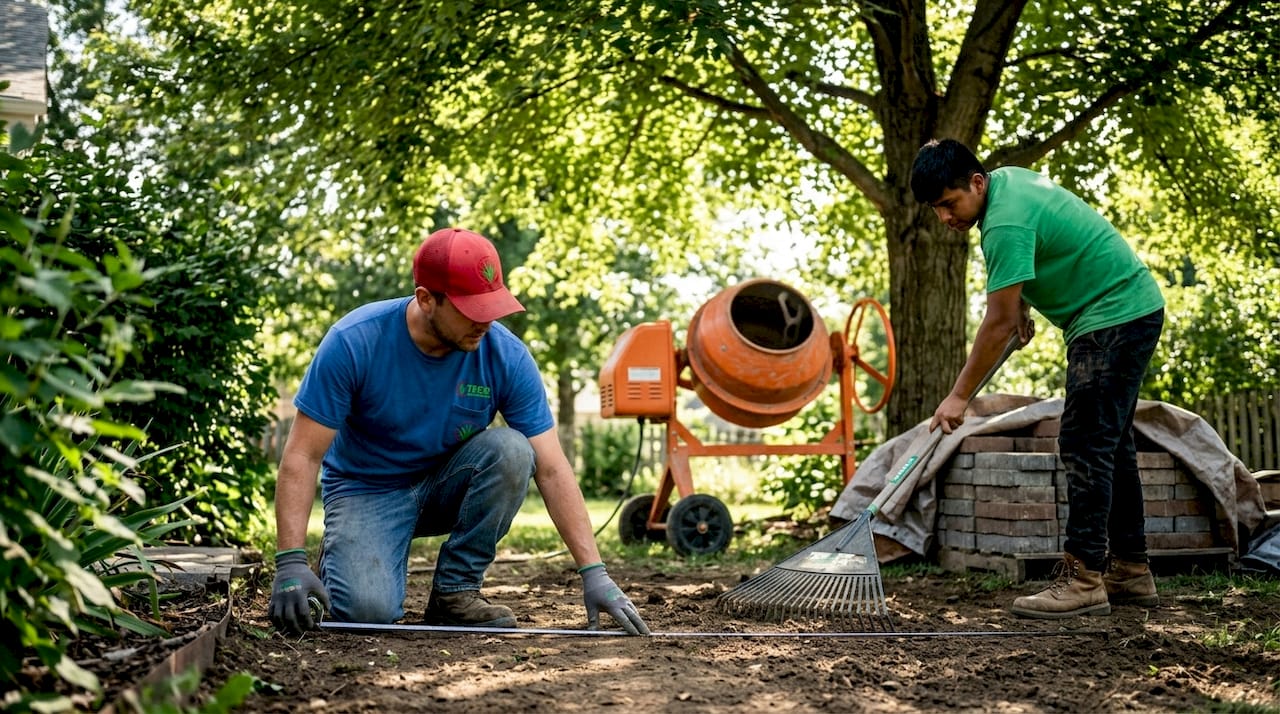
The main cost components on any project are concrete materials, labor, site preparation (excavation, grading, compaction), and finishing. Decorative upgrades like stamping, integral color, and sealers stack on top of those base numbers. Kansas City’s clay-heavy soil and hard winters add site prep costs that homeowners in milder climates simply do not face.
What factors drive concrete patio cost in Kansas City?
Size is the single biggest lever. Larger slabs spread fixed labor and equipment costs across more square footage, so the per-square-foot price drops as the project grows. A 400-square-foot patio almost always costs less per square foot than a 100-square-foot one, even with the same finish.
Finish type is the second major driver. A plain broom finish is the most affordable. Moving up to exposed aggregate, integral color, or a stamped pattern adds both material cost and skilled labor time. Stamped concrete requires specialty tools, release agents, and a crew experienced enough to work the pattern before the slab sets.
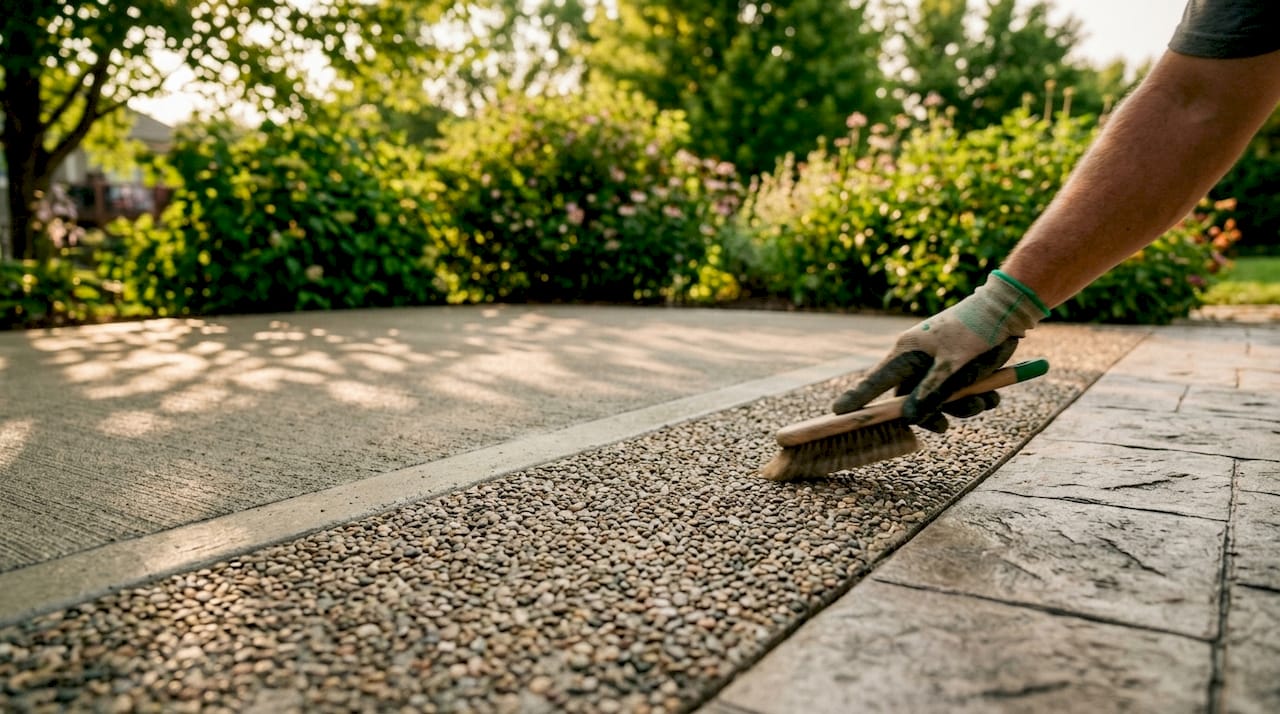
Site preparation is where budgets quietly blow up. Excavation, grading, and soil compaction are non-negotiable in Kansas City, where expansive clay soil shifts with moisture and temperature. Skipping or skimping on this step is the most common reason patios crack within a few years. If your yard slopes toward the house, drainage adjustments add to prep costs as well.
Other factors that move the number:
- Slab thickness: A 4-inch slab is standard for patios; going to 6 inches for heavier use adds material and labor.
- Reinforcement: Rebar grids or fiber mesh add upfront cost, but reduce long-term repair bills significantly.
- Demolition: Removing an existing slab before pouring new concrete adds demolition and haul-away fees.
- Access: Tight side yards or fenced lots that prevent a concrete truck from getting close require a pump, which adds cost.
- Design complexity: Curves, custom borders, and multi-level designs take longer to form and finish than a simple rectangle.
Labor rates in the Kansas City market reflect a mid-tier cost of living, so you will generally pay less here than in coastal cities, but local demand during peak spring and summer seasons can tighten contractor availability and nudge prices upward.
Standard concrete vs. stamped concrete: how do the costs compare?
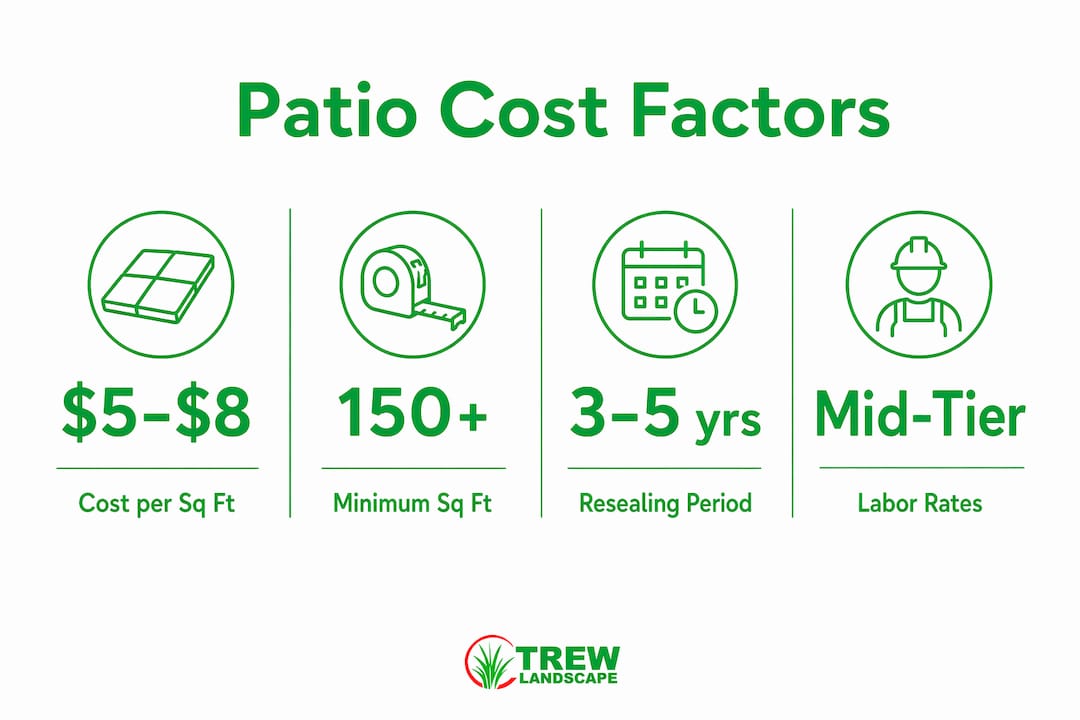
Standard poured concrete is the budget-friendly baseline. You get a durable, functional surface for roughly $5–$8 per square foot with a broom finish, and the installation timeline is straightforward. The tradeoff is aesthetics: a plain gray slab does the job but does not add much visual interest to an outdoor space.
Stamped concrete patios average $15–$25 per square foot, driven by the added cost of stamping tools, color hardeners, release agents, and the extra labor required to execute the pattern cleanly. Popular patterns in Kansas City include ashlar slate, cobblestone, and wood plank, all of which mimic higher-cost materials at a fraction of the price. For design options specific to this area, Kansas City stamped patterns are worth reviewing before you finalize a design.
A few practical comparisons:
- Upfront cost: Standard concrete wins by a wide margin, often costing less than half of a stamped installation.
- Curb appeal: Stamped concrete mimics stone, brick, or wood at a lower price than those materials installed individually.
- Maintenance: Both types need periodic resealing, but stamped surfaces with color require more careful sealer selection to preserve the finish.
- Repair visibility: A crack in a stamped patio is harder to patch invisibly than one in a plain gray slab.
If your budget is tight but you still want some visual interest, a single color added to a standard slab sits in the middle ground, typically $8–$11 per square foot, and gives you more personality without the full stamped price tag.
How much does a concrete patio cost by size in Kansas City?
Patio size shapes the total bill more than any other single variable. Here are realistic 2026 cost ranges for common configurations in the Kansas City area:
| Patio Size | Square Feet | Standard Concrete | Stamped Concrete |
|---|---|---|---|
| — | — | $900–$3,000 | — |
| 15×20 | — | — | — |
| 20×20 | 400 sq ft | $3,200–$7,200 | — |
| 15×30 | 450 sq ft | — | — |
| 40×60 | — | — | — |
A 20×20 concrete patio runs $3,200–$7,200 including labor and materials, with decorative finishes pushing the total higher. A 15×30 patio covers 450 square feet and lands in a similar range for standard concrete, though the longer rectangular shape is easier to form than a complex custom layout.
For a 40×60 slab at 4 inches thick, you are looking at a commercial-scale pour. At that size, the per-square-foot rate often drops because fixed costs get spread across a much larger area, but total project cost is still substantial.
Smaller patios carry a hidden cost trap. Patios under 150 square feet often trigger contractor minimum fees that do not scale down with the job size. A 10×10 slab might cost $900–$3,000 total, but the per-square-foot rate can look surprisingly high because the contractor’s mobilization, setup, and minimum labor costs stay fixed regardless of how small the pour is.
Pro Tip: If your desired patio is under 150 square feet, ask contractors whether adding a small walkway or step to the project would bring the total square footage up enough to avoid the minimum fee threshold. You may get more concrete for only a modest price increase.
How does Kansas City’s climate affect your patio and its cost?
Kansas City’s freeze-thaw cycle is the defining challenge for any concrete installation here. Water seeps into micro-cracks, freezes, expands, and widens those cracks with each cycle. Over a few winters, an improperly built slab can go from hairline fractures to full-blown heaving.
Reinforced slabs with rebar or fiber mesh cost more upfront but hold together far better through Kansas City winters. Skipping reinforcement to save a few hundred dollars is a trade that rarely pays off. Repairs to a cracked slab can easily exceed the original savings, and a severely damaged patio often needs full replacement rather than a patch.
Proper sub-base compaction matters just as much as the concrete itself. Kansas City’s clay soil expands when wet and contracts when dry, creating movement beneath the slab. A well-compacted gravel base of at least 4 inches gives the slab a stable, draining foundation that resists that movement. Preparing your property correctly before the pour is one of the highest-return investments you can make.
Concrete patios need resealing every 3–5 years to prevent surface spalling and protect the finish from moisture infiltration. Budget $200–$500 for a professional reseal depending on patio size, and plan for it as a recurring maintenance cost. For more on keeping your slab in shape through Kansas City seasons, concrete maintenance practices specific to this climate are worth reading before your first winter.
What should you expect when hiring a Kansas City concrete contractor?
Licensed, insured contractors in Kansas City typically offer free on-site estimates with no hidden fees, and that transparency is a baseline expectation you should hold every bidder to. A contractor who quotes over the phone without seeing your yard is guessing, and those guesses tend to be optimistic.
When you request quotes, verify or ask for the following:
- License and insurance: Confirm both are current. An uninsured crew working on your property is a liability you absorb.
- Itemized quote: Labor, materials, site prep, and finishing should each appear as separate line items, not a single lump sum.
- Reinforcement spec: Ask specifically whether the quote includes rebar or fiber mesh. If it does not, ask why.
- Control joint plan: Properly placed sawcut joints manage where the slab cracks. A contractor who does not mention them is a red flag.
- References or portfolio: Stamped and decorative work especially requires a track record you can see.
- Timeline: Most residential patios take 2–4 days from pour to cure, but full strength takes 28 days. Clarify when the space will be usable.
Pricing structures vary. Some contractors charge a flat per-square-foot rate; others build a project-specific quote that accounts for site conditions, access, and finish complexity. Either approach is fine as long as the scope is written down before work starts. For a full picture of what professional installation covers, concrete contractor services from Trewlandscape lay out what a thorough engagement looks like.
Concrete is generally more affordable to install initially than pavers, though pavers offer easier access for sub-surface repairs without disturbing the entire surface. If you are weighing both options, a paver patio installation comparison can help clarify which fits your budget and long-term plans.
Ready to get a real number for your yard? Trewlandscape provides hardscape design and installation for Kansas City homeowners, from standard concrete slabs to fully stamped decorative patios. Contact Trewlandscape for a transparent, on-site estimate with no guesswork.

Key Takeaways
A standard concrete patio in Kansas City costs $4.68–$6.18 per square foot for a basic finish, while stamped concrete runs $15–$25 per square foot, with total project costs shaped heavily by size, site prep, and local climate demands.
| Point | Details |
|---|---|
| Typical cost range | Most Kansas City homeowners spend a typical range of several thousand dollars for a standard concrete patio installation. |
| Stamped concrete premium | Stamped options cost significantly more per square foot than a plain broom finish. |
| Small patio trap | Patios under a small size threshold often trigger minimum contractor fees, raising the per-square-foot rate. |
| Climate reinforcement | Kansas City’s freeze-thaw cycle requires reinforced slabs with rebar or fiber mesh to prevent premature cracking. |
| Ongoing maintenance | Plan to reseal your patio every 3–5 years to protect the surface and extend its lifespan. |