
Trew Landscape Blog
8 Deck Railing Options: How to Pick the Right One
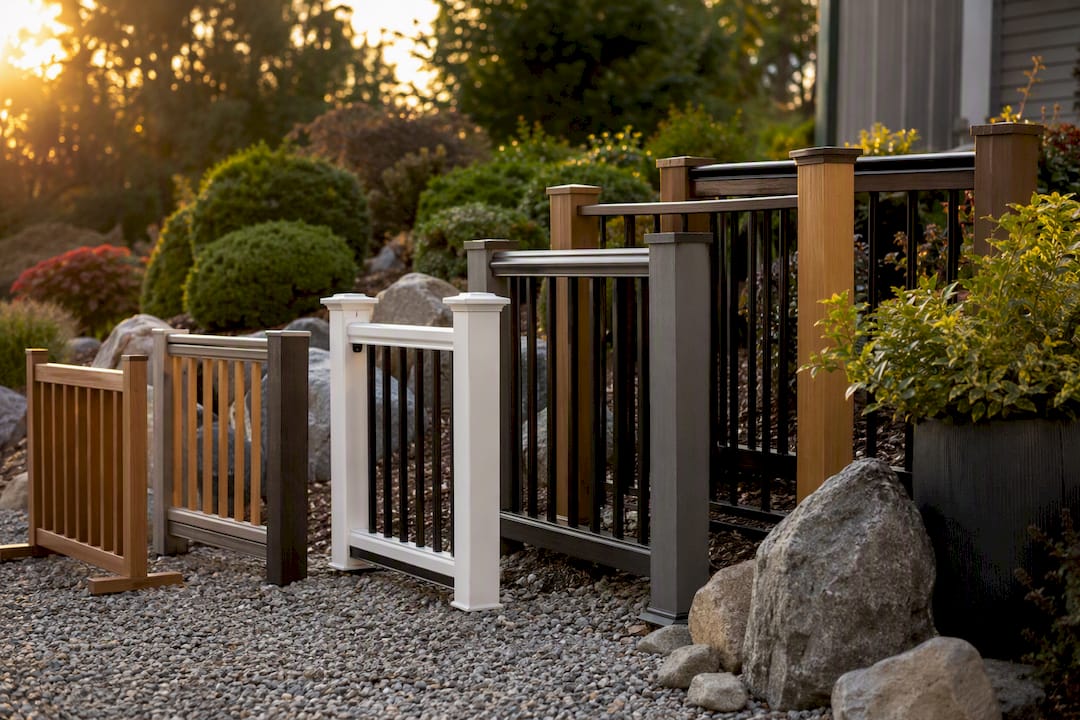
8 Deck Railing Options: How to Pick the Right One ! Close-up of wood, vinyl, and composite deck railings If you want the cheapest fix, pressure-treated wood runs about $20 to $50 per linear foot and is the most DIY-friendly of all the deck railing options on the market.
8 Deck Railing Options: How to Pick the Right One
If you want the cheapest fix, pressure-treated wood runs about $20 to $50 per linear foot and is the most DIY-friendly of all the deck railing options on the market. If you want low upkeep without a wood budget, vinyl or capped composite systems cost more upfront but skip the annual staining. If you’re protecting a view, cable or tempered glass keeps sightlines open at a premium price and usually needs a pro. For a modern, high-end look with real durability, powder-coated aluminum or steel splits the difference. One code rule applies no matter which you pick: any deck surface more than 30 inches above grade needs a guard at least 36 inches tall, with no gap wide enough for a 4-inch sphere to pass through.
- Budget pick: Pressure-treated wood, DIY-friendly, $20-$50/lf installed
- Low-maintenance pick: Composite or vinyl, DIY-moderate, $25-$60/lf installed
- View-first pick: Cable or tempered glass, hire a pro, $60-$600/lf installed
- Modern/premium pick: Powder-coated aluminum or steel, DIY-moderate to pro, $50-$200/lf installed
Pro Tip: Measure your deck’s finished floor height before you fall in love with a style. A deck sitting 29 inches off the ground has different code obligations than one at 31 inches, and that half-foot can change your whole plan.
Key Takeaways
The right deck railing choice depends on matching your top priority (cost, upkeep, view, or style) to a material, then confirming it against the IRC’s 30-inch guard trigger and 4-inch sphere rule before you buy.
| Point | Details |
|---|---|
| Match material to goal | Wood for budget, vinyl/composite for low upkeep, cable/glass for views, aluminum/steel for a modern look. |
| Know the code floor | Guards are required above 30 inches, with a 36-inch minimum height and a 4-inch sphere limit on gaps. |
| Budget realistically | Installed costs run $20 to $600 per linear foot, with stairs adding 20% to 35% more per foot. |
| Weigh lifecycle cost, not just sticker price | Vinyl, composite, and aluminum often last 25 to 35 years versus 10 to 25 for wood. |
| Hire a pro for structural systems | Trew Landscape LLC handles engineered post attachments and permit documentation for cable, glass, and full deck installs. |
Table of Contents
- Deck Railing Materials and Infill Styles Compared
- What Deck Railing Costs per Linear Foot
- Building Code Rules You Cannot Skip
- How to Choose the Right Deck Railing
- Maintenance and Lifespan by Material
- Trew Landscape’s Approach to Railing Installations
- Lead Times and Ordering Windows for Railing Systems
- Matching Railing to Wood, Composite, or Concrete Decks
- Permits and Inspections for Railing Projects
- Weather and Climate Factors That Affect Material Choice
- Why the “Cheapest Option” Question Misses the Point
- Get a Deck Railing Quote From Trew Landscape LLC
- Sources
- FAQ
Deck Railing Materials and Infill Styles Compared
Every material trades something for something else. Wood gives you the lowest price and total design flexibility, but it demands the most attention over time. Pressure-treated pine is the default choice for budget builds and lasts roughly 10 to 25 years depending on the species and how often you reseal it. Cedar and other hardwoods cost more but resist rot better and look considerably richer without stain.
Vinyl and PVC railing skip the staining cycle entirely. It won’t splinter, doesn’t need paint, and holds up to Kansas City humidity swings better than most people expect. If you’re weighing wood vs vinyl railing for a full renovation, vinyl usually wins on 20-year cost even though it loses on day-one price.
Capped composite railing looks close to real wood grain but is built from wood fiber sealed in a polymer shell, so it won’t rot or gray the way raw wood does. It’s heavier than vinyl and generally needs two people to install cleanly.
Aluminum deck railing styles run from simple picket designs to sleek horizontal-line systems, and powder coating means the finish resists chipping far better than old-style paint. Steel and wrought iron go a step further on strength and traditional styling, but both weigh more and usually need welded or bolted connections that aren’t a first-timer’s weekend project.
Infill choice matters as much as the frame material:
- Vertical balusters are the standard, cheapest, and easiest to keep code-compliant since spacing is simple to measure.
- Cable railing preserves views almost completely but relies on taut horizontal wires that need properly engineered end posts.
- Glass panels (tempered or laminated) give you the cleanest sightline of any option and pair well with modern homes, at the highest material cost.
- Square-web and drink-rail systems add a flat cap or mesh detail that’s popular on rooftop decks and pool areas.
Pro Tip: If you’re set on cable railing, plan your post framing before you order hardware. Undersized posts let cable deflect under tension, which can widen gaps past the 4-inch limit even if your initial spacing measured correctly.
What Deck Railing Costs per Linear Foot
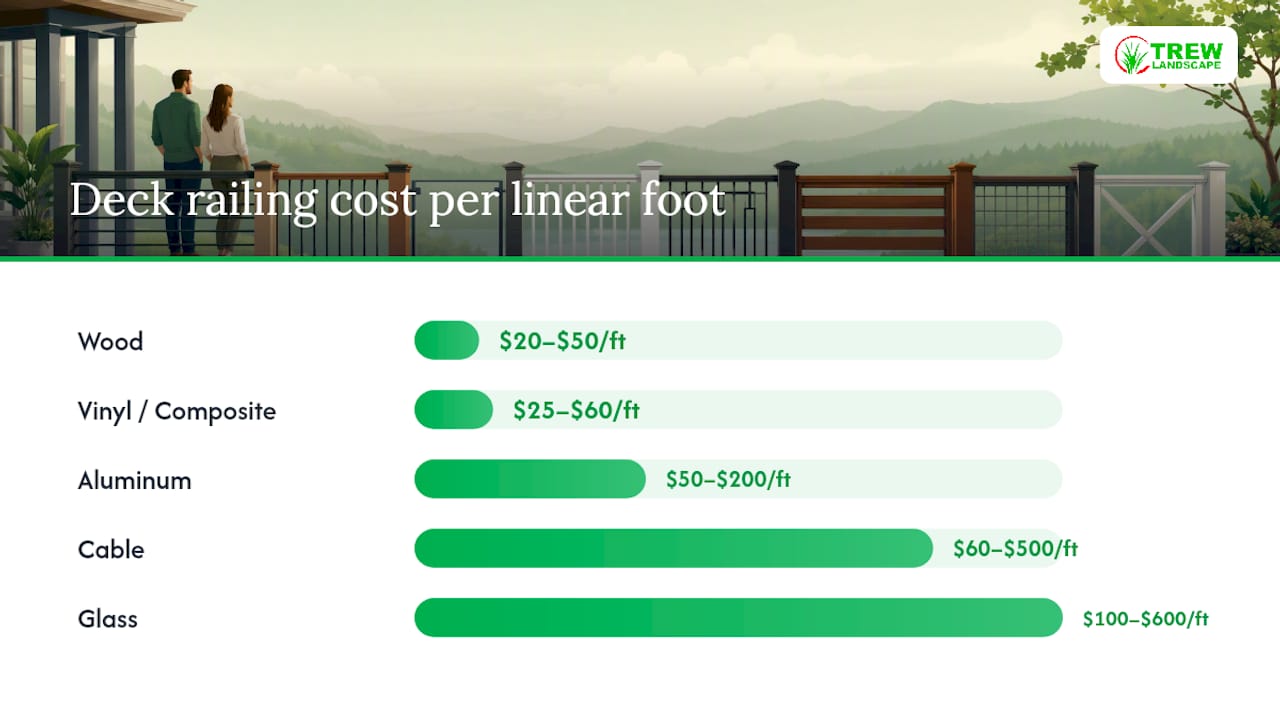
Installed pricing swings from about $20 to $600 per linear foot depending entirely on material and complexity, according to national cost data. Here’s roughly where each system lands:
- Wood: $20-$50/lf, the cheapest option and most forgiving for DIY
- Vinyl/PVC: $25-$60/lf, moderate DIY difficulty
- Composite: $25-$60/lf, similar install complexity to vinyl
- Aluminum: $50-$200/lf, depends heavily on finish and panel style
- Cable: $60-$500/lf, engineered posts push costs up fast
- Glass: $100-$600/lf, the priciest system on the list
Three things move a quote beyond the base range. Stairs add roughly 20% to 35% per linear foot because of angled cuts and the separate graspable handrail they require. Corners add extra posts and labor. And cable or glass systems need engineered posts strong enough to carry real tension or point loads, which pushes both material and labor costs higher than a standard baluster run.
If you’re DIY-comfortable, wood, vinyl, and composite are realistic weekend-to-week projects. Cable and glass are where most homeowners hand the job to a contractor. For a broader sense of what a full deck project costs beyond just the railing, Trew Landscape LLC’s deck cost breakdown is worth a look before you finalize a budget.
Building Code Rules You Cannot Skip
The International Residential Code sets the floor, not the ceiling, and it’s non-negotiable on a few points.
- Guard height trigger: any deck surface more than 30 inches above the ground below requires a guard.
- Minimum height: most jurisdictions require at least 36 inches, though some local building departments amend that up to 42 inches.
- 4-inch sphere rule: no gap in the guard infill can let a 4-inch sphere pass through, with a slightly larger 4 3/8-inch allowance on stairs and a 6-inch triangular rule where the stair meets the bottom rail.
- Graspable handrails: stairs typically need a separate, continuously graspable rail sized within a specific diameter range, distinct from the guard itself.
Pro Tip: Buy a $5 test sphere (a 4-inch ball works fine) and physically check your baluster spacing before your inspection, not after. It catches the single most common failure inspectors flag.
Before you order materials, call your local permit office. Many municipalities adopt stricter amendments than the base IRC language, and that call is the cheapest insurance you’ll ever buy on this project.
How to Choose the Right Deck Railing
Rank your priorities before you shop, not after. Most homeowners land on some order of appearance, maintenance, view preservation, budget, and longevity, and whichever sits at the top should decide your material.
- Appearance-first: aluminum, steel, or glass for a clean modern line
- Maintenance-first: vinyl or composite to skip the annual refinishing
- View-first: cable or glass to keep sightlines open
- Budget-first: pressure-treated wood
- Longevity-first: vinyl, aluminum, or composite, which commonly outlast wood by a decade or more
Once you’ve got a shortlist, bring these questions to any supplier or contractor quote:
- What’s the warranty on materials and on labor separately?
- Can you show engineered connection details for the posts, especially for cable or glass?
- What load spec does the system meet, and is that documented anywhere?
- For cable systems, what tensioning hardware is included, and how is re-tensioning handled later?
- For glass, is the panel tempered or laminated, and to what thickness?
Watch for red flags in any quote: no mention of engineered post connections, no stated load spec, a warranty that’s vague on what’s actually covered, or a bid that comes in noticeably lower than others without an itemized breakdown explaining why.
Maintenance and Lifespan by Material
Vinyl, aluminum, and composite systems typically last 25 to 35 years with little more than occasional washing. Wood lasts roughly 10 to 25 years depending on species, and only if you keep up with sealing or staining every two to three years. Sun exposure, standing moisture, and salt (if you’re near a pool) all accelerate wear across every material, though wood feels it first.
- Wood: reseal or stain every 2-3 years, check for soft spots annually
- Vinyl/composite: rinse annually, check post caps for cracking
- Aluminum/steel: inspect for finish chips, touch up powder coat as needed
- Cable: re-tension periodically as cables stretch slightly over time
A low sticker price on wood can flip into the more expensive choice over 25 years once you add up repeated refinishing and eventual replacement against a composite or vinyl system installed once.
Trew Landscape’s Approach to Railing Installations
Trew Landscape LLC installs deck railing as part of full deck builds, hardscape projects, and finish work across the Kansas City area, and we treat the structural details as seriously as the look. On every job, we document post attachment methods, load transfer points, and finished guard heights before calling for inspection, because that paperwork is exactly what most failed inspections are missing.
- Deck framing and railing installed as one coordinated system, not an afterthought
- Post attachment and load documentation kept on file for inspection
- Finish carpentry and lighting integration available on the same project
Lead Times and Ordering Windows for Railing Systems
Stock vinyl, aluminum, and pressure-treated wood railing sections are usually the fastest to get, often available within a week or two from local suppliers if standard colors and lengths work for your layout. Custom color runs, nonstandard panel widths, or matched trim packages add real time to that window, sometimes stretching to several weeks depending on the manufacturer’s production schedule.
Composite railing sits in the middle. Popular colors from major brands are frequently in stock at building supply stores, but less common shades or matched fascia boards may need a special order that adds a few weeks.
Cable and glass systems take the longest by a wide margin. Cable hardware itself isn’t usually the bottleneck, but the engineered posts that support it often are, especially if they’re custom-fabricated to match a specific post spacing or finish. Tempered or laminated glass panels are cut to order in most cases, since standard stock sizes rarely match an existing deck’s post spacing exactly. Expect several weeks minimum for glass, longer if the fabricator is backed up or if you’re ordering a non-standard tint or thickness.
Steel and wrought iron fall somewhere between aluminum and glass. Stock panel styles move fast, but anything custom-welded to fit an irregular deck shape needs a fabrication slot, and those calendars fill up quickly during peak building season in spring and early summer. If you’re planning a project for a specific date, whether that’s a graduation party or a holiday gathering, order railing materials well before you think you need to. Supply timing is one of the most common reasons deck projects slip past their planned finish date.
Matching Railing to Wood, Composite, or Concrete Decks
Not every railing system attaches to every surface the same way, and that matters more than most homeowners realize until a contractor points it out mid-quote.
Wood-framed decks are the most flexible base. Nearly every railing option, wood, vinyl, composite, aluminum, cable, or glass, can be bolted directly into wood framing with the right hardware, since wood accepts lag bolts and structural screws easily. This is why wood decks remain the most common pairing for cable and glass systems that need serious post strength.
Composite decking (the deck surface itself, not the railing) is typically built over a wood or engineered substructure, so railing attachment usually happens the same way as on a traditional wood deck: through the framing, not the composite boards themselves. The composite surface boards aren’t structural, so posts need to reach the framing below.
Concrete decks and patios are a different animal entirely. Railing posts on concrete need specialized base plates and concrete anchors rated for the guard’s required load, since you can’t simply bolt into a slab the way you would into wood framing. This is common on raised concrete patios, rooftop decks, or poured walkways with a drop-off. Aluminum and steel systems often come with concrete-mount base plate kits designed for exactly this situation, while cable and glass on concrete need extra engineering attention to make sure the anchor points can handle the tension or wind load involved.
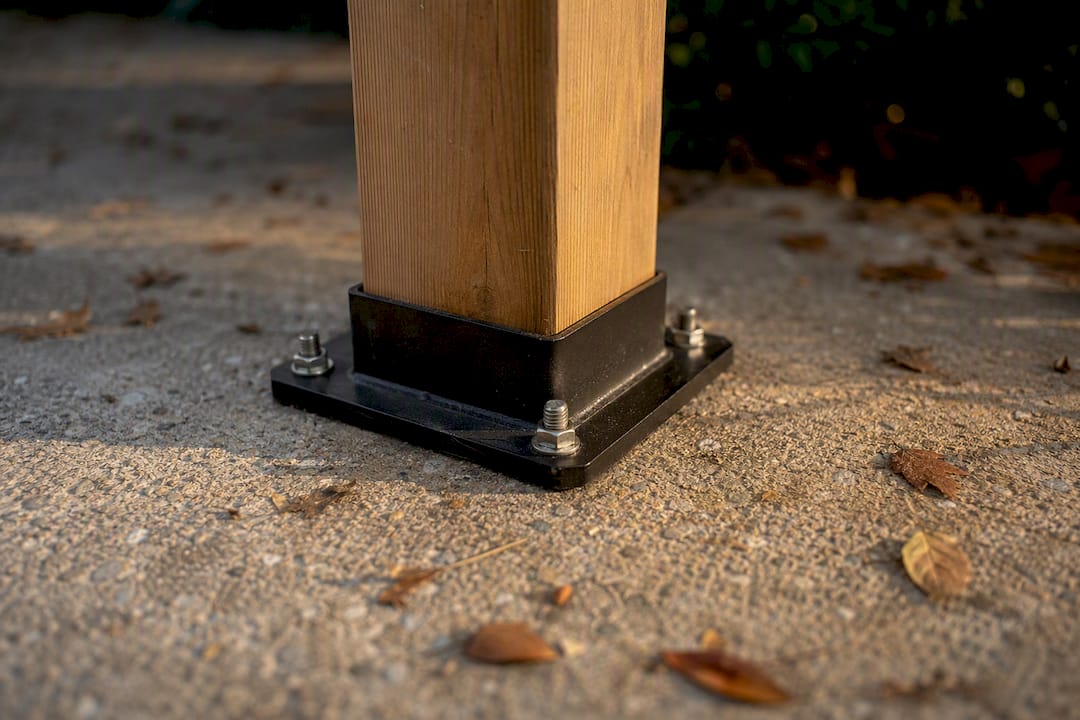
If your project mixes surfaces, say a wood deck that transitions to a concrete patio, plan for two different attachment methods in the same railing run. It’s a detail that’s easy to miss in a rough estimate and expensive to fix after posts are already set.
Permits and Inspections for Railing Projects
Most municipalities require a permit for any new deck railing installation, and replacing an existing railing on a permitted deck often triggers a new inspection even if the deck itself isn’t changing. Permit requirements exist specifically because guard height and infill spacing are safety-critical, and inspectors check those measurements directly rather than taking a contractor’s word for it.
The inspection itself usually focuses on a short list of items: finished guard height measured from the deck surface, baluster or infill spacing tested against the 4-inch sphere rule, secure post attachment to the framing or a rated base plate, and graspable handrail dimensions on any stairs. Bring your local permit office into the conversation before you order materials, not after, since some jurisdictions add requirements beyond the base IRC language, like the 42-inch height amendment some cities apply to certain deck heights or pool proximity.
Keep your product specification sheets and, for cable or glass systems, any engineering documentation from the manufacturer. Inspectors frequently ask for load ratings on cable tensioning hardware or glass panel thickness specs, and having that paperwork ready on inspection day avoids a second visit. If you’re hiring a contractor, ask upfront whether permit filing and inspection scheduling are included in the quote or handled separately, since that’s a detail that varies a lot between smaller crews and full-service companies.
Weather and Climate Factors That Affect Material Choice
Kansas City’s mix of humid summers, freeze-thaw winters, and regular temperature swings puts real stress on railing materials over time, and some hold up to that cycle far better than others.
Wood expands and contracts with moisture, and repeated freeze-thaw cycles accelerate checking and splitting, especially at joints and fastener points. That’s part of why wood needs more frequent resealing in a climate with real winters, not just hot summers.
Vinyl and composite systems handle temperature swings with less visible damage, though extreme cold can make vinyl slightly more brittle to impact, and darker composite colors absorb more heat in direct sun, which matters if you’re barefoot on a hot deck in July. Aluminum and steel resist moisture damage well, but uncoated or poorly finished metal can develop surface rust over years of freeze-thaw and humidity exposure, which is why powder coating quality matters more than color choice alone.
Cable systems have their own quirk: metal cable contracts slightly in cold weather and expands in heat, which is part of why proper initial tensioning and periodic re-tensioning matter more in a four-season climate than in a mild one. Glass holds up structurally fine across temperature swings, but expansion and contraction at the mounting hardware needs to be accounted for in the installation to avoid stress cracks over years of cycling.
If your deck gets direct afternoon sun for most of the day, factor that into color choice for both composite decking and railing, since darker finishes run noticeably hotter to the touch.
Why the “Cheapest Option” Question Misses the Point
Most homeowners search for the cheapest deck railing and end up with pressure-treated wood, which is a reasonable answer for the first year and a questionable one by year fifteen. The upfront price on wood is real, but it’s only half the number that matters. A wood railing that needs restaining every two or three years and partial replacement by year 20 can cost more, in total, than a vinyl or composite system installed once and left alone.
The conventional advice treats material choice as a single decision made at the lumber yard. It isn’t. It’s a decision about how you want to spend your time and money over the next quarter century, not just over the next month. Homeowners who prioritize a view, whether that’s a backyard tree line or a pool, consistently underestimate how much cable and glass systems depend on the post engineering behind them, not just the visible hardware.
What actually deserves more weight than most articles give it: the post connection and load path. That detail, more than the finish or the infill style, determines whether a railing passes inspection the first time and holds up for decades. Get the structure right, and the aesthetic choice becomes the easy part.
Get a Deck Railing Quote From Trew Landscape LLC
If you’d rather have a professional handle the post engineering, permit conversation, and finish details than DIY a cable or glass system yourself, Trew Landscape LLC installs deck railing as part of full deck builds and standalone railing upgrades across the Kansas City area. We document post attachments and load points before your inspection, so you’re not scrambling to explain hardware to an inspector after the fact.

Bring your rough sketch, a few photos of your current deck, or just your address, and we’ll walk the site to talk through material options, realistic costs, and permit requirements before you commit to anything. Deck railing pairs naturally with broader hardscape work too, if you’re already thinking about a patio or retaining wall alongside it. Request a quote through our deck installation page to get a site visit scheduled and a real number attached to your project.
Sources
- IRC deck railing code explained
- Cable railing code & the 4-inch sphere rule
- Porch & deck railing costs (install vs replace)
- Deck railing cost & code guide (2026)
FAQ
What is the cheapest way to do deck railing?
Pressure-treated wood is the least expensive option, running roughly $20 to $50 per linear foot installed, and it’s the most DIY-friendly system for handy homeowners.
What is the 4-inch sphere rule for railings?
No gap in a required guard can allow a 4-inch diameter sphere to pass through, with a slightly larger 4 3/8-inch allowance on stairs and a 6-inch triangular opening rule at the base.
What is the least expensive deck railing material?
Pressure-treated wood holds the lowest installed cost of any common system, though vinyl and composite often cost less over 25 years once you factor in wood’s repeated staining and earlier replacement.
What is the best material for deck railing?
There’s no single best material. Vinyl and composite win on low maintenance and 25 to 35 year lifespans, cable and glass win on preserving views, and aluminum or steel wins on a modern look with strong durability. Trew Landscape LLC can help match the right system to your deck’s structure and your priorities.