
Trew Landscape Blog
Front Yard Landscaping Ideas for Kansas City Homes 2026
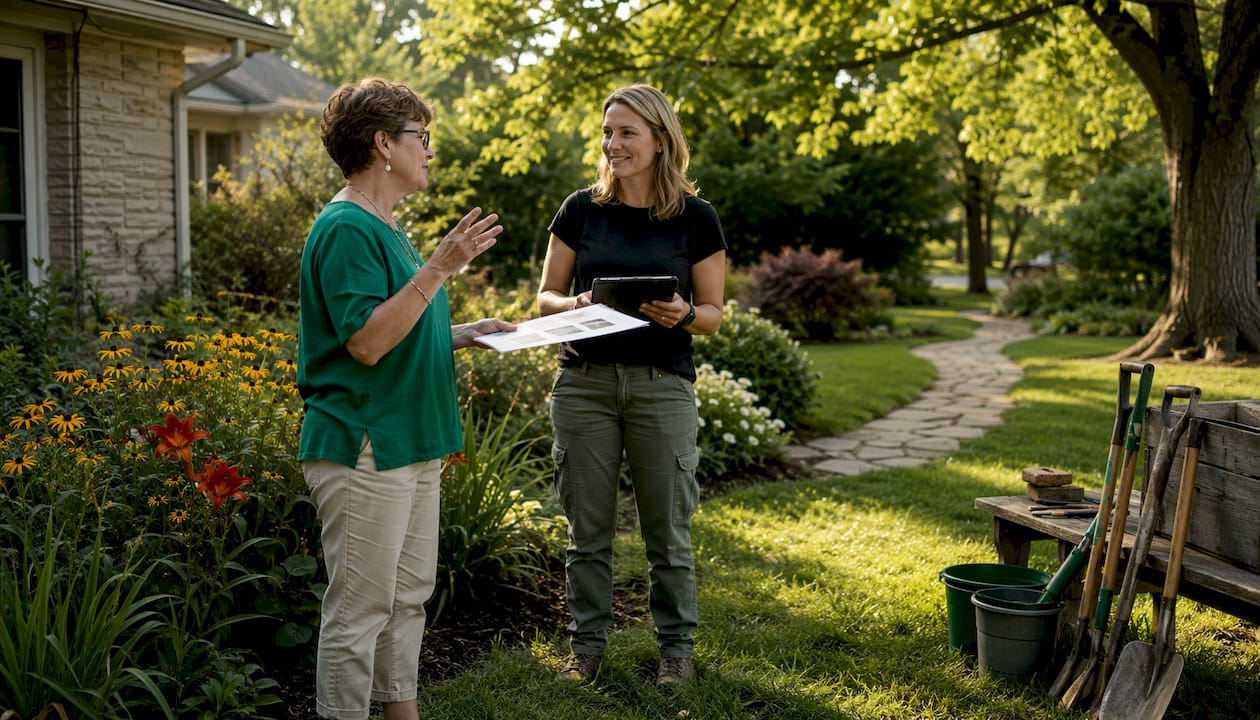
Front Yard Landscaping Ideas for Kansas City Homes 2026 ! Woman consulting landscaper in Kansas City yard The strongest front yard landscaping ideas for Kansas City homes share three traits: they work with the local climate, they stay manageable year after year, and they treat the yard as one connected system rather than a collection of random plants.
Front Yard Landscaping Ideas for Kansas City Homes 2026
The strongest front yard landscaping ideas for Kansas City homes share three traits: they work with the local climate, they stay manageable year after year, and they treat the yard as one connected system rather than a collection of random plants. Whether you have a narrow strip along a ranch-style home or a generous corner lot in North Kansas City, the same core principles apply.
Here are the ideas that consistently deliver the best curb appeal results:
- Layer plants by height. Place taller shrubs at the back of beds, mid-height perennials in the middle, and low groundcovers at the front edge.
- Use the rule of 3. Group plants in odd numbers (3, 5, or 7) to create visual harmony and make the yard feel larger.
- Add a focal point. A small ornamental tree, a boulder, or a well-placed shrub gives the eye somewhere to land.
- Balance hardscape and softscape. Walkways, edging, and retaining walls give structure; plants add warmth and color.
- Choose native and pollinator-friendly species. Purple coneflower, black-eyed Susan, and catmint thrive in Kansas City’s climate with minimal care.
- Create seasonal interest. Mix spring bloomers with summer perennials and fall-interest grasses so the yard looks alive from April through November.
- Replace struggling turf with ground cover. In tight or shaded areas, drought-tolerant ground covers like kurapia or Korean grass outperform grass with far less water.
Local providers like Trey’s Lawn & Landscape, By the Blade Lawn & Landscape, Keller’s Landscaping (serving the metro since 1988), Kansas City Landscaping & Construction, and Riverfront Landscape all bring regional expertise to these exact challenges.
Design principles that separate great yards from forgettable ones
Good front yard design follows a logic, not just a taste. The most common mistake homeowners make is treating the yard as a series of disconnected fixes: a new shrub here, a fresh layer of mulch there. Professional designs start by defining clear movement paths, functional zones, and edges before a single plant goes in the ground.
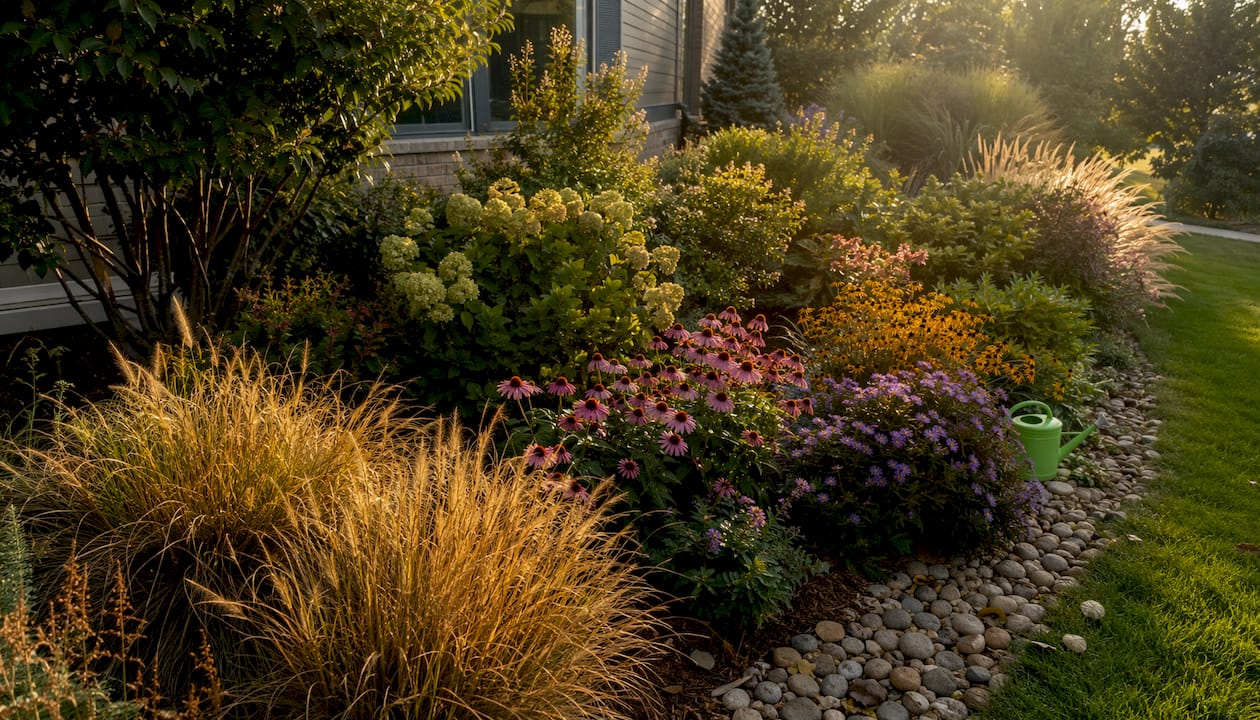
Layering creates depth. A flat bed of same-height plants reads as a hedge, not a garden. Stack a tall anchor shrub behind mid-height perennials, with a low groundcover or ornamental grass at the front edge. That three-tier structure makes even a narrow bed look intentional.
Focal points do the heavy lifting in small front yards. Without one, the eye wanders and the yard feels unfinished. A Japanese maple, a sculptural boulder, or two matching planters flanking the front door all work. The key is that there is one clear destination, not five competing ones.
Visual clutter kills curb appeal faster than any other single factor. Limiting your plant palette to a tight selection and repeating those species throughout the yard creates cohesion. A practical rule: if you cannot describe your planting scheme in one sentence, you have already gone too far.
- Keep bed edges clean and consistent (steel edging holds curves and lasts for years).
- Maintain at least 3–4 feet of clearance between plants and your foundation to prevent overgrowth and reduce pruning.
- Define a clear path from the street to the door, at least 36 inches wide.
- Avoid planting more than a handful of different species in one bed.
Pro Tip: Install all hardscape elements, including walkways, retaining walls, and edging, before you plant anything. Hardscape installation involves digging and grading that will destroy plants placed too early.
Which plants and materials actually work in Kansas City’s climate?
Kansas City sits in USDA hardiness zones 5b–6a, which means hot, humid summers and cold winters with occasional ice storms. Plants that look great in a Denver or Dallas front yard may struggle here. The good news is that the region supports a wide range of tough, beautiful species.
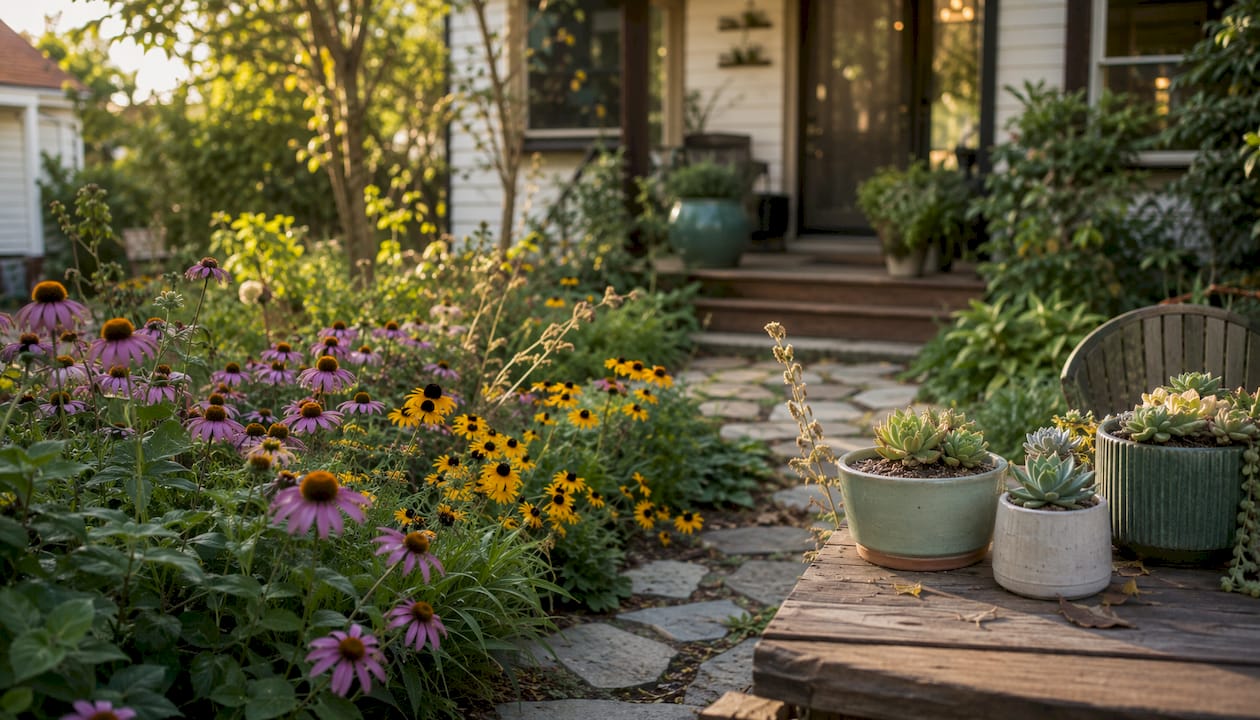
Native and drought-tolerant plants reduce water use and increase long-term survival rates. Purple coneflower, black-eyed Susan, and wild bergamot attract pollinators and require almost no supplemental watering once established. Catmint blooms for months and stays tidy with one hard cut in late summer.
For structure, boxwood and dwarf nandina hold their form year-round. Ornamental grasses like Karl Foerster add movement and winter interest without any pruning until early spring. Knock Out roses and spirea are workhorses that bloom heavily with minimal fuss.
Ground covers deserve more attention than they get in Kansas City front yards. Kurapia and Korean grass suppress weeds, conserve water, and eliminate the mowing cycle entirely in areas where turf underperforms. Creeping phlox and liriope work well along bed edges and in partial shade.
- Pollinator-friendly choices: purple coneflower, catmint, wild bergamot, black-eyed Susan
- Structural shrubs: boxwood, dwarf nandina, spirea, oakleaf hydrangea
- Grasses and movement: Karl Foerster, switchgrass, blue oat grass
- Ground covers: kurapia, Korean grass, creeping phlox, liriope
- Hardscape materials: natural flagstone, concrete pavers, decorative gravel, shredded hardwood mulch
For hardscaping, natural stone and concrete pavers hold up well through Kansas City’s freeze-thaw cycles. Decorative gravel works as a low-maintenance mulch alternative in sunny, dry areas. Shredded hardwood bark mulch remains the standard for planting beds: it retains moisture, regulates soil temperature, and breaks down to improve the clay-heavy soils common across the metro.
Cost-effective strategies and maintenance tips that actually save time
The cheapest front yard upgrade you can make is a clean edge. Steel or aluminum bed edging costs a fraction of new plants and immediately makes an existing yard look more polished. Start there before spending anything on new material.
Kansas City soils tend toward heavy clay, which drains poorly and compacts easily. Tilling 3–4 inches of compost into bed areas before planting makes a measurable difference in plant establishment and long-term health. A basic soil test, available through the University of Missouri Extension, tells you exactly what amendments your soil needs before you spend money on fertilizer.
Water conservation matters here. Drip irrigation delivers water directly to root zones, cutting waste compared to overhead sprinklers. Pairing drip lines with a 3-inch layer of mulch over bed surfaces reduces watering frequency significantly. For homeowners considering drainage solutions, addressing low spots and pooling areas early prevents erosion that undoes planting work.
- Prioritize high-visibility areas first. The entry path and the beds flanking the front door deliver the most curb appeal per dollar spent.
- Buy plants in late summer when nurseries discount inventory by 50–70%.
- Divide established perennials in fall to multiply plants for free.
- Use free wood chip mulch from municipal programs when available.
- Adapt to your yard size. Small yards benefit from hardscaped courtyards and tight plant palettes. Larger lots can carry more variety, but the rule of 3 still applies.
For maintenance scheduling, the lightest-touch approach works best: one hard cutback of ornamental grasses in late february or early march, a fresh layer of mulch in spring, and a single fertilizer application in fall for shrubs. That is genuinely the full annual calendar for a well-planted Kansas City front yard.
Low-maintenance front yard landscaping that holds up year after year
The lowest-maintenance front yards in Kansas City share one characteristic: they rely on plants that do not need constant intervention to look good. Ornamental grasses, native perennials, and tough shrubs like viburnum and oakleaf hydrangea fall into this category. Once established, typically after the first full growing season, they need almost nothing beyond an annual cleanup.
Replacing a struggling turf panel with a hardscaped courtyard or a mass of ground cover is the single biggest maintenance reduction most homeowners can make. Grass in a small front yard demands weekly mowing, edging, fertilizing, and irrigation. A gravel court with steel-edged planting beds requires almost none of that. Many designers view front-yard grass as dead space precisely because it consumes resources without adding functional use.
Artificial turf is another option worth considering for North Kansas City homeowners who want a green look without the upkeep. Artificial turf installation eliminates mowing, watering, and seasonal reseeding entirely, and modern products hold up well through the region’s temperature swings.
Lighting ideas that highlight your landscaping and improve safety
Landscape lighting transforms a front yard after dark and costs far less than most homeowners expect. The highest-return placement is along the entry path: low-voltage LED path lights spaced evenly from the sidewalk to the front door make the approach feel safe and welcoming without overwhelming the design.
Uplighting works well on a specimen tree or a textured wall. A single fixture aimed at a Japanese maple or a stone facade creates dramatic shadow and depth that no amount of daytime planting can replicate. Keep the fixture itself hidden in the bed; the light source should be invisible, only the effect visible.
For the house face, a pair of well-chosen wall sconces flanking the front door does double duty: they improve safety and serve as a design element in daylight. Replacing dated brass fixtures with matte black or brushed nickel updates the entire entry without touching a plant. Trewlandscape’s landscape lighting services cover full low-voltage LED installations designed specifically for Kansas City homes.
Ready to transform your North Kansas City front yard?
Trewlandscape brings together landscape design, hardscaping, lighting, and sod installation under one roof for Kansas City homeowners. Whether you are starting from scratch or refreshing an existing yard, the team handles every stage from design through installation. Reach out for a free estimate and get a plan built around your yard, your budget, and the Kansas City climate.
Key Takeaways
The most effective front yard landscaping for Kansas City homes combines native plants, clean hardscape, and the rule of 3 to create low-maintenance curb appeal that holds up through the region’s climate extremes.
| Point | Details |
|---|---|
| Use the rule of 3 | Group plants in odd numbers (3, 5, or 7) to create visual harmony and make yards feel larger. |
| Hardscape before planting | Install walkways, edging, and walls first to avoid damaging plants during construction. |
| Choose climate-suited plants | Native species like purple coneflower and catmint thrive in Kansas City with minimal water once established. |
| Replace struggling turf | Ground covers like kurapia eliminate mowing and conserve water in areas where grass underperforms. |
| Light the entry path | Low-voltage LED path lights along the walkway deliver high curb appeal impact at low installation cost. |