
Trew Landscape Blog
Paver Patio Cost in Kansas City: 2026 Pricing Guide
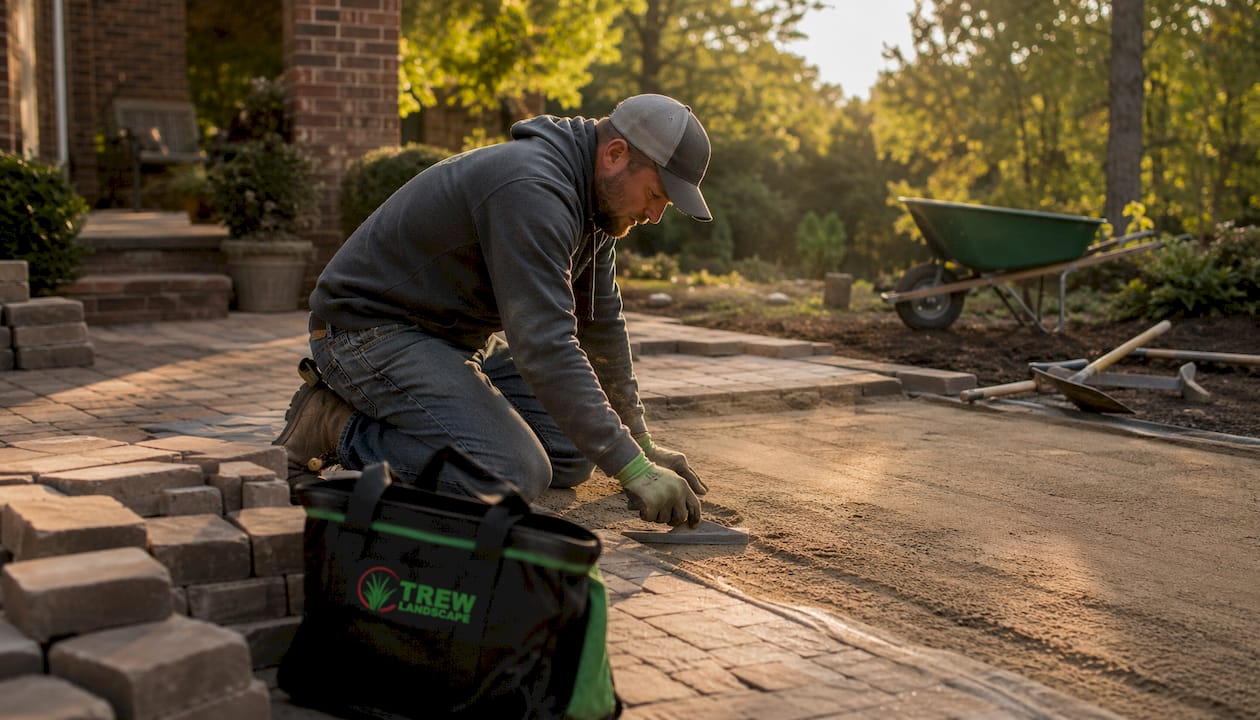
Paver Patio Cost in Kansas City: 2026 Pricing Guide ! Contractor preparing paver patio base outdoors In Kansas City, a paver patio installed cost generally varies by materials and site conditions, with smaller patios costing noticeably more per unit area than larger projects.
Paver Patio Cost in Kansas City: 2026 Pricing Guide
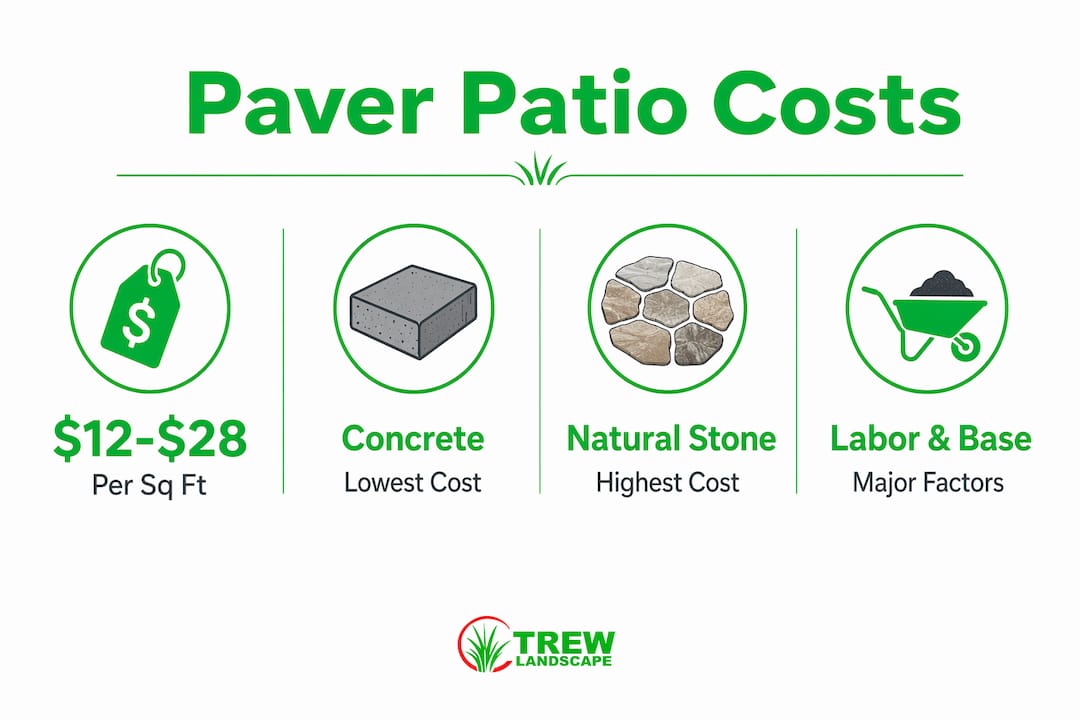
In Kansas City, a paver patio installed cost generally varies by materials and site conditions, with smaller patios costing noticeably more per unit area than larger projects. That wide range exists because paver patios are not a single product. They are a system: excavation, a compacted gravel base, sand bedding, the pavers themselves, edge restraint, and finishing. Every layer has a price.
Here is what drives the total cost at a glance:
- Patio size: Larger patios cost less per square foot because fixed setup costs spread over more area
- Paver material: Concrete pavers sit at the low end; natural stone can triple the material cost
- Base preparation: A proper gravel base and sand bed typically adds $2 to $5 per square foot to the total
- Labor: Labor and base prep account for 60–70% of total installed cost in most Kansas City projects
- Site conditions: Poor drainage, clay soil, or limited equipment access pushes labor hours up fast
- Design complexity: Curves, borders, and intricate patterns add 10–20% to labor costs
What factors affect the cost of a paver patio?
Base preparation
The base is where most of the money actually goes, even though you never see it once the job is done. A proper paver base requires sufficient depth of compacted gravel road base, followed by a sand bedding layer. Skipping depth or using inferior fill is the single most common way a low bid becomes an expensive repair three years later. Kansas City’s freeze-thaw cycles make this especially punishing: a shallow base heaves in winter and settles unevenly in spring. Proper drainage and base work directly determine how long your patio lasts in this climate.
Paver material type
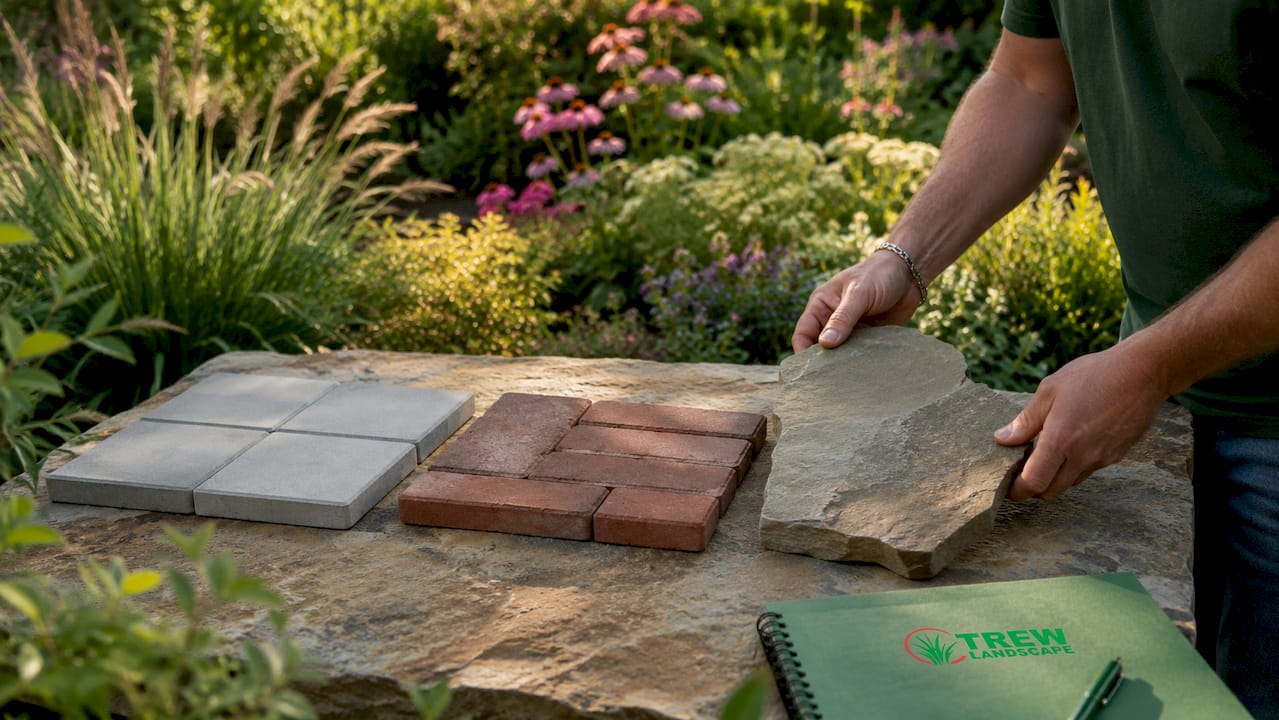
Material choice is the second-biggest lever on price, with concrete pavers at the lower end and natural stone generally costing more; porcelain pavers offer freeze-thaw resistance suitable for Kansas City, and are worth considering for Kansas City yards because their near-zero moisture absorption makes them highly freeze-thaw resistant. Natural stone looks stunning but requires more skilled labor to set, which is why the installed price climbs so fast.
Labor rates and design complexity
Kansas City labor rates run $50 to $80 per hour, or roughly $4 to $11 per square foot depending on the scope. A straightforward rectangle in a running bond pattern sits at the low end. Add a herringbone layout, curved edges, or an L-shape, and every custom cut adds time. A 300 sq ft rectangle might install at a certain cost; the same square footage in a more complex shape increases labor and total cost.
Site conditions
- Grading and leveling: Sloped or uneven yards require grading before any base work begins, adding cost
- Clay soil: Heavy clay common in the Kansas City area drains poorly and may need extra excavation depth or drainage solutions
- Limited equipment access: A backyard with a narrow gate forces crews to haul materials manually, which can add hours to the job
- Existing surfaces: Removing an old concrete slab adds additional cost before new work begins.
Extras and add-ons
Seating walls, landscape lighting, decorative borders, and drainage systems all add to the final number. A landscape drainage installation is often necessary in Kansas City yards with poor natural runoff, and it is far cheaper to install during the patio project than to retrofit later. Outdoor lighting, fire pit pads, and built-in planters are popular upgrades that can add anywhere from a few hundred to several thousand dollars.
What do real Kansas City paver patio projects actually cost?
The table below shows typical installed price ranges by patio size and material type, based on current Kansas City area pricing.
| Patio Size | Sq Ft | Concrete Pavers | Brick Pavers | Natural Stone |
|---|---|---|---|---|
| 12x12 | 144 | $1,700–$3,000 | $2,000–$3,000 | — |
| 12x20 | 300 | $3,800–$6,000 | $4,500–$7,000 | — |
| 20x20 | 500 | $6,000–$10,000 | — | — |
A 12x12 patio is a common starting size in Kansas City, often sufficient for modest outdoor furniture or a small seating area. At that scale, concrete pavers are the practical choice for most homeowners. The jump to natural stone nearly doubles the cost, and much of that premium goes to labor, not just materials.
Cost per square foot drops on larger patios because the fixed costs of mobilization, gravel delivery, and equipment setup spread over more area. A 100 sq ft patio might run around $20 per square foot installed, while the same materials on a 500 sq ft project drop closer to $14 to $16 per square foot. For small patios, total budget is a more useful number than per-square-foot comparisons.
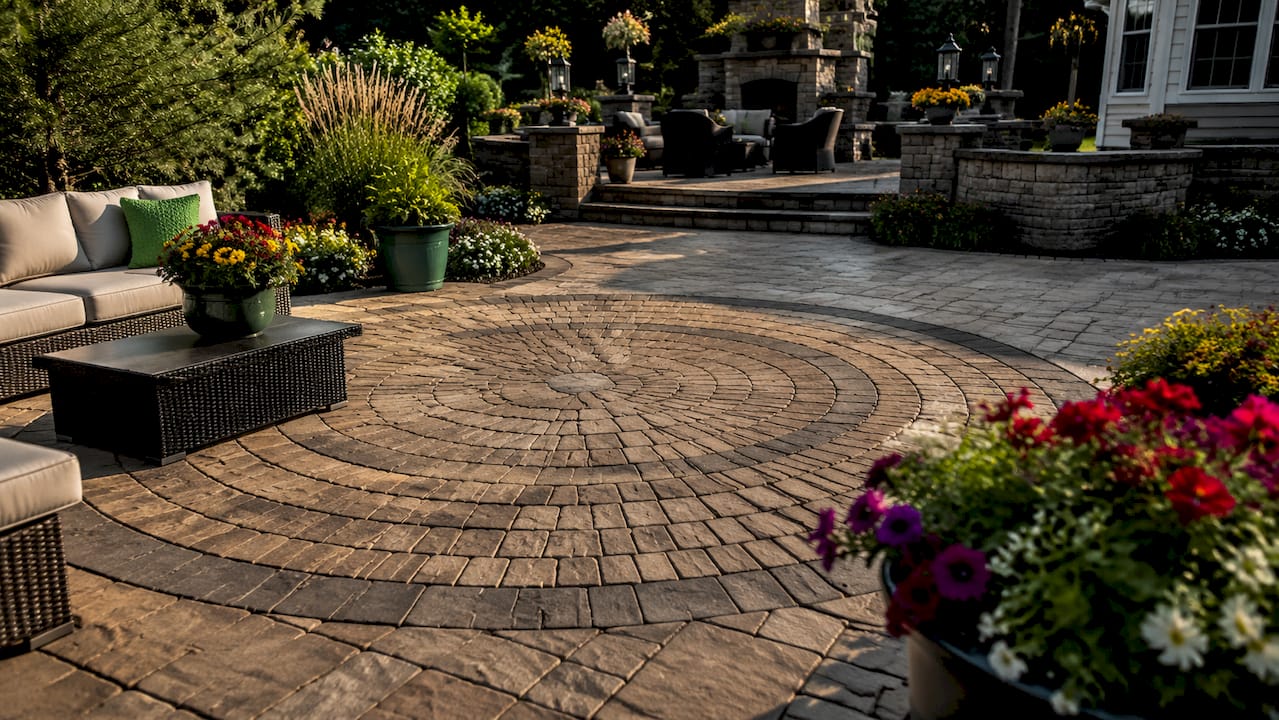
Design complexity matters too. A simple rectangular patio with a standard running bond pattern keeps labor costs predictable. Circular inlays, mixed-size patterns, or multiple levels each add cutting time and skill requirements that show up in the final invoice.
Hidden costs and contractor quote pitfalls to watch for
Low bids are the most expensive mistake Kansas City homeowners make. A quote that looks $2,000 cheaper than the competition often excludes the items that determine whether your patio lasts five years or twenty-five.
Common exclusions in low bids:
- Base preparation depth (some contractors spec 4 inches when 6 to 8 is appropriate for Kansas City’s frost depth)
- Edge restraint, which keeps pavers from spreading over time
- Polymeric sand for joints, which resists weeds and washout
- Drainage solutions for yards with clay soil or poor natural slope
- Hauling and disposal fees for excavated soil
Low bids frequently omit critical base preparation or drainage, and the consequences show up within a few freeze-thaw cycles. Pavers shift, edges spread, and water pools where it shouldn’t. Fixing a failed base means pulling up the entire patio and starting over.
Pro Tip: Ask every contractor to specify the base depth in inches, the gravel type, and whether edge restraint and polymeric sand are included. If a bid does not list these as line items, ask for a written revision before signing anything.
Watch for vague language like “base preparation as needed.” That phrase means nothing and commits the contractor to nothing. A fair bid names the materials, the depth, and the method.
How to compare contractor quotes for a paver patio in Kansas City
Getting three bids is the starting point, not the finish line. The real work is reading what each bid actually says.
What every quote should include:
- Total square footage and patio dimensions
- Base system: gravel depth, type, and compaction method
- Paver type, brand or product line, and color
- Edge restraint type and installation method
- Joint sand specification (standard or polymeric)
- Drainage handling, especially for sloped or clay-heavy sites
- Labor hours or a clear scope of work
- Warranty on both materials and installation workmanship
Contractor bids should clearly list base preparation, paver types, drainage handling, and labor as separate line items. When you can compare bids at that level of detail, price differences become explainable rather than mysterious. A bid that is $1,500 higher might include 2 extra inches of base gravel and polymeric sand. That is often worth it.
Ask each contractor how they handle unexpected site conditions. Clay soil, buried debris, and drainage surprises are common in Kansas City yards. A contractor who has a clear answer and a change-order process is more trustworthy than one who says “we’ll figure it out.”
Check reviews specifically for completed paver projects, not just general landscaping work. Paver patio installation requires a different skill set than sod or planting, and a contractor’s track record on hardscape jobs tells you more than their overall rating. Request photos of finished patios from the past year, and ask whether the crew who did those projects will be on your job.
How long does a paver patio installation take?
A typical residential paver patio in Kansas City takes 2 to 5 days from start to finish, though the full timeline from first contact to completed project runs longer.
Project timeline breakdown:
- Estimate and planning: 1 to 2 weeks to get quotes, finalize design, and sign a contract
- Material lead time: 1 to 3 weeks depending on paver availability and supplier stock
- Site preparation: 1 day for excavation and grading on most standard lots
- Base installation: 1 day for gravel delivery, spreading, and compaction
- Paver laying and finishing: 1 to 3 days depending on size, pattern complexity, and crew size
- Curing and cleanup: Polymeric sand needs 24 hours to set before the patio is fully usable
A 144 sq ft patio with a simple pattern can realistically finish in 2 days of active work. A 500 sq ft project with curves, a seating wall, and drainage work might take a full week. Land grading and excavation on difficult sites adds time before a single paver goes down.
Weather delays are real. Rain during base installation can set a project back by days if the gravel needs to dry before compaction. Build a buffer into your timeline, especially for spring and fall installs.
How seasons and weather affect paver patio costs and scheduling
Spring and fall are the busiest seasons for paver installation in Kansas City, and that demand affects both scheduling and price. Most contractors book out 4 to 8 weeks during peak season, and some charge a modest premium for rush scheduling.
Winter installation is possible in Kansas City but comes with real constraints. Ground frost makes excavation harder and more expensive. Contractors who work through winter often charge more to account for the added difficulty, and some manufacturers recommend against installing polymeric sand below 32°F because it won’t cure properly.
Summer heat is generally fine for installation but can affect scheduling around extreme heat advisories. Concrete pavers and natural stone handle heat well once installed, but crews working in 95°F temperatures work more slowly, which can extend labor hours.
The best window for paver installation in Kansas City is late April through June and again in September through October. You get cooperative ground conditions, reasonable temperatures, and enough lead time before winter freeze-thaw cycles begin stressing a new base. Booking in late winter for a spring install is the most reliable way to get your preferred contractor at a standard rate. Some contractors offer off-season discounts for projects scheduled in January or February, though you will likely wait until spring for actual installation.
Hardscape design decisions made early in the year also give you time to source specialty pavers, which can have longer lead times than standard concrete units.
Key Takeaways
A paver patio in Kansas City costs $12 to $28 per square foot installed, with labor and base preparation accounting for 60–70% of the total, making material choice and base quality the two decisions that most affect long-term value.
| Point | Details |
|---|---|
| Installed cost range | Kansas City paver patios run $12–$28 per square foot installed. |
| Labor and base dominate | Labor and base prep account for 60–70% of total cost; skimping on base depth causes early failure. |
| Size reduces per-sq-ft cost | Larger patios cost less per square foot because fixed mobilization costs spread over more area. |
| Hidden costs are common | Low bids often exclude edge restraint, polymeric sand, drainage, and proper base depth. |
| Best scheduling window | Late april through june and september through october offer the best conditions and standard rates. |
Ready to get a clear, itemized quote for your Kansas City paver patio? Trewlandscape specializes in professional paver installation and hardscaping across North Kansas City, with transparent pricing and detailed proposals that spell out every line item before work begins.

Request your free project estimate and get a real number for your yard, not a ballpark.