
Trew Landscape Blog
Pavers vs Concrete Patio: Which Is Right for You?
Pavers vs Concrete Patio: Which Is Right for You? !
Pavers vs Concrete Patio: Which Is Right for You?
Which wins in the pavers vs concrete patio debate?
Pavers win on durability, repairability, and long-term value. Concrete wins on upfront cost and clean, modern aesthetics. For Kansas City homeowners dealing with freeze-thaw cycles and clay-heavy soil, that distinction has real consequences for your wallet over a 20-year horizon.
Here’s the quick version:
- Upfront cost: Concrete costs less per square foot installed for a basic finish; pavers are generally more expensive depending on the material
- Lifespan: Concrete typically lasts 25–30 years; pavers last 30 years or more without major cracking
- Durability: Pavers offer more than three times the compressive strength of a standard poured slab
- Repairs: A cracked paver gets swapped out in an hour; a cracked concrete slab leaves a visible patch every time
- Design: Pavers offer virtually unlimited patterns and layouts; concrete delivers a cleaner, more monolithic look
- Maintenance: Both require periodic attention. Concrete needs regular sealing; pavers require joint sand replenishment to stay level
- Environment: Pavers allow water to drain through joints, reducing stormwater runoff. Large concrete slabs shed water entirely
- Climate fit: Kansas City’s freeze-thaw winters are harder on rigid concrete than on flexible paver systems
Table of Contents
- How do pavers and concrete really compare?
- Who are the top patio contractors in the Kansas City metro?
- How do you decide between a paver patio and a concrete patio?
- Trewlandscape brings both options to North Kansas City
- Key Takeaways
How do pavers and concrete really compare?
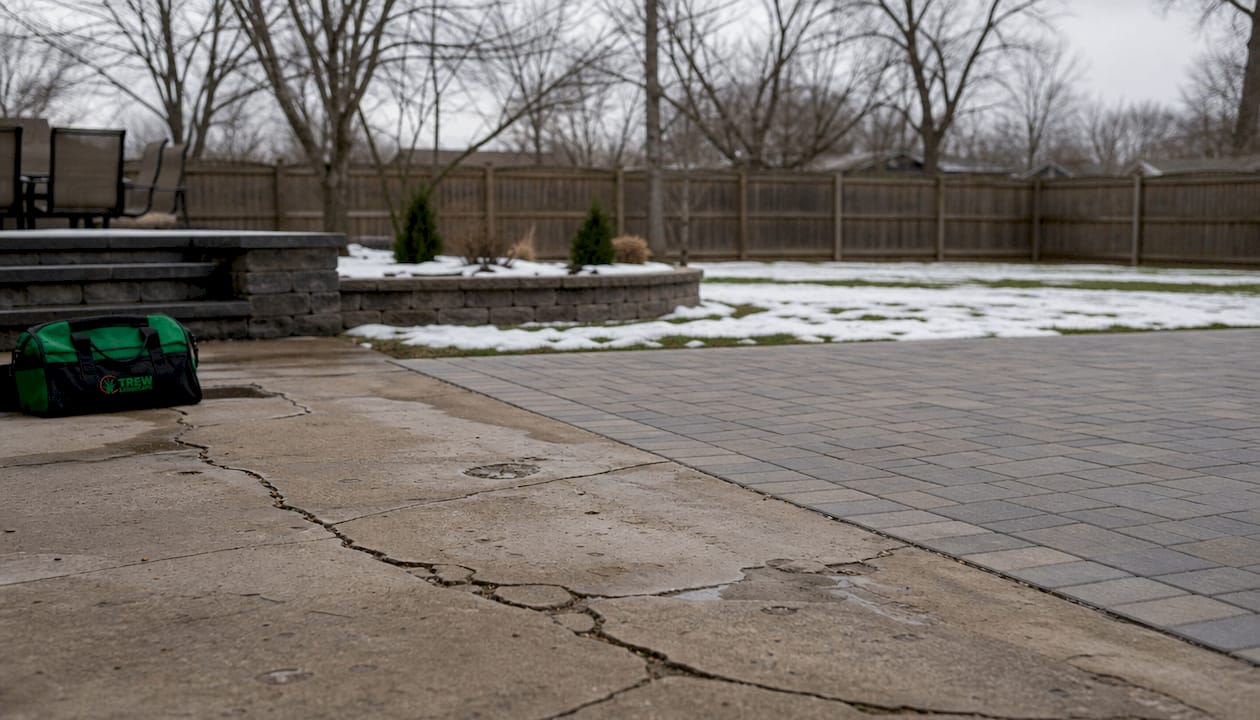
The core structural difference is rigidity versus flexibility. A poured concrete patio is one continuous slab. When the ground moves, the slab cracks. Pavers are individual units set over a compacted base, so they shift slightly with soil movement and then settle back without fracturing.
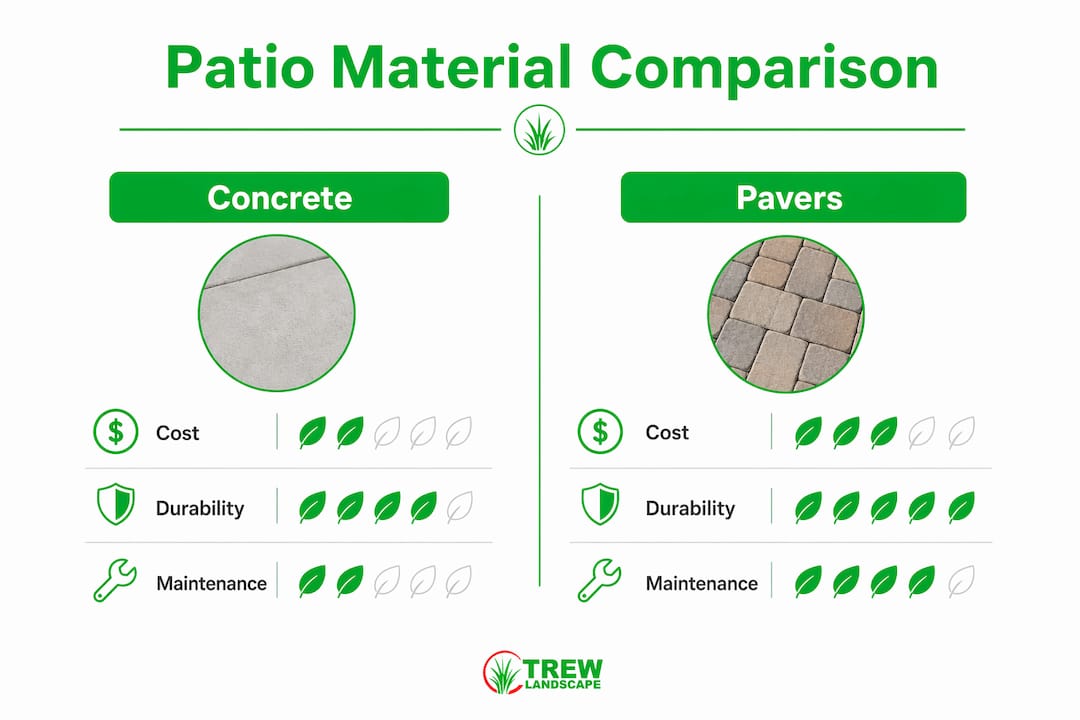
| Factor | Poured Concrete | Pavers |
|---|---|---|
| Durability | Prone to cracking from freeze-thaw and soil movement | Flexible system handles ground movement without fracturing |
| Upfront cost | $6–$10/sq ft (basic); $10–$18/sq ft (stamped) | $10–$25/sq ft depending on material |
| Design options | Broom finish, stamped, stained, exposed aggregate | Unlimited patterns, colors, borders, curves |
| Maintenance | Concrete needs regular sealing; crack monitoring | Joint sand replenishment; reseal periodically |
| Installation complexity | Forms, pour, finish, cure (multiple days active) | Excavation, base, bedding, laying, compaction (several days) |
| Typical lifespan | 25–30 years | 30+ years |
| Repair ease | Patches are visible; large cracks may require re-pour | Lift one unit, replace it, done |
| Resale value | Moderate boost | High boost; perceived as premium hardscaping |
| Environmental impact | Sheds stormwater; impermeable | Permeable options reduce runoff |
Stamped concrete vs pavers: the design trade-off
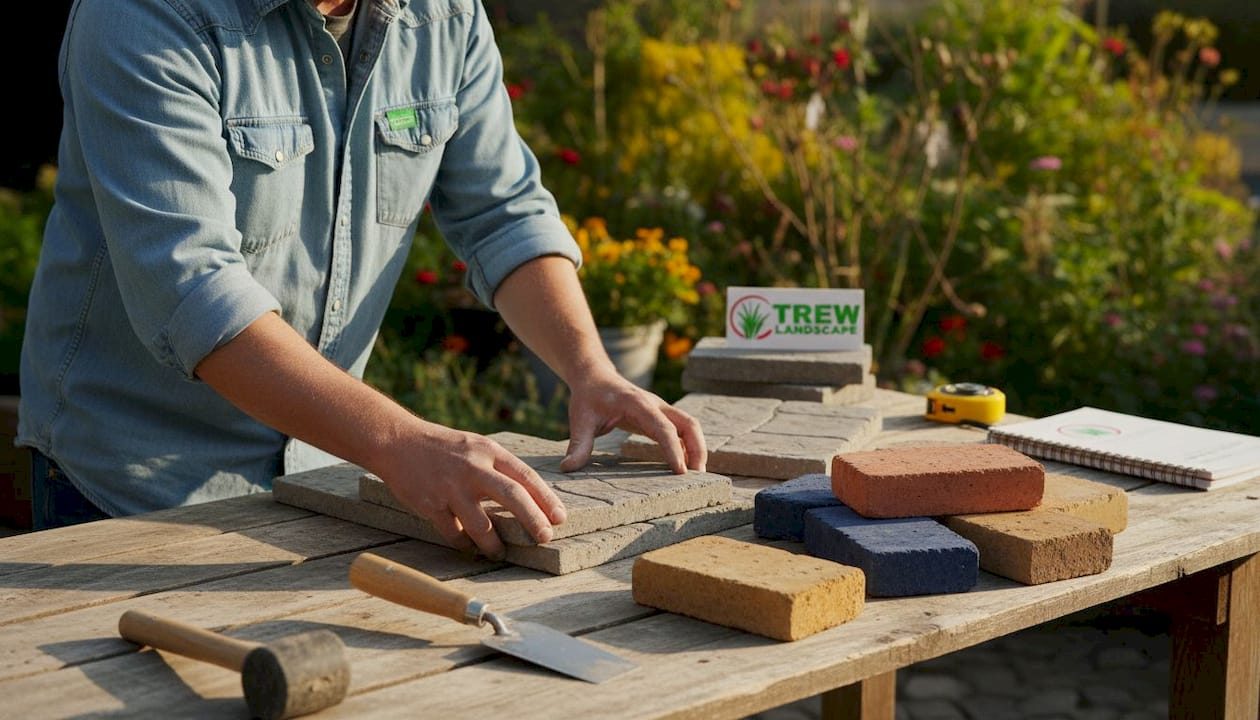
Stamped concrete mimics paver patterns but doesn’t replicate their structural flexibility. You get the look at a lower price point, but the same cracking risk as any other concrete slab. Up close, high-quality pavers have a texture and depth that stamped concrete doesn’t fully match. From across the yard, the difference shrinks considerably. If budget is tight but you want visual interest, stamped concrete is a reasonable middle ground. Just don’t expect it to perform like the real thing when a Kansas City January decides to test it.
Repairs and the color-match problem
Concrete repairs are permanent reminders. A filled crack or patched section rarely blends with the surrounding surface because weathering changes the color over time. With pavers, keeping a few extra units from your original install solves the color-match problem entirely. Pull the damaged paver, drop in a spare, re-sand the joints. The repair is invisible.
Kansas City climate and sustainability
Kansas City’s freeze-thaw cycles are genuinely punishing for rigid concrete. Water gets into micro-cracks, freezes, expands, and widens the fracture. Pavers flex with that movement rather than fighting it. On the sustainability side, permeable paver systems reduce stormwater runoff and can help manage drainage on properties with grading challenges. If you’re curious about Kansas City businesses prioritizing eco-conscious approaches, green-focused local companies are worth exploring for complementary landscaping decisions.
Who are the top patio contractors in the Kansas City metro?
Five contractors serve the Kansas City area with strong track records in either paver or concrete work. Their specializations differ enough that the right choice depends on what your project actually needs.
| Contractor | Specialty | Rating | Best For |
|---|---|---|---|
| Hinkle Outdoor Living | Paver patios, outdoor kitchens, pools, fire features | 4.8★ (144 reviews) | Award-winning paver design and full outdoor living builds |
| Kansas City Hardscapes | Paver patios, retaining walls, pergolas, outdoor kitchens | 4.7★ (76 reviews) | Personalized family-owned hardscape projects |
| AAA Fast Construction LLC | Custom flagstone, stone masonry, retaining walls | 5★ (55 reviews) | Premium stonework and historic masonry restoration |
| Enriquez Concrete Construction, LLC | Concrete patios, retaining walls, landscaping | 5★ (29 reviews) | Reliable concrete craftsmanship with landscaping integration |
| Concrete Design Of Kc, Inc. | Stamped concrete, flatwork, driveways, commercial | 4★ (27 reviews) | Decorative concrete and stamped patio designs |
Hinkle Outdoor Living is the most recognized name in Kansas City paver work, holding a Unilock Award of Excellence. Their projects go well beyond a basic patio. If you want a cohesive outdoor living space with a pool, fire feature, and covered structure, they have the design and build depth to pull it off.
Kansas City Hardscapes takes a family-owned approach with a focus on making your outdoor space genuinely livable. They handle everything from paver patios to outdoor kitchens and retaining walls, with a reputation for personalized service on each project.
AAA Fast Construction LLC occupies a different niche entirely. Their strength is premium stone masonry, including custom flagstone patios, decorative columns, and historic restoration work. If your project involves integrating natural stone features or you want something beyond standard concrete pavers, they’re worth a call.
Enriquez Concrete Construction, LLC brings over 17 years of concrete and landscaping experience to the Kansas City area. They’re a solid choice when concrete is the right material and you want a contractor who also handles the surrounding landscaping.
Concrete Design Of Kc, Inc. specializes in stamped concrete and flatwork across residential and commercial projects. A practical option for homeowners who want decorative concrete without the paver price tag.
How do you decide between a paver patio and a concrete patio?
The right material depends on four things: your budget, how long you plan to stay in the home, how much maintenance you’re willing to do, and what the space needs to look like.
Key decision factors:
- Long-term plans: If you’re staying 10-plus years, pavers’ lower repair costs and longer lifespan tend to pay off over time. If you’re selling in three years, basic concrete gets the job done for less money upfront
- Budget: A 400 sq ft concrete patio runs roughly $2,400–$4,000 installed; the same area in pavers runs $4,000–$10,000 depending on material
- Maintenance tolerance: Concrete is lower maintenance short-term but punishes neglect with visible cracks. Pavers need consistent joint sand attention but reward that care with invisible repairs
- Design goals: Curves, borders, mixed materials, and pattern changes are native to pavers. Clean, continuous surfaces suit concrete
- Climate resilience: Kansas City winters favor pavers. The freeze-thaw vulnerability of concrete is a real cost factor here, not a theoretical one
For design inspiration before committing to a material, browsing Kansas City restaurant patios gives you a real-world look at how both materials perform in high-traffic outdoor settings.
Pro Tip: The single biggest predictor of patio longevity isn’t the surface material. Proper base preparation and drainage determine whether your patio lasts 15 years or 40. Always ask a contractor specifically about sub-base depth, compaction method, and drainage slope before signing anything.
When evaluating contractors, ask for warranty terms in writing. Most reputable installers offer at least a one-year warranty on residential work. A contractor who won’t put that in writing is a red flag regardless of price. You can also explore paver installation options and concrete patio preparation guidance to go into those conversations better informed.
Trewlandscape brings both options to North Kansas City
Choosing between pavers and concrete is easier when you don’t have to manage two separate contractors. Trewlandscape handles both paver installation and concrete patio work for residential and commercial properties across the Kansas City metro, including North Kansas City.
Where Trewlandscape stands apart is the full-project approach. Drainage, grading, lighting, sod, and hardscape design get planned together rather than bolted on after the fact. That matters because, as every experienced installer knows, the base and drainage beneath your patio determine how long it lasts. Trewlandscape’s hardscape design services cover the whole picture, from material selection through final installation. Get a quote and see what your outdoor space could look like with the right team behind it.
Key Takeaways
Pavers outperform concrete on durability and repairability in Kansas City’s freeze-thaw climate, but concrete remains the lower-cost entry point for homeowners with tighter budgets or shorter timelines.
| Point | Details |
|---|---|
| Cost difference | Concrete runs $6–$10/sq ft installed; pavers run $10–$25/sq ft, but carry lower long-term repair costs. |
| Durability edge | Pavers last 30-plus years and handle freeze-thaw cycles without cracking; concrete typically lasts 25–30 years. |
| Repair advantage | Damaged pavers swap out invisibly; concrete patches are almost always visible. |
| Base prep is everything | Proper sub-base and drainage matter more than surface material for long-term patio performance. |
| Trewlandscape | Handles both paver and concrete patio projects in North Kansas City with full drainage and design integration. |