
Trew Landscape Blog
Privacy Fence Styles: Best Looks and Yard Seclusion
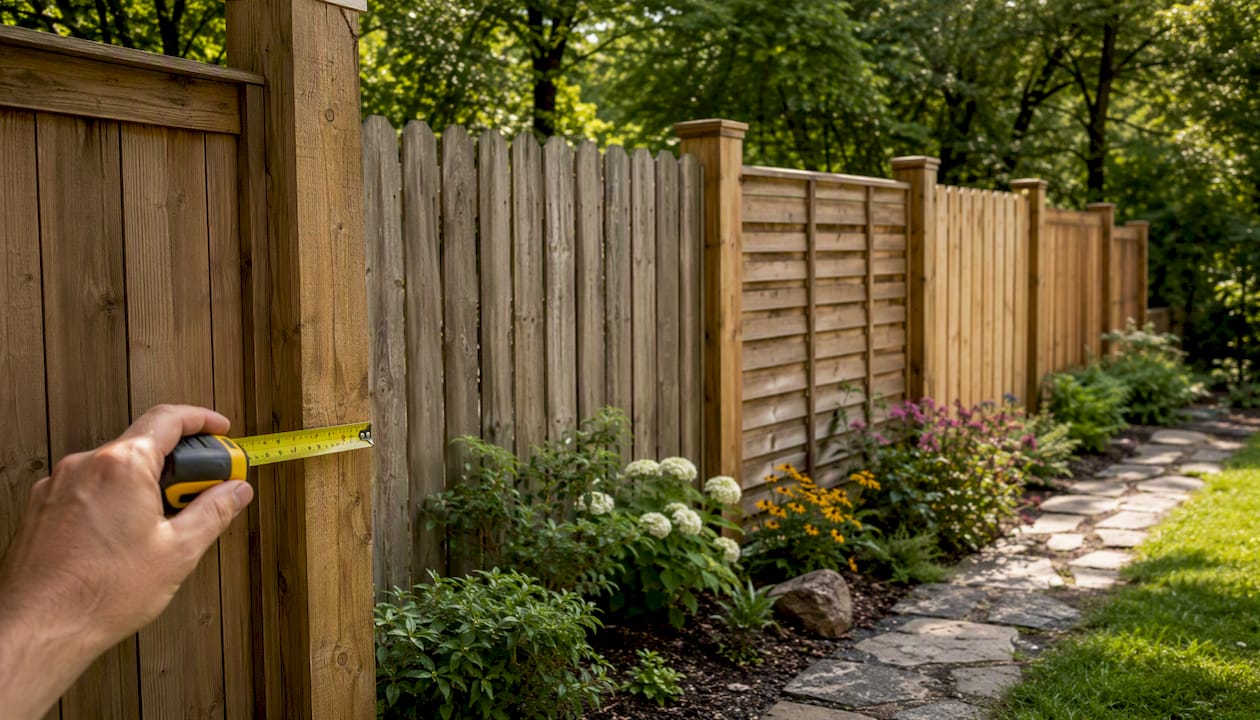
Privacy Fence Styles: Best Looks and Yard Seclusion ! Various privacy fence styles in a backyard For most homeowners who want maximum yard seclusion with solid value, board-on-board, tongue-and-groove, and solid vinyl panel are the top picks.
Privacy Fence Styles: Best Looks and Yard Seclusion
For most homeowners who want maximum yard seclusion with solid value, board-on-board, tongue-and-groove, and solid vinyl panel are the top picks. Horizontal slat fences are the go-to for modern curb appeal. Shadowbox is the smart call for shared property lines and windy lots.
Here is who each style fits best:
- Board-on-board: Best for homeowners who want near-100% visual privacy and a classic wood look at a mid-range price.
- Tongue-and-groove: Best for those who want a seamless, gap-free panel and are willing to pay a slight premium for the tightest sightline block.
- Solid vinyl panel: Best for low-maintenance households; vinyl fences last 25–30 years with little more than an annual rinse.
- Horizontal slat: Best for modern or contemporary homes where design matters as much as privacy.
- Shadowbox: Best for exposed or shared-line lots where wind relief and a “good neighbor” look both matter.
Always verify local building codes, HOA covenants, and property lines before ordering materials. Trew Landscape LLC handles permit research and installation across Kansas City, so you are not navigating that process alone.
Key Takeaways
| Point | Details |
|---|---|
| Top privacy styles | Board-on-board and tongue-and-groove provide 95–100% visual coverage; shadowbox suits shared lines and windy lots. |
| Best low-maintenance material | Vinyl solid panels last 25–30 years and need only an annual rinse, outperforming wood on lifetime cost. |
| Horizontal slat premium | Horizontal slat fences cost 15–25% more than standard vertical fences due to framing and lumber demands. |
| Installed cost baseline | Most privacy fences run $15–$30 per linear foot installed; masonry can reach $100+ per linear foot. |
| Trew Landscape LLC | Handles site assessment, permit coordination, and full fence installation across Kansas City. |
Table of Contents
- 1. What are the most popular privacy fence styles?
- 2. How do wood, vinyl, composite, metal, masonry, and bamboo compare?
- 3. How do you choose the right privacy fence style for your yard?
- 4. What permits and HOA rules apply to privacy fences in the U.S.?
- 5. What does a privacy fence cost, and how long will it last?
- 6. How do you maintain a privacy fence to make it last?
- 7. How a professional contractor selects the right fence
- What Trew Landscape LLC actually recommends
- Ready to fence your Kansas City yard?
- Sources
- FAQ
1. What are the most popular privacy fence styles?
Common privacy-fence styles include board-on-board, stockade, shadowbox, tongue-and-groove, horizontal slat, lattice-top, and living privacy hedges. Here is a quick scan of each, with privacy levels and best-fit scenarios.
Board-on-board (overlapping) Boards overlap by 1–2 inches on alternating sides of the rail, so there is no direct sightline through the fence even as boards dry and shrink. Privacy coverage runs near 95–100%, and the overlapping profile gives it a substantial, finished look from both sides. Works with traditional, craftsman, and farmhouse architecture. Gallery callout: shoot from a 45-degree angle to show the overlap pattern and the neighbor-side finish.
Stockade (board-to-board) Boards sit flush, edge to edge, with no overlap. Maximum privacy when new, but gaps can open as wood dries. Lower material cost than board-on-board. Best for budget-focused projects where the fence faces a low-traffic side yard. Gallery callout: straight-on close-up to show the tight board seam.
Shadowbox (alternating boards) Boards alternate on opposite sides of a center rail, creating a louvered effect. Shadowbox delivers roughly 70–85% visual privacy while allowing airflow through the gaps, which reduces wind load on exposed lots. It also looks identical from both sides, making it the classic “good neighbor” fence. Gallery callout: neighbor-side shot to show the symmetrical finish.
Tongue-and-groove Boards interlock with a machined edge, producing a seamless, gap-free panel that holds its sightline block even after years of weathering. The clean, flat face suits contemporary and transitional homes. Slightly higher material cost due to milled edges. Gallery callout: close-up of the panel face to highlight the seamless surface.
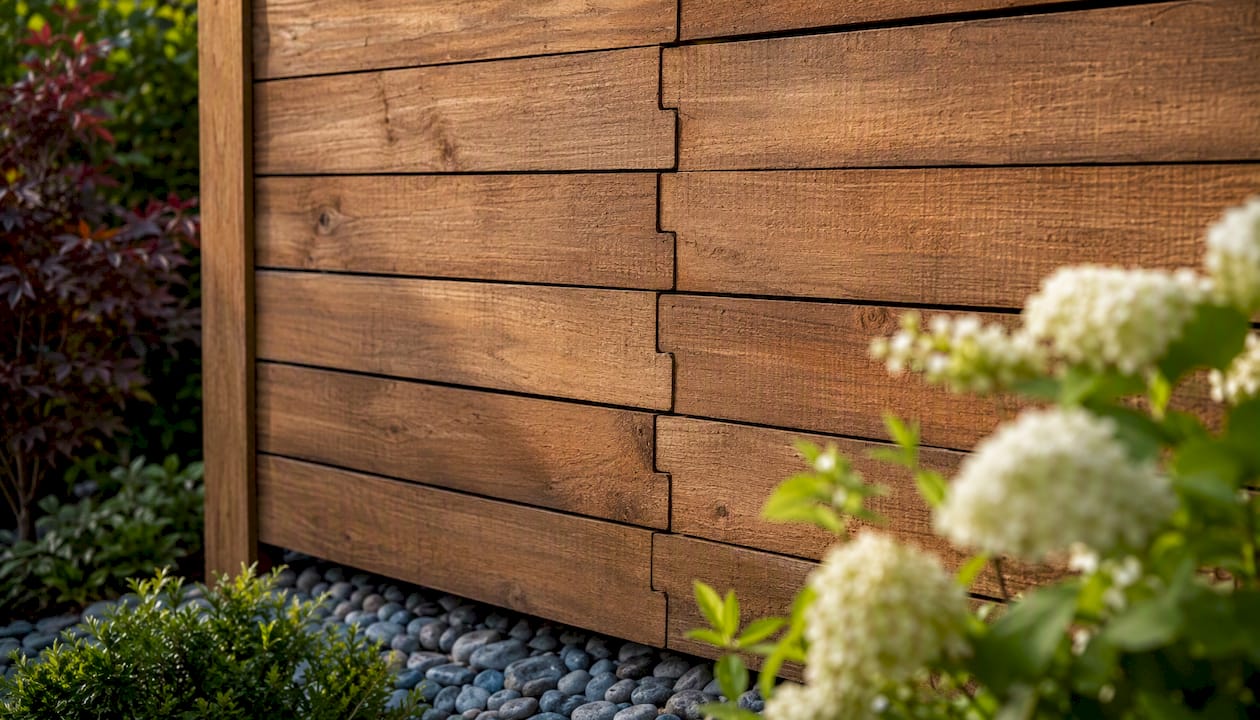
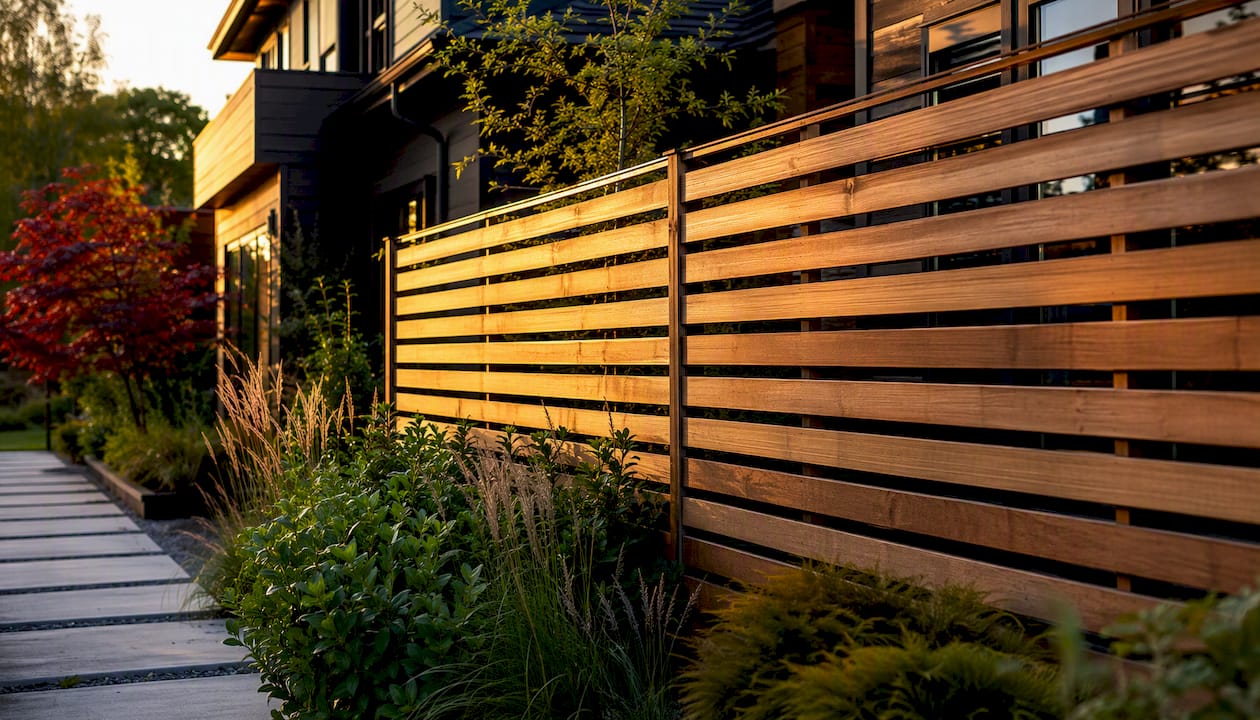
Horizontal slat Boards run horizontally rather than vertically, giving the fence a distinctly modern, architectural look. This is the dominant design trend for modern homes heading into 2026, and it pairs naturally with cedar, composite, or metal post systems. Privacy level depends on board spacing; tight spacing achieves near-full coverage. Gallery callout: wide shot of the full fence run against a contemporary home exterior.
Lattice-top A solid lower panel topped with a decorative lattice section. Privacy is high at the lower zone and open at the top, which suits homeowners who want light and airflow above fence height without sacrificing seclusion at eye level. Common in cottage and traditional gardens. Gallery callout: angled shot showing the lattice cap against climbing plants.
Masonry or solid wall Brick, concrete block, or stone walls offer maximum privacy, the best noise reduction of any fence type, and essentially permanent structure. They require structural footings below frost depth and carry the highest upfront cost. Best for urban lots, pool enclosures, or anywhere noise reduction is a primary goal. Gallery callout: wide shot showing the wall’s texture and the clean sightline block from street level.
Living hedge or green fence Arborvitae, privet, or bamboo planted in a tight row creates a natural privacy screen over two to five years. Zero hard-material cost upfront, but requires consistent watering, trimming, and patience. Works best as a supplement to a fence rather than a standalone solution in most U.S. climates.
Basket weave and louvered (optional) Basket weave interlaces boards for a woven texture; louvered fences use angled slats that block sightlines while allowing airflow. Both are less common but worth considering for decorative side yards or pool areas where ventilation matters.
2. How do wood, vinyl, composite, metal, masonry, and bamboo compare?
| Material | Privacy level | Durability / lifespan | Maintenance | Installed cost (per linear foot) | Best architectural fit | Noise reduction |
|---|---|---|---|---|---|---|
| Cedar wood | 95–100% (solid styles) | 15–20 years | Stain/seal every 2–4 years | $15–$30 | Traditional, farmhouse, craftsman | Moderate |
| Pressure-treated pine | 95–100% | 20–25 years | Stain/seal every 3–5 years | $12–$25 | Traditional, utilitarian | Moderate |
| Vinyl (solid panel) | 95–100% | 25–30 years | Annual rinse | $15–$30 | Contemporary, colonial | Moderate |
| Composite | 95–100% | 20–30 years | Annual rinse | $25–$45 | Modern, transitional | Moderate |
| Metal panels (steel/aluminum) | 80–95% | 30–50 years | Occasional rust treatment (steel) | $15–$30 | Industrial, modern | Low |
| Masonry (brick/block/stone) | 100% | 50+ years | Repointing every 10–20 years | $40–$100+ | Urban, Mediterranean, formal | High |
| Bamboo | 80–95% | 5–15 years | Annual sealing in wet climates | $10–$25 | Tropical, coastal, zen | Low |
Quick material notes:
- Cedar vs. pressure-treated pine: Cedar resists rot and insects naturally and holds stain well. Pressure-treated pine costs less upfront but can warp more in humid climates like Kansas City summers.
- Vinyl: Vinyl fences last 25–30 years with UV inhibitors built into the material. No painting, no staining. The tradeoff is a higher upfront cost than wood and limited repairability if a panel cracks. See vinyl fence color options and trends for design ideas.
- Composite: Looks like wood, performs closer to vinyl. Higher upfront cost than both, but the lifetime math often favors it over cedar when you factor in staining labor.
- Metal panels: Steel and aluminum panels are extremely durable, but most metal fence designs are ornamental rather than fully solid. True privacy metal panels exist but cost significantly more.
- Masonry: The best noise reducer by a wide margin, and the only option that genuinely adds structural permanence to a property. Requires concrete footings below frost depth, which adds to both cost and installation time.
- Bamboo: Attractive and eco-friendly, but durability varies sharply by climate. In high-humidity or freeze-thaw regions, untreated bamboo can degrade in under five years.
Climate note: In Kansas City, freeze-thaw cycles stress wood posts and bamboo significantly. Vinyl and composite handle temperature swings better. Salt-air coastal climates favor vinyl, composite, or aluminum over steel or untreated wood.
3. How do you choose the right privacy fence style for your yard?
Defining the fence’s primary job is the single most important step. Privacy, noise reduction, wind control, containment, and curb appeal each point toward different style and material combinations. Work through this checklist before you call a contractor.
Step 1: Measure and map your sightlines Walk your property at the times of day when privacy matters most. Note exactly where neighbors, streets, or second-story windows have a direct view.
Step 2: Evaluate wind exposure and drainage An exposed lot or a fence run along a prevailing wind corridor needs a style that allows some airflow. Shadowbox reduces wind load by roughly 40–50% compared to a solid panel, according to fence performance data from Preferred Fence NY. Also check whether the fence line crosses a drainage swale or low spot, which affects post depth and footing design.
Step 3: Confirm property lines and utilities Order a property survey if your lines are not clearly marked. Call 811 (the national dig-safe hotline) to locate underground utilities before any post is set. Setting a post on a neighbor’s property or through a utility line creates expensive problems.
Step 4: Check HOA rules and local permits Most municipalities cap residential fence height at 6 feet in rear yards and 4 feet in front yards, but local codes vary. HOA covenants often restrict materials, colors, and styles further. Pull both before you finalize a style.
Step 5: Shortlist two styles and materials Match your answers from steps 1–4 to the style catalog above. Narrow to two options, then price both with a contractor. The cost difference between, say, cedar board-on-board and vinyl solid panel often surprises homeowners when lifetime maintenance is included.
Step 6: Get contractor bids Ask at least two contractors to bid the same scope: same height, same linear footage, same post depth. That makes bids comparable. Ask each contractor how they handle post footings, what fasteners they use, and whether they pull the permit.
Key questions to answer before you pick:
- Do you need 100% visual block, or is 80% sufficient?
- Is the fence line exposed to prevailing winds?
- Does your HOA restrict materials or colors?
- How much annual maintenance are you willing to do?
- What is your 10-year budget, not just the upfront cost?
4. What permits and HOA rules apply to privacy fences in the U.S.?
Always check local building code, a plot survey, utility locates, and HOA covenants before you buy or build. Skipping any one of these steps can mean tearing out a finished fence.
What to verify with your municipality:
- Maximum allowed height (typically 6 feet rear, 4 feet front, but varies by city and zoning district)
- Required setback from property line (often 2–6 inches, sometimes more)
- Permit triggers (most cities require a permit for fences over 6 feet or in flood zones)
- Pool-barrier requirements if the fence encloses a pool (these are governed by local code and sometimes state law)
- Post-set depth requirements, especially in high-wind zones or frost-prone areas
What to verify with your HOA:
- Approved materials and colors (some HOAs prohibit chain link or require specific wood species)
- Style restrictions (some prohibit solid walls or require “good neighbor” designs)
- Approval process and timeline before construction begins
Standard pre-construction steps:
- Order a property survey to confirm your boundary lines
- Call 811 at least three business days before digging to locate underground utilities
- Submit permit application with a site plan showing fence location, height, and materials
State and local variance is significant. A fence that is fully permitted in one Kansas City suburb may require a variance in the next. Verify your specific address with the local building department, not a neighbor’s experience.
5. What does a privacy fence cost, and how long will it last?
Privacy fences typically cost $15–$30 per linear foot installed for standard styles and materials. That range widens considerably at the high end for masonry or premium composite.
| Style / material pairing | Installed cost (per linear foot) | Typical lifespan | Maintenance level |
|---|---|---|---|
| Cedar board-on-board | $15–$30 | 15–20 years | Moderate (stain every 2–4 years) |
| Pressure-treated pine stockade | $12–$22 | 20–25 years | Low-moderate |
| Vinyl solid panel | $15–$30 | 25–30 years | Low (annual rinse) |
| Composite panel | $25–$45 | 20–30 years | Low |
| Horizontal cedar slat | $15–$30 | 15–20 years | Moderate |
| Masonry (brick/block) | $40–$100+ | 50+ years | Low (repointing) |
Main cost drivers:
- Material: Wood is cheapest upfront; masonry is most expensive.
- Height: Every additional foot of height adds material and labor cost.
- Site prep: Rocky soil, slopes, or drainage issues increase excavation time.
- Post depth: Frost-line requirements in Kansas City push posts deeper, adding concrete and labor.
- Finishing: Staining or painting wood at installation adds $2–$5 per linear foot.
Horizontal slat fences cost 15–25% more than a standard vertical fence because they require higher-grade, straighter lumber and more precise framing to keep the horizontal lines true over a long run.
When the higher upfront cost pays off: Vinyl and composite cost more than cedar at installation but eliminate staining labor entirely. Over a 20-year period, the lifetime cost of a vinyl fence often matches or beats cedar when you price in two to four staining cycles. For homeowners who want to compare vinyl versus wood in detail, the math is worth running before committing to wood.
6. How do you maintain a privacy fence to make it last?
Maintenance frequency depends almost entirely on material. Wood needs the most attention; vinyl and composite need the least.
Annual tasks (every material):
- Visual inspection for leaning posts, loose boards, and damaged hardware
- Wash the fence surface with a garden hose or low-pressure washer to remove dirt, mold, and algae
- Clear soil, mulch, and plant debris from the fence base to prevent moisture retention
Every 2–4 years (wood fences):
- Sand any rough or splintering surfaces
- Apply a penetrating stain or sealant rated for exterior wood
- Replace any boards showing rot, especially at the bottom rail
Every 5–10 years (all materials):
- Check post bases for rot or corrosion at the soil line
- Inspect and tighten or replace gate hardware
- Repoint masonry joints if gaps or crumbling appear
After major storms:
- Check for leaning or displaced posts
- Inspect the fence line for debris impact damage
- Confirm gate alignment has not shifted
Pro tips:
Pro Tip: Set posts in concrete footings that extend 2–4 inches above grade so water drains away from the wood rather than pooling at the base. This single detail extends post life by years.
Pro Tip: Leave a 2-inch gap between the bottom rail and soil. Ground contact accelerates rot on wood and can stain vinyl. Gravel beneath the fence line helps drainage.
Use galvanized or stainless-steel fasteners throughout. Standard steel screws rust within a few seasons in Kansas City’s wet springs, and rust streaks are nearly impossible to remove from vinyl or composite panels. For Kansas City-specific maintenance guidance, freeze-thaw cycles make annual post inspections especially important.
7. How a professional contractor selects the right fence
Contractors start by defining the fence’s job: privacy, noise reduction, wind control, containment, or curb appeal. That answer drives every material and style decision that follows.
Contractor site assessment checklist:
- Measure the full fence run and note grade changes or slopes
- Evaluate soil type (clay, sandy, rocky) to determine post depth and footing size
- Assess wind exposure and identify any drainage paths the fence line crosses
- Verify property lines against survey or plat map
- Confirm HOA approval requirements and local permit triggers
- Identify underground utilities (811 locate)
- Note proximity to trees whose roots could displace posts over time
How style selection plays out in practice:
On an exposed lot with a noise concern near a busy road, a contractor will typically recommend masonry or a solid composite panel with concrete footings. The noise reduction and permanence justify the higher cost. On a shared property line with an HOA that requires a “good neighbor” design, shadowbox or board-on-board are the natural choices because both sides of the fence look finished and neither style is typically restricted.
For homeowners weighing whether to manage installation themselves, professional versus DIY installation comes down to post-setting accuracy and permit handling. A post set at the wrong depth or off the property line creates problems that cost more to fix than the original installation savings.
Trew Landscape LLC’s fencing services cover site assessment, permit coordination, material selection, and full installation across Kansas City.
What Trew Landscape LLC actually recommends
Most homeowners come to us having already picked a style based on a photo they liked. That is a fine starting point, but the style that photographs beautifully in a mild Pacific Northwest climate may not hold up the same way through a Kansas City winter. Function has to come first.
The tradeoff we see most often: a homeowner wants the clean look of a horizontal cedar fence but does not want to stain it every two years. The honest answer is that horizontal cedar requires more maintenance than vertical cedar because water sits on the horizontal board faces rather than running off. Composite horizontal slats solve that problem, but the upfront cost is higher. Most homeowners, once they see the 10-year cost comparison, choose composite or vinyl without hesitation.
Privacy fencing is one of the highest-return investments in a yard, both for daily quality of life and for property value. Get the style right for your site, not just for your mood board.
Ready to fence your Kansas City yard?
Trew Landscape LLC gives you a single point of contact from site assessment through final installation, including permit coordination, so you are not juggling a surveyor, a permit office, and a contractor separately.
Services that commonly pair with a new fence project:
- Fencing installation — style selection, permitting, and full installation
- Hardscape design — retaining walls and concrete footings that anchor fence posts in challenging soil
- Landscape design — site planning that integrates the fence with your full yard layout
- Sod installation — restore the lawn along the fence line after post-setting is complete
Request an estimate or schedule a site visit at Trewlandscape to get a scoped bid for your specific lot and style.
Sources
- Privacy Fence Guide: Styles, Materials, and Sizing Tips — Modernize
- What is a privacy fence? How to design it & best materials — Gardeners Idea
- 8 Privacy Fence Styles Ranked: Board-on-Board, Shadowbox, Stockade & More — Fence Advisors
- Fence types for Florida: Wood vs Vinyl vs Aluminum — Durbin Creek Nursery
- Best Fence for Backyard Privacy in 2026: Styles, Costs & Ideas — BuyAFence
FAQ
Which type of privacy fence is best?
For low maintenance over the long run, solid vinyl panels are the strongest choice, lasting 25–30 years with minimal upkeep.
How do you block a neighbor’s view of your backyard?
A 6-foot board-on-board or solid vinyl panel fence along the shared property line eliminates most sightlines. Map the exact angles where visibility occurs before setting the fence run, since a shorter fence in the right position often outperforms a taller fence placed incorrectly.
What are the different types of fence styles?
Common privacy fence styles include board-on-board, stockade, shadowbox, tongue-and-groove, horizontal slat, lattice-top, masonry walls, and living hedges, each offering different privacy levels, maintenance demands, and visual character.
What is the cheapest style of privacy fence?
Pressure-treated pine stockade is typically the lowest-cost option, with installed prices starting around $12–$22 per linear foot. Cedar board-on-board runs slightly higher but holds up better over time in humid climates.