
Trew Landscape Blog
2–5 Year Signal: Stamped Concrete Maintenance and Records for Homeowners
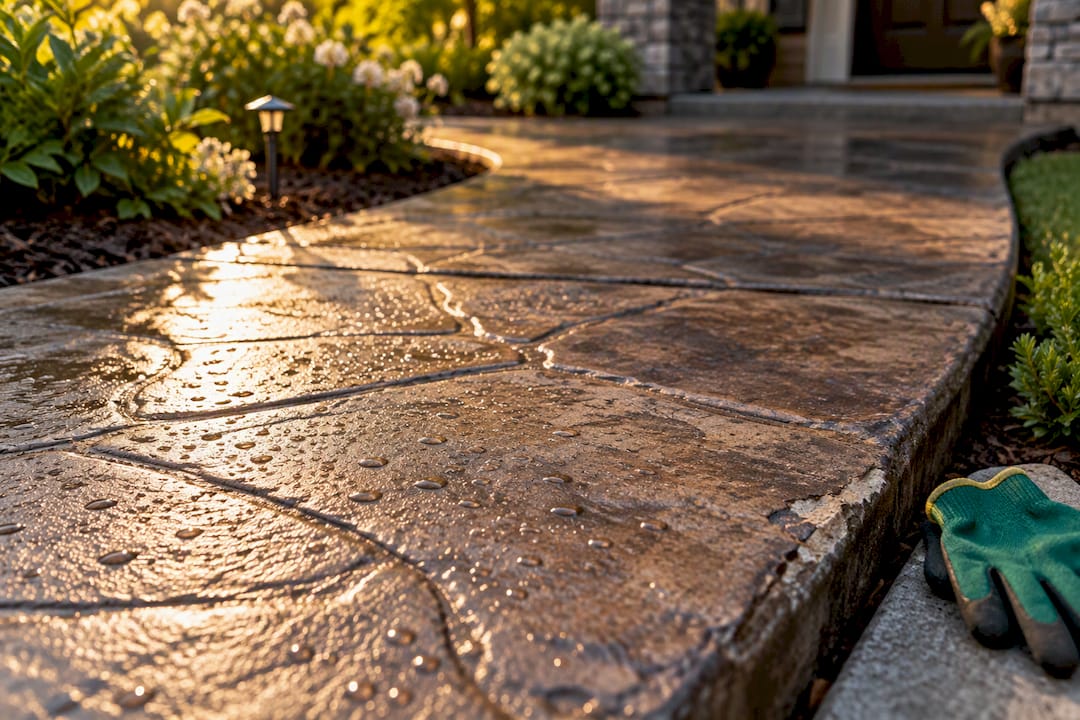
2–5 Year Signal: Stamped Concrete Maintenance and Records for Homeowners ! Water beading on maintained stamped concrete To keep stamped concrete looking and performing its best, keep it sealed, clean it regularly, and repair damage promptly.
2–5 Year Signal: Stamped Concrete Maintenance and Records for Homeowners
To keep stamped concrete looking and performing its best, keep it sealed, clean it regularly, and repair damage promptly. Reseal on an as-needed basis, watching for lost water beading or color fade rather than a fixed calendar. Most driveways and patios need a fresh coat roughly every 2 to 5 years, depending on traffic and sun exposure. Call a professional when you spot structural cracking, an unknown or failed sealer coat, or a job big enough to require full stripping and reseal.
TL;DR:
- Most stamped concrete requires resealing every 2 to 5 years, with the need driven by water beading and color fading rather than a fixed schedule.
- Routine maintenance includes weekly sweeping and rinsing, with sealant checks every few months to detect dull patches or flaking, avoiding harsh cleaners.
- Proper cleaning involves sweeping debris first, then washing with a pH-neutral detergent, thoroughly rinsing, and letting the surface dry at least 12 hours before resealing.
- Pressure washing should be done at 1,200 to 1,500 PSI with a fan tip and no closer than 12 inches to prevent damaging the sealer or pattern.
- Repairing cracks requires professional assessment for structural issues, with small cosmetic cracks repairable using color-matched caulk, while worsening or movement cracks need expert intervention.
Table of Contents
- Your Stamped Concrete Maintenance Checklist
- How to Clean Stamped Concrete Without Ruining It
- Removing Common Stains From Stamped Concrete
- Sealing Stamped Concrete the Right Way
- Repairing Cracks in Stamped Concrete
- Winter Care and Deicing Without the Damage
- Keep a Maintenance Record for Your Stamped Concrete
- A Practitioner’s Take on Stamped Concrete Care
- Professional Sealing and Repair Services From Trew Landscape
- Sources
- FAQ
Your Stamped Concrete Maintenance Checklist
Stamped concrete care breaks down into three rhythms: weekly, seasonal, and as-needed. Miss the weekly stuff and you’re doing damage control every spring.
- Weekly: Sweep or blow off leaves, dirt, and grit; rinse spills (drinks, grease, pet waste) before they set into the sealer.
- Monthly or seasonal: Wash the whole surface with a pH-neutral detergent and check for dull patches, flaking sealer, or new stains.
- As-needed: Splash water on a few spots. If it beads up, the sealer is still working. If it soaks in and darkens the concrete, it’s time to reseal.
- Never use: acid cleaners, vinegar, ammonia-based products, or abrasive scouring pads. They strip sealer and can etch the stamped pattern.
That water test takes ten seconds and saves you from guessing.
How to Clean Stamped Concrete Without Ruining It
Cleaning stamped concrete is mostly about sequence. Rush it and you push grit into the sealer or leave standing water that clouds a fresh coat.
- Clear debris first. A stiff broom or leaf blower gets rid of loose dirt, leaves, and sand before any water touches the surface.
- Wash with a pH-neutral detergent. Mix according to the label, usually a light dilution, and scrub with a medium-bristle brush. Avoid wire brushes, which scratch the sealer.
- Rinse thoroughly. Standing water left to dry on its own can leave mineral spots, so squeegee or blow off pooled water when possible.
- Let it dry fully. Give the surface 12 to 24 hours before applying any sealing best practices products, according to industry drying guidance.
Pressure washing works, but it’s the step most homeowners get wrong. Keep the nozzle 12 to 18 inches from the surface, use a fan tip rather than a pinpoint jet, and stay in the 1,200 to 1,500 PSI range for sealed decorative concrete. Anything higher risks chewing into the sealer or the stamped texture itself.
Pro Tip: Test any cleaner or pressure setting on a hidden corner first, like a spot near a planter bed. Wait for it to dry completely before judging the result. What looks fine wet can turn hazy or slick once it cures.
Removing Common Stains From Stamped Concrete
Different stains need different weapons. Treating them all the same way is how people end up bleaching a rust spot or scrubbing oil deeper into the pores.
- Oil and grease: Cover with an absorbent (cat litter or baking soda works), let it sit, then scrub with a concrete-safe degreaser and rinse well. Skip heavy solvent soaking, which can lift the sealer along with the stain.
- Rust: Use a rust remover formulated for concrete, not a generic household product, and always test a small area first since some formulas discolor certain sealers.
- Paint: Fresh drips often lift with a plastic scraper and warm water. Dried paint may need a chemical stripper, but check compatibility with your existing sealer before applying it broadly.
- Mildew and organic staining: An oxygenated cleaner or a diluted bleach solution handles most mildew and efflorescence, followed by a thorough rinse and, if bleach was used, a baking soda neutralizing rinse.
- Safety note: Wear gloves and eye protection with any of these products, and never mix bleach with ammonia-based cleaners.
Sealing Stamped Concrete the Right Way
Sealer choice determines almost everything about how your stamped concrete ages. There are three main categories, and picking the wrong one for your climate or traffic level is the single biggest maintenance mistake homeowners make.
- Penetrating sealers soak into the concrete and repel water without changing the surface look much. They breathe well and hold up to UV exposure, but they don’t restore color or gloss.
- Topical (film-forming) sealers sit on the surface, deepen color, and add sheen. They look great fresh but need more careful reapplication and can peel if applied over moisture or a failed prior coat.
- Hybrid sealers blend some penetrating properties with a thin film layer, aiming for a middle ground between durability and appearance.
Before resealing, remove any failed or incompatible coating through stripping, light sandblasting, or pressure washing, and if a release powder from the original stamping process is still present, an acid wash followed by careful neutralization may be needed. Always run a test patch first.
Application matters as much as the product. The ASCC’s decorative concrete guidance recommends a spray-and-back-roll method, applying two thin coats rather than one heavy one, with coverage running roughly 200 to 350 square feet per gallon depending on the product. Avoid sealing in direct sun or high heat, since the sealer can flash-dry unevenly, and give it the manufacturer’s full cure time before letting foot or vehicle traffic back on.
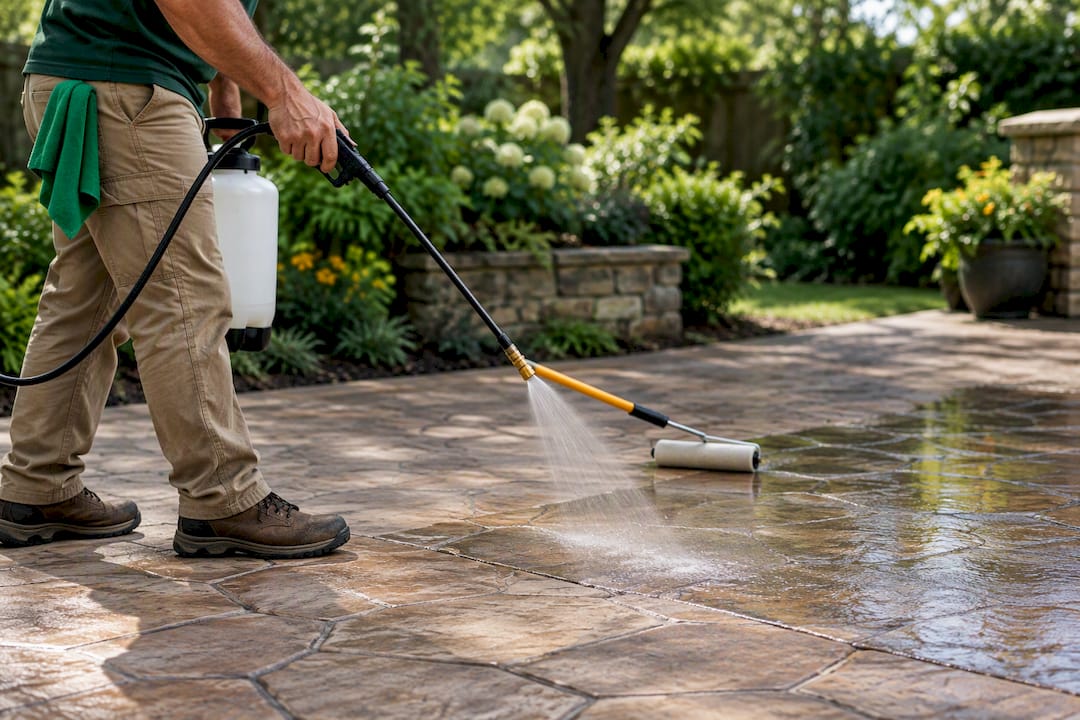
Pro Tip: Resist the urge to reseal every year just to keep that glossy showroom look. Layering fresh sealer over sealer that hasn’t actually failed builds up film that eventually peels or hazes, and stripping that buildup costs far more than waiting an extra year would have.
Skip the calendar and watch the surface instead: lost water beading, fading color, or visible flaking are your real cues to reseal, not a date on the wall.
Repairing Cracks in Stamped Concrete
Not every crack means trouble, but knowing the difference between a cosmetic issue and a structural one saves you from a bad decision either way.
- Hairline cracks that don’t move or widen over seasons are usually cosmetic and can often be filled with a cementitious repair caulk matched to the surrounding color.
- Movement or structural cracks (ones that widen, shift, or come with a dip or heave in the slab) point to subbase settlement or undermining, and patching them cosmetically just hides a bigger problem.
- DIY-friendly fixes include small caulk repairs and thin patch overlays on isolated surface chips, always after cleaning and drying the damaged area.
- Call a professional for widening cracks, repeated failures in the same spot, or any sign the slab has shifted. A concrete contractor can assess whether the subbase itself needs work, similar to how drywall cracking often signals a structural issue worth investigating rather than just patching over.
- Keep a repair log: date, material used, and method, so the next repair or reseal uses something compatible.
Winter Care and Deicing Without the Damage
Freeze-thaw cycles and rock salt are hard on any concrete, but stamped surfaces with a film-forming sealer take the hit harder because salt crystals can wedge under the coating.
- Skip sodium chloride rock salt when you can; sand or a calcium magnesium acetate traction product is gentler on both the sealer and the slab.
- Rinse off any leftover deicer residue once temperatures warm up in spring, before it has a chance to draw moisture into the pores.
- Shovel with a plastic blade, not metal, to avoid gouging the sealer, and clear standing water before it refreezes.
- Handle sealing and crack repairs before the first hard freeze each year. Chris Sullivan’s diagnostic approach to stamped concrete maintenance stresses catching problems before winter locks them in, not after. For Kansas City properties specifically, seasonal freeze-thaw exposure makes this timing even more important.
Keep a Maintenance Record for Your Stamped Concrete
A simple maintenance log turns guesswork into decisions. The ACI’s decorative concrete guide recommends documenting installer, original sealer brand and type, installation and cure dates, every cleaning and reseal date, and repair notes tied to environmental exposure.
- Why it matters: knowing what sealer is already down prevents applying an incompatible product that peels or hazes within a season.
- What to track: location, product name and resin type, application weather, and the date traffic resumed.
- Format: a shared spreadsheet works fine for a homeowner; property managers juggling multiple sites benefit from a shared folder so maintenance teams don’t have to guess what was used last time.
- Always test first: apply any new cleaner or sealer to a small hidden patch and check for color change, haze, or slipperiness before treating the whole surface.
A Practitioner’s Take on Stamped Concrete Care
Diagnostic maintenance beats routine maintenance every time: clean, inspect, test a patch, then decide whether to reseal or repair. The biggest mistakes we see are resealing too soon and skipping release powder removal before a new coat goes down. If you’re unsure what’s already on your concrete, get an assessment before you touch it.
— Trew Landscape LLC
Professional Sealing and Repair Services From Trew Landscape
Professional sealing and repair services are the local alternative to guessing your way through a reseal job. We handle the diagnostic work first, testing what’s already on your concrete, checking the subbase for movement, and matching sealer chemistry before anything goes down, rather than just spraying a new coat over whatever failed the first time.

Our concrete contractor team handles sealing, resealing, crack repair, and full patching for stamped patios, driveways, and walkways across the Kansas City area. If your stamped concrete has lost its water beading, developed a spreading crack, or you simply inherited a property with no maintenance history, that’s exactly the kind of job worth a professional look. You can also browse our broader hardscape design work if you’re considering an overlay or a full patio redesign alongside repairs. Request an inspection or estimate through our main services page and we’ll tell you honestly whether you need a reseal, a repair, or just a good cleaning.
Sources
- Sealing Stamped Concrete: Best practices (ASCC/DCC excerpt, March 2025)
- Sealing Stamped Concrete: How to Keep It Looking Great for Years - Concrete Network
FAQ
What Does Stamped Concrete Maintenance Actually Involve?
Stamped concrete maintenance means routine sweeping and rinsing, periodic washing with a pH-neutral cleaner, and resealing when water no longer beads on the surface. It also includes prompt repair of chips or cracks so small issues don’t spread. Following ACI’s maintenance guidance on documentation makes each future decision easier.
How Often Should You Seal Stamped Concrete?
There’s no fixed schedule. Most stamped concrete needs resealing every 2 to 5 years depending on foot and vehicle traffic, sun exposure, and climate. Watch for lost water beading or fading color as your real signal rather than counting years.
Is Stamped Concrete High Maintenance?
Stamped concrete isn’t high maintenance, but it isn’t zero maintenance either. It needs the same regular sweeping and washing as any patio surface, plus an occasional reseal that most owners can handle themselves or hire out for a modest job.
What Are the Drawbacks of Stamped Concrete?
The main drawbacks are the need for periodic resealing, sensitivity to harsh chemicals like acid or vinegar, and the risk of slipperiness when a topical sealer wears thin. Cracks can also be trickier to patch invisibly than plain concrete because of the textured pattern.
Can I Pressure Wash Stamped Concrete Safely?
Yes, if you keep the pressure in the 1,200 to 1,500 PSI range and hold the nozzle at least 12 inches from the surface using a fan tip. Higher pressure or a pinpoint nozzle can strip the sealer or damage the stamped texture.