
Trew Landscape Blog
Yard Drainage Solutions for Kansas City Homeowners
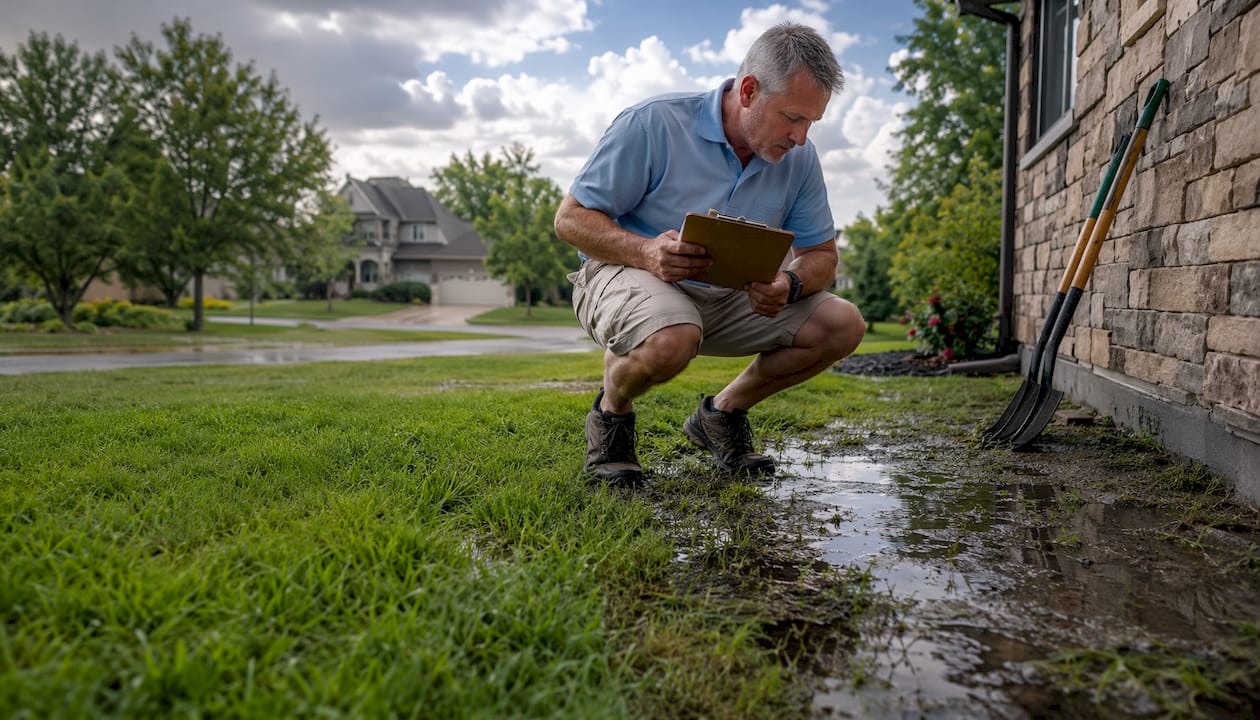
Yard Drainage Solutions for Kansas City Homeowners ! Landscaper inspecting yard water pooling > TL;DR: > > - A site assessment focused on slope correction and downspout management can often resolve yard ponding issues in Kansas City.
Yard Drainage Solutions for Kansas City Homeowners
TL;DR:
- A site assessment focused on slope correction and downspout management can often resolve yard ponding issues in Kansas City. If those simple fixes fail, subsurface drainage solutions like French drains and drain tile are effective for persistent saturation. Proper outlet verification and professional installation ensure long-term, legal, and efficient water management.
If your yard is holding water after every rain, the smartest first move is to schedule an on-site assessment with a local Kansas City contractor before buying a single foot of pipe. Trew Landscape LLC diagnoses drainage problems across the KC metro, and the right fix often starts with something simple: correcting the yard’s slope to a moderate grade between gentle and moderate (a small drop per 100 feet) and extending downspouts a few feet away from the foundation. Those two adjustments alone resolve a surprising number of ponding problems. Only after ruling them out should subsurface work like French drains or drain tile enter the conversation.
Table of Contents
- What yard drainage problems look like in Kansas City
- What are the best yard drainage solutions for your yard?
- How much does it cost to fix backyard drainage?
- What does a contractor check during an on-site drainage assessment?
- How do you choose a reliable drainage contractor in Kansas City?
- What happens during a professional drainage installation?
- How Trew Landscape LLC approaches drainage projects in Kansas City
- Key Takeaways
- What most drainage guides get wrong about Kansas City yards
- Trew Landscape LLC serves Kansas City homeowners with drainage solutions that last
- Useful sources
- FAQ
What yard drainage problems look like in Kansas City
Knowing what to describe to a contractor speeds up diagnosis considerably. Here are the most common symptoms KC homeowners report:
- Surface ponding — water sits in low spots for hours or days after rain, even on flat ground
- Chronically soggy lawn — turf stays soft and spongy well after surrounding areas dry out
- Water near the foundation — pooling against the house, basement entry, or window wells
- Slope erosion — mulch, soil, or gravel washing downhill during storms
- Saturated low spots — persistent wet patches that never fully dry between rain events
When you call a contractor, note the timing: does water appear within the first 30 minutes of rain (surface runoff) or does it linger for 48 hours or more (subsurface saturation or poor infiltration)? That distinction shapes the entire solution. Photos taken immediately after a storm are worth more than any description.
What are the best yard drainage solutions for your yard?
Match the fix to the water source. Surface runoff calls for grading corrections and downspout management. Saturated soil calls for subsurface drains. High water tables near basements call for sump pumps. Most KC yards need a combination.
Surface and grading fixes
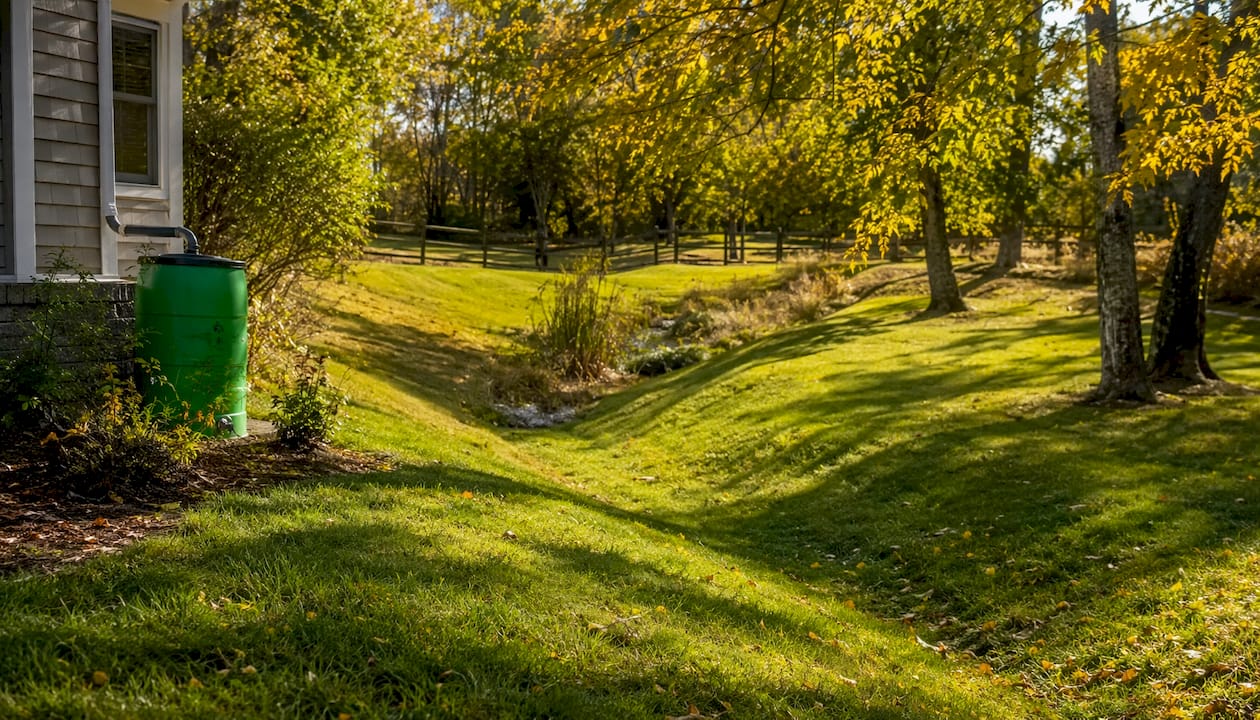
Regrading is the first tool a good contractor reaches for. A yard sloping toward the house sends water straight to the foundation; reshaping it to a minimum gentle slope near the foundation redirects that flow before it becomes a buried problem. Downspout extensions and buried downspout pipes move concentrated roof runoff away from the foundation zone. A 2,000-square-foot roof generates roughly 1,200 gallons of runoff per inch of rainfall, so managing that volume matters.
Swales and berms work well when water moves visibly across the surface. A shallow grass swale slows and redirects sheet flow and is easier to inspect and maintain than any buried system.
Subsurface drainage systems
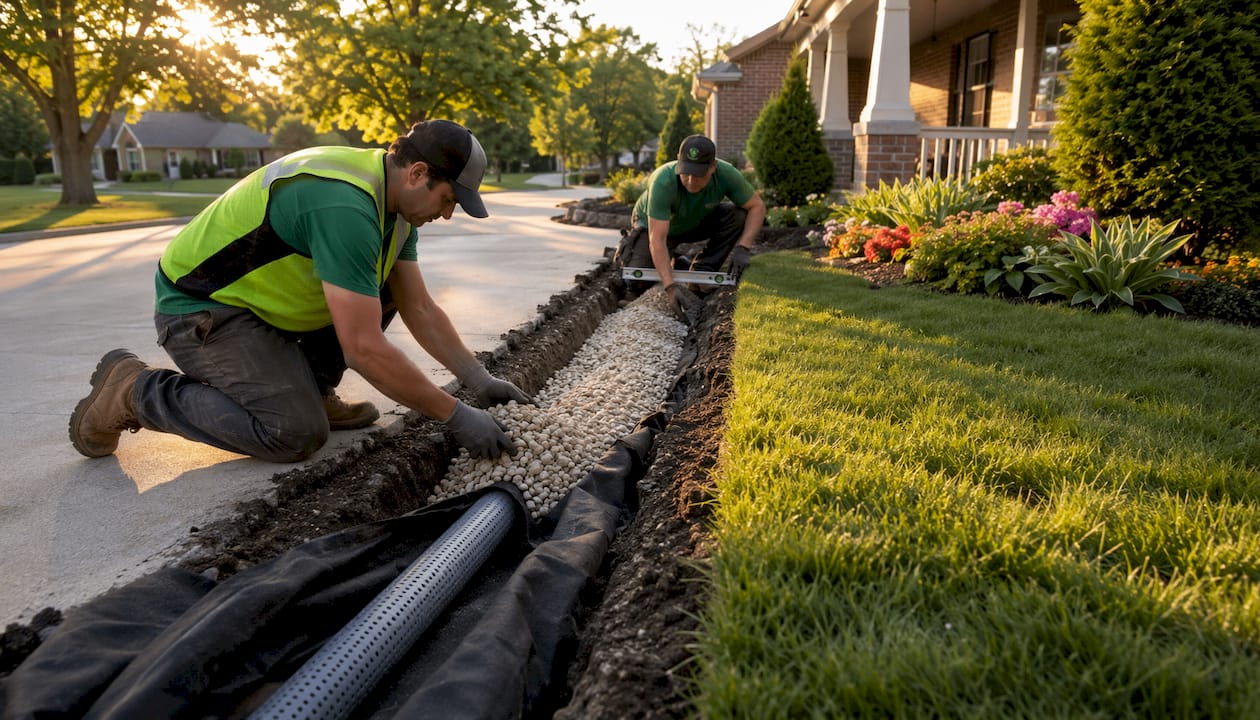
French drains and perforated drain tile intercept water moving through or sitting in the soil. A typical installation involves a trench 18–24 inches deep, lined with geotextile filter fabric, filled with washed gravel, and fitted with a perforated pipe that carries water to a legal outlet. Kansas City’s clay-heavy soils restrict infiltration significantly, so filter fabric and a generous gravel envelope around the pipe are non-negotiable for long-term performance.
Channel drains, catch basins, and surface drains collect water at hardscape edges, patio low points, and driveways where surface shaping alone cannot move water fast enough. Dry creek beds armor and guide water along a repeated flow path, protecting planting beds and mulch from washout.
Retaining walls and sump pumps
Retaining walls stabilize slopes and can incorporate drainage behind the wall to prevent hydrostatic pressure buildup. For basements or crawl spaces with high water tables, a sump pit and pump system collects water at the lowest point and discharges it away from the structure. When space or outlet runs are limited, pairing subsurface drains with a sump pump moves water to a legal discharge point without relying on gravity alone.
Pro Tip: Always confirm the outlet before specifying any system. A French drain or catch basin that discharges into another low spot, onto a neighbor’s property, or across a sidewalk creates a new problem. Verify both the physical capacity and the legal acceptability of the discharge point before any digging starts.
How much does it cost to fix backyard drainage?
Cost varies widely based on scope, soil conditions, outlet complexity, and whether permits are required. Clay soil means more excavation labor and more gravel. A long outlet run adds pipe and trenching costs. Here are realistic ballpark ranges for the Kansas City area:
| Fix type | Typical range | Notes |
|---|---|---|
| Grading/downspout correction | $300–$1,500 | Often the first and cheapest fix |
| Channel drain or catch basin | $500–$2,000 | Depends on run length and outlet |
| French drain / drain tile | $1,500 and up | Per project; clay soil increases cost |
| Sump pump installation | $1,000 to $3,000 | Includes pit, pump, and discharge line |
| Full site drainage system | $5,000–$15,000+ | Combined grading, subsurface, and restoration |
Timeline expectations:
- Site assessment to written estimate: 2–7 days
- Small grading or downspout fix: 1 day
- French drain or drain tile project: 1–3 days of active work, plus scheduling lead time
- Larger projects with retaining walls or full regrading: 1–2 weeks or more
Factors that stretch both cost and schedule: clay soil requiring extra excavation, hidden utilities, required permits, limited equipment access, and long outlet runs to a legal discharge point.
What does a contractor check during an on-site drainage assessment?
An on-site diagnostic visit is the only reliable way to determine water paths, soil behavior, and feasible outlet options before committing to a design. A thorough assessment covers:
- Measure existing slope and identify negative grades toward structures
- Evaluate soil type and infiltration rate (critical in KC clay)
- Locate utilities, septic lines, and any existing drainage infrastructure
- Identify low spots, water entry points to the foundation, and basement risk zones
- Test downspout capacity and current discharge distance
- Inspect existing outlet condition and legal discharge path
- Walk property lines to assess neighbor runoff contributions
Pro Tip: Ask the contractor to physically show you the proposed outlet location and explain how it handles peak storm flow. If they cannot answer that question on-site, that is a red flag.
How do you choose a reliable drainage contractor in Kansas City?
Start here: hire a licensed, insured contractor who visits the site, provides a written scope with a drawing, and backs the work with a warranty. Then verify the details.
What to ask and confirm:
- Proof of current insurance and licensing
- Before-and-after photos from local KC projects
- References from homeowners in the area
- A detailed, line-item written estimate
- A specified outlet and discharge plan in writing
- Warranty terms covering both materials and workmanship
- Timeline, staging, and clean-up expectations
Red flags to watch for:
- Verbal-only estimates with no written scope
- Recommending subsurface work without tracing the water path or showing the outlet
- Vague descriptions like “we’ll put in a French drain” with no outlet plan
- Pressure to sign quickly or pay a large deposit upfront
- No local references or portfolio photos
Standing water near your home is also prime mosquito habitat. If you are addressing drainage, it is worth knowing that mosquito control systems can complement the fix once water is moving correctly.
What happens during a professional drainage installation?
Installations follow a predictable sequence. Here is what to expect once work begins:
- Pre-construction marking — utility locates completed, work zones flagged, access confirmed
- Excavation — trenching or regrading per the approved plan
- Pipe and gravel installation — filter fabric laid, gravel base placed, perforated pipe set, gravel backfilled around pipe
- Outlet construction — discharge point built and secured (pop-up emitter, channel, or municipal connection)
- Testing — water run through the system to confirm flow and outlet function
- Backfill and compaction — trench filled and compacted to prevent settling
- Surface restoration — sod, pavers, or hardscape repairs completed to match surrounding areas
- Final walk-through — contractor reviews the system, explains maintenance, and confirms warranty
After installation, run a hose through the system during the next storm and verify the outlet is flowing freely. Request as-built notes showing pipe locations and depths for future reference.
How Trew Landscape LLC approaches drainage projects in Kansas City
Trew Landscape LLC uses a diagnostic-first approach to every drainage project: on-site slope measurements, soil assessment, outlet verification, and a written scope before any work begins. Their services cover the full range of outdoor drainage solutions, from targeted grading and buried downspout extensions to drain tile installation, channel drains, catch basins, and retaining-wall tie-ins for slope stabilization.
What sets a Trew Landscape project apart is the restoration work that follows. After trenching, they restore the surface with sod, pavers, or concrete so the yard looks finished, not patched. Before-and-after photos and a written warranty are standard. Free estimates are available for KC homeowners ready to get a diagnosis.
- On-site assessment and slope measurement
- Grading corrections and downspout management
- Drain tile and French drain installation with filter fabric
- Channel drains, catch basins, and surface drains
- Retaining-wall drainage tie-ins
- Full surface restoration: sod, pavers, or hardscape repair
Key Takeaways
The most effective approach to yard drainage in Kansas City is a diagnosis-first workflow: confirm the water path, fix grading and downspouts first, then add subsurface drains only where surface fixes are insufficient.
| Point | Details |
|---|---|
| Diagnose before you dig | A site assessment identifies water paths and outlet options before any fix is chosen. |
| Grading and downspouts first | A 2–5% slope and 6–10 ft downspout discharge resolve many ponding problems without subsurface work. |
| Outlet planning is non-negotiable | Every system needs a legal, capacity-verified discharge point before installation begins. |
| KC clay soil changes the spec | Clay soils require filter fabric, a generous gravel envelope, and professional pipe sizing. |
| Trew Landscape LLC | Offers free on-site estimates, drain tile installation, grading, and full surface restoration for KC homeowners. |
What most drainage guides get wrong about Kansas City yards
The standard advice to “install a French drain” skips the most important step: reading the water path first. In Kansas City, clay soil is the variable that changes everything. Clay does not absorb water the way sandy or loamy soil does, so a French drain installed without proper filter fabric and gravel specification will clog within a few seasons and fail quietly. Homeowners often do not notice until the soggy lawn is back and the buried pipe is full of silt.
The other mistake is treating the outlet as an afterthought. A system that moves water from your yard to your neighbor’s yard is not a solution. It is a liability. Before any contractor starts digging, the outlet location should be confirmed, shown to the homeowner, and documented in the written scope.
DIY subsurface installs are particularly risky here. Without utility locates, soil assessment, and outlet verification, a homeowner can damage buried lines, create new drainage problems, or install a system that violates local discharge rules. The cost of a professional diagnosis is small compared to fixing a failed DIY install.
Trew Landscape LLC serves Kansas City homeowners with drainage solutions that last
Persistent yard flooding does not fix itself, and the wrong fix wastes money. Trew Landscape LLC offers Kansas City homeowners a straightforward path: a free on-site drainage assessment, a written scope with outlet planning, and professional installation backed by a workmanship warranty.

Services include grading and excavation, drain tile and French drain installation, channel drains, catch basins, retaining-wall drainage tie-ins, and complete surface restoration with sod or pavers. Every project starts with a site visit, not a guess. Request your free estimate at Trew Landscape LLC and get a drainage plan built for your yard, your soil, and your KC lot conditions.
Useful sources
- Trew Landscape LLC — Landscape Drainage Installation: Service detail page covering Trew’s drainage installation process, drain tile, and site restoration for KC homeowners.
- Trew Landscape LLC — Drain Tile Service: Primary service page for French drain and drain tile installations in the Kansas City area.
- Trew Landscape LLC — Land Grading and Excavation: Explains grading and excavation services and how proper site prep protects yards.
- Dallas Drainage Pros — Grading Guidance: Technical reference for residential slope recommendations (2–5%) and downspout discharge distances (6–10 ft).
- US Residential Drainage Guide — Low Point Labs: Detailed breakdown of soil types, drainage solutions, and regional considerations including clay-soil specifications.
- Yard Drainage Solution Guide — The Garden Scene: Practical guide to matching drainage fixes to specific water-path failures.
FAQ
How much does it cost to fix backyard drainage?
Most Kansas City backyard drainage projects range from $300–$1,500 for simple grading and downspout corrections up to $5,000–$15,000 or more for full site systems with drain tile, retaining walls, and surface restoration. Scope, clay soil conditions, and outlet complexity drive the final number.
What is the best drainage system for a backyard?
The best system matches the water source: grading and downspout extensions for surface runoff, French drains or drain tile for subsurface saturation, and sump pumps for high water tables. Most KC yards benefit from combining surface grading with targeted subsurface drainage.
How do I fix bad drainage in my yard?
Start with a site assessment to trace the water path before buying materials. Fix grading to a 2–5% slope away from the house and extend downspouts 6–10 feet from the foundation first. If soggy areas persist after those corrections, subsurface drain tile or a French drain is the next step.
How do I divert water runoff from a neighbor’s yard?
A swale, berm, or curtain drain installed along the property line can intercept and redirect incoming surface flow. Any discharge point must stay on your property or connect to a legal outlet. Trew Landscape LLC can assess the property line conditions and design a solution that handles neighbor runoff without creating a new problem downstream.