
Trew Landscape Blog
Plan, Phase, Build: Backyard Landscaping for Kansas City Yards
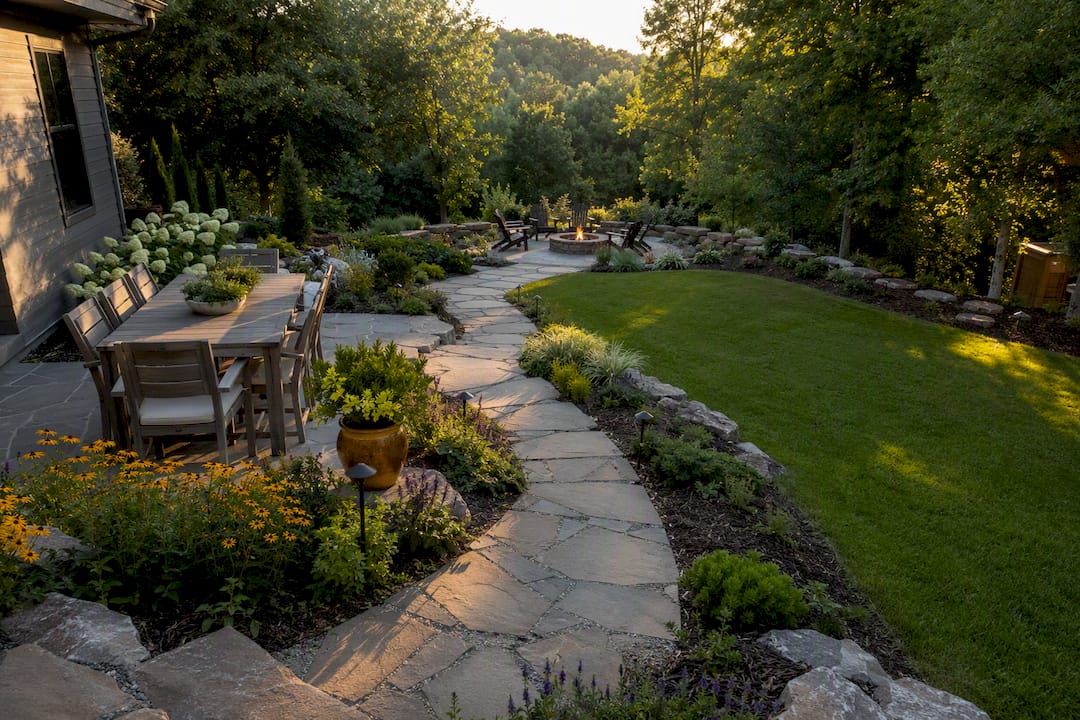
Plan, Phase, Build: Backyard Landscaping for Kansas City Yards ! Layered Kansas City backyard outdoor rooms Start with how you actually want to use the space, not with a photo you liked.
Plan, Phase, Build: Backyard Landscaping for Kansas City Yards
Start with how you actually want to use the space, not with a photo you liked. Pick two or three real uses, dining, lounging, gardening, then build the hardscape (patio, paths, structure) first and layer plants and extras in phases as budget allows. This article groups practical backyard landscaping ideas by cost and yard size, with planning steps and site-tested tips from Trew Landscape LLC woven in.
TL;DR:
- Proper site assessment and precise grading are crucial to prevent water pooling and avoid costly repairs from improper drainage or base preparation.
- Small yards benefit from vertical gardens, compact patios, and multi-use furniture to maximize functionality within limited space and budget constraints.
- Mid-range projects like paver patios, pergolas, and fire pits require careful planning, with DIY being feasible for skilled homeowners to reduce costs.
- Major structural features such as full-size patios, outdoor kitchens, and retaining walls should be installed by professionals to ensure safety, permit compliance, and durability.
- Phasing construction over several seasons and focusing on structural elements first helps control costs and prevent mistakes that lead to failure or expensive fixes.
Table of Contents
- Backyard Landscaping Ideas by Budget and Yard Size
- Planning Your Layout Before You Buy Anything
- Choosing Materials and Plants That Actually Hold Up
- Six Weekend Projects You Can Actually Finish
- What Trew Landscape LLC Sees Go Wrong on Site
- Sustainable Backyard Practices Worth Adopting
- Adding a Water Feature Without Overcomplicating the Yard
- Keeping Your Backyard Looking Good Year After Year
- Prioritize Usability Over Trends
- Let Trew Landscape LLC Handle the Parts That Can’t Fail
- Sources
- FAQ
Backyard Landscaping Ideas by Budget and Yard Size
Most backyard landscaping ideas fail for one of two reasons: the homeowner buys features before deciding how the space gets used, or the budget runs out halfway through because nobody planned for phasing. Sorting ideas by cost tier and yard size fixes both problems at once. You know what’s realistic for your wallet, and you know what actually fits your lot.
Low-budget wins (under a few hundred dollars, mostly DIY)
These projects deliver visible change fast without touching your savings account.
- Mulch beds around existing trees and structures. Defines edges instantly, suppresses weeds. DIY, one afternoon.
- Container gardens on a patio or deck. Flexible, movable, no digging required. DIY, a weekend to plan and plant.
- Seasonal annual plantings in existing beds. Cheap color rotation three or four times a year. DIY, an hour per planting.
- String lights over a seating area. Instant evening ambiance for well under $100. DIY, half a day including hanging hardware.
- Gravel paths connecting existing features. Low material cost, no concrete truck needed. DIY, a weekend for a short run.
- Fresh paint and refreshed furniture. A repainted fence or a $40 can of exterior paint on old chairs changes the whole feel. DIY, a weekend.
- DIY raised garden beds from lumber or kits. Built in a day, productive within a season.
Moderate-budget projects (four figures, mix of DIY and pro help)
This tier is where most backyard renovation ideas actually live, because it’s where structure meets affordability.
- Paver patio, modest footprint. A modest-sized paver patio can create a practical dining or lounge zone. Concrete pavers run cheaper than natural stone and hold up well; a herringbone paver pattern adds visual interest without adding material cost. DIY is possible for a skilled homeowner, but base prep is where most self-installed patios go wrong. Time: a long weekend for pros, a full week or more for DIY.
- Modular pergola kits. Adds shade and structure over an existing patio or deck. Pro install in a day, DIY in a weekend with two people.
- Prefabricated fire pit. A steel ring or kit-built fire pit anchors an evening gathering spot. DIY, a few hours.
- Larger planting beds with shrubs and perennials. More structure than annual color, less cost than hardscape. DIY or pro, a weekend to a few days.
- Raised vegetable beds, expanded. Multiple beds with irrigation lines start pushing into this tier. DIY, a weekend.
High-budget anchors (five figures, usually contracted)
These are the projects that transform a yard rather than decorate it.
- Custom paver or flagstone patio, full-size. A patio sized for actual entertaining, not just a table for two, plus a paver patio with fire pit built into the design. Hardscape typically functions as the skeleton of a backyard design and gets installed before final planting, according to Yardcast’s step-by-step guide. Pro install, one to three weeks depending on scope.
- Outdoor kitchens. Built-in grills, counters, and storage extend the living space outdoors permanently. Pro install, several weeks.
- Decks. Especially on sloped lots where a patio isn’t level ground. Pro install, one to two weeks.
- Retaining walls. Needed for grade changes or usable flat space on a hillside lot. Pro install, one to two weeks, and often subject to local permit thresholds.
- Major grading and drainage correction. Not glamorous, but it’s what keeps every other investment from failing. Pro install, timeline varies with scope.
Small-yard adaptations
A small lot doesn’t mean fewer good backyard design ideas, it means picking ones that work vertically and compactly.
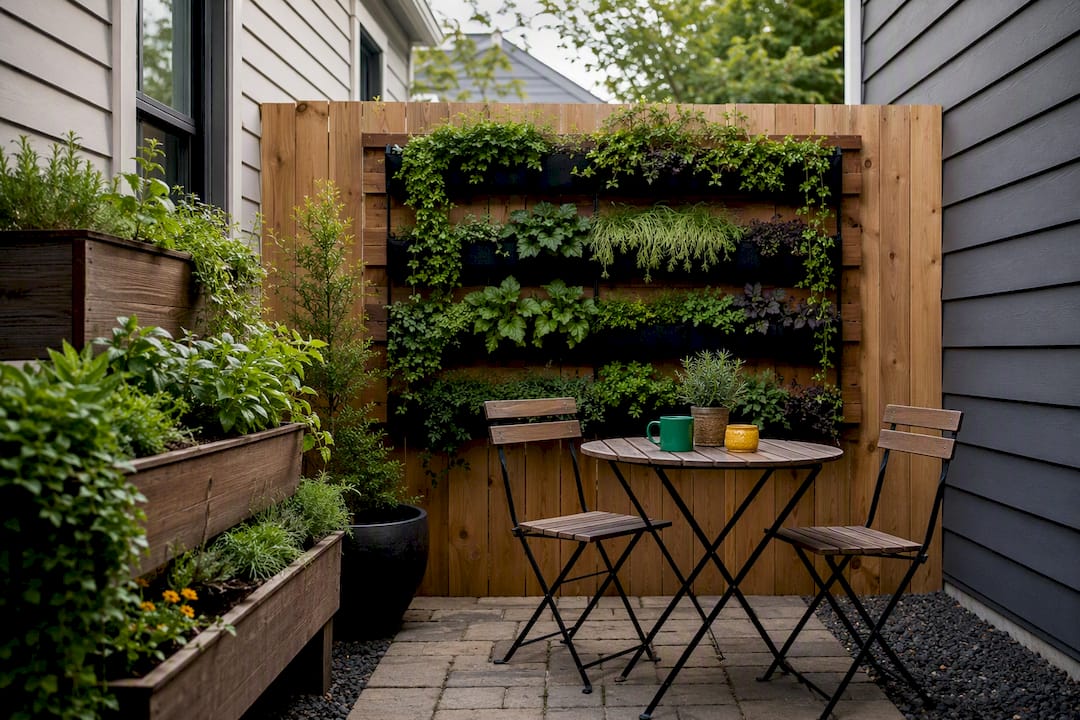
Vertical gardens on a fence or wall multiply planting space without eating floor area. A micro patio, sometimes as small as 8 by 10 feet, still fits a bistro table and two chairs. Foldaway or stackable furniture lets one space serve dining and lounging at different times of day. Tiered planters turn a narrow side yard into usable garden space instead of dead ground.
Large-yard ideas
Bigger lots can support multiple outdoor rooms rather than one central patio. Think a dining zone near the house, a fire pit area farther out, and a lawn section left open for play or pets. A dedicated fitness or play lawn keeps active use separate from planting beds. Naturalized meadow sections cut mowing dramatically in areas you don’t walk through daily. Garden paths, whether gravel, stepping stone, or paver, connect these zones so the yard reads as one design instead of scattered features.
Planning Your Layout Before You Buy Anything
Skipping the planning step is how homeowners end up with a fire pit twelve feet from the back door and a garden bed blocking the path to the grill. Organizing the yard into connected zones based on how you’ll actually use each one produces a far more usable result than picking features one at a time, a point echoed across most backyard planning guides.
Step 1: Answer three lifestyle questions first
- What are your top two or three uses for this space, dining, entertaining large groups, quiet relaxation, kids’ play, growing food?
- Which of those uses happens most often, and which one matters most to the household?
- How much of the yard can realistically be dedicated to each use without one crowding another?
Design professionals consistently warn against trying to fit too many competing functions into one yard. A clear set of two or three priorities produces a connected set of outdoor rooms; a wish list of ten produces clutter.
Step 2: Measure before you dream
Walk the yard with a tape measure and a notepad. Mark where doors open, where mature trees cast shade at different times of day, and where utility lines, meters, and septic fields sit. Accurate measurements and site assessment are the step most homeowners skip, and it’s the one that prevents the most expensive mistakes. Note rough dimensions you’ll need later: a patio for a table of six needs roughly 12 by 14 feet minimum, and paths for two people walking side by side need at least 4 feet of width.
Step 3: Budget in phases, not all at once
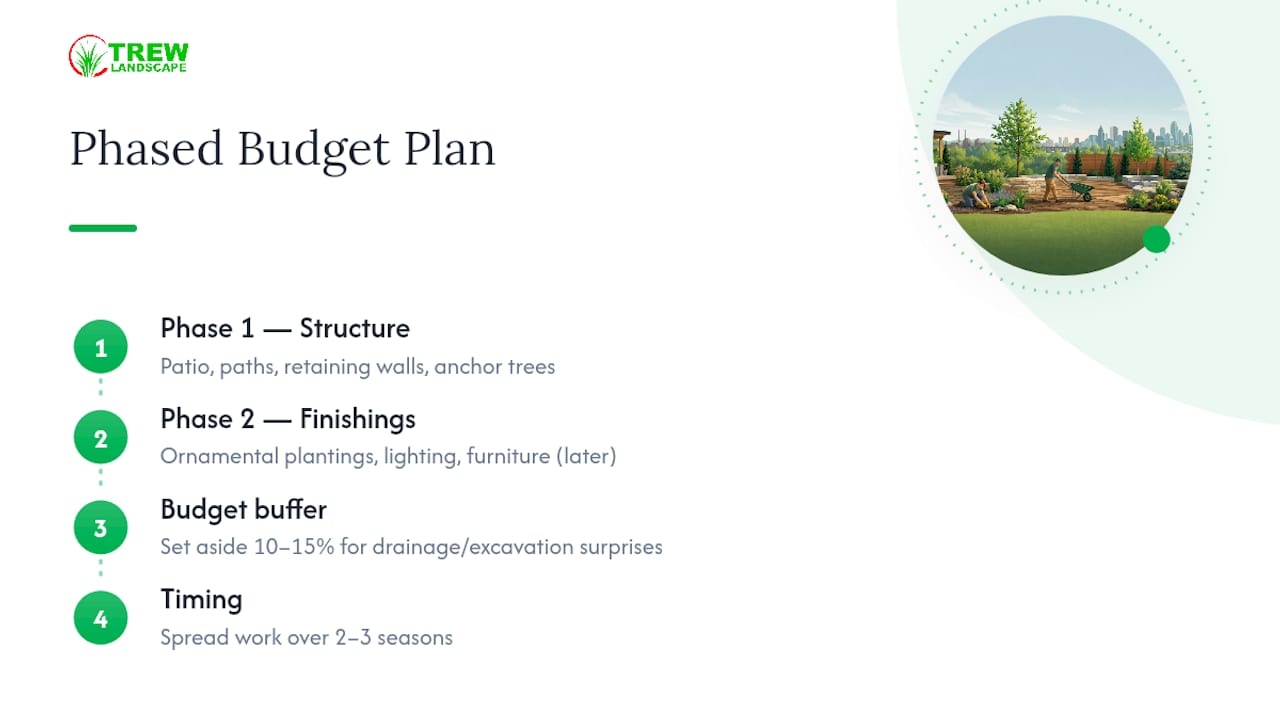
Build structural elements first: patio, paths, retaining walls, and any anchor trees you want to establish early since they take years to mature. Delay ornamental plantings, decorative lighting upgrades, and furniture until the structure is in place. Phasing a renovation over two or three seasons is a common practitioner strategy for spreading cost without losing the plan. Set aside roughly 10 to 15 percent of your total budget as a contingency buffer for surprises like hidden drainage issues or rock in the excavation.
Pro Tip: Sketch your zones on graph paper before calling anyone for quotes. A rough scale drawing, even a bad one, gets you a far more accurate estimate than describing the yard verbally.
Step 4: Check the site itself
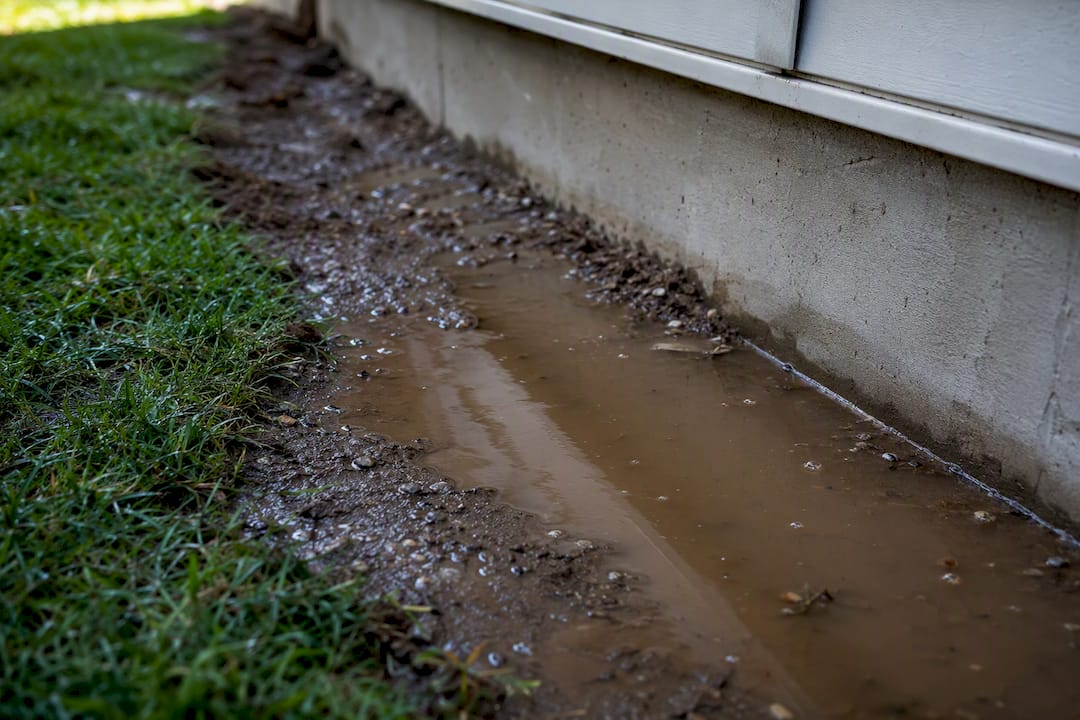
Look at how water moves across the yard during a hard rain. Standing water 24 hours after a storm, soil that stays soggy, or mulch that washes downhill are all signs of a drainage problem you’ll want fixed before building anything on top of it. Note whether the soil is sandy, clay-heavy, or somewhere in between, since that affects both plant choice and paver base requirements. If the yard has more than a few feet of elevation change, or if you’re planning a retaining wall taller than a couple feet, bring in a professional for grading advice before you commit to a design.
Choosing Materials and Plants That Actually Hold Up
The materials and plants you choose to determine whether your backyard landscape design looks good for two years or twenty. This is where a lot of DIY projects quietly fail, not from bad taste, but from picking the wrong material for the site or plants that fight the climate instead of working with it.
Hardscape material comparison
| Material | Cost profile | Maintenance | Durability notes |
|---|---|---|---|
| Concrete pavers | Moderate | Low; occasional resanding of joints | Individual pavers can be replaced if damaged |
| Flagstone | Higher | Low to moderate | Natural variation, can be slippery when wet |
| Poured concrete | Lower to moderate | Low, but cracks are hard to repair invisibly | Prone to cracking in freeze-thaw climates without control joints |
| Composite decking | Moderate to higher | Very low, no staining or sealing | Long lifespan, doesn’t rot like wood |
Concrete pavers, flagstone, poured concrete, and composite decking each carry different price and maintenance profiles, and picking the right one usually comes down to climate and how much upkeep you’re willing to do, according to Yardcast’s material breakdown. If you like the geometric look, a herringbone paver pattern interlocks pavers at 45 or 90 degree angles, which resists shifting under vehicle or heavy foot traffic better than a simple running-bond layout.
Picking plants that don’t demand constant attention
Match plants to your hardiness zone and the actual sun exposure of each bed, not the exposure you wish it had. Native and regionally adapted species need less water, less fertilizer, and less pest intervention once established. Garden Design’s guidance emphasizes layering plants for multi-season interest, meaning something is blooming or providing structure in spring, summer, fall, and winter, not just a burst of color in June that fades to nothing by August. A low-maintenance landscaping plan built around these principles cuts weekly chores significantly compared to a high-maintenance annual-heavy design.
Drainage rules that prevent failure
Grade the ground to fall at least a quarter inch per foot away from your home’s foundation. This single detail prevents more landscaping failures than any other, because water that pools against a house or under a patio eventually undermines both. Permeable pavers or gravel joints let rainwater soak through instead of running off, which helps in areas prone to heavy storms.
By the Numbers: Practitioner guides consistently point to inadequate base preparation as a leading cause of paver patio failure, specifically insufficient gravel depth or poor compaction, which lets pavers sink and shift within a season or two of installation.
Grading and drainage rank among the most technical parts of any backyard project, and a subtle slope error is invisible until the first heavy rain, a pattern well documented in backyard planning research. Call a professional when grading involves more than a foot of elevation change, when a retaining wall will exceed your local code’s height threshold for a permit, or before any excavation near buried utility lines.
Six Weekend Projects You Can Actually Finish
- Raised vegetable bed. Cedar boards, screws, soil. Budget: low. DIY: easy. Time: one day. Maintenance tip: refresh soil each spring. Cheat: use reclaimed lumber to cut material cost in half.
- Gravel or stepping-stone path. Gravel, edging, stepping stones. Budget: low. DIY: easy. Time: a weekend. Cheat: use fewer, larger stepping stones spaced farther apart.
- Simple fire pit. Steel ring or prefab kit, gravel base. Budget: low to moderate. DIY: moderate. Time: a few hours. Maintenance tip: keep it covered when not in use.
- Privacy screen with planters and lattice. Lattice panels, planter boxes, climbing vines. Budget: moderate. DIY: moderate. Time: a weekend. Cheat: start with smaller plants and let vines fill in over a season.
- String-lighted patio. Bulb string lights, hooks, timer. Budget: low. DIY: easy for low-voltage kits. Time: half a day. Contract it out if you need a hardwired electrical run.
- Container-focused planting scheme. Pots, potting soil, plants. Budget: low to moderate. DIY: easy. Time: an afternoon.
Anything involving below-grade excavation near utilities, structural retaining walls, or new electrical circuits belongs with a licensed pro, not a weekend toolbox.
What Trew Landscape LLC Sees Go Wrong on Site
Most paver patio failures we get called to fix trace back to base prep, not the pavers themselves. A practitioner rule of thumb: excavate deep enough for several inches of compacted gravel base plus a sand setting bed before a single paver goes down. Skip or shortcut that step and you’ll see sinking or shifting within a year or two, regardless of how nice the pavers look on day one.
Phasing matters as much as base prep. Install structural elements, patios, walls, anchor trees, first. Add planting and decor in later seasons once you’ve lived with the layout and know what’s missing. Before buying materials, walk your yard after a hard rain and note where water sits. Standing water more than a day after a storm, or soil that never seems to dry out, are red flags worth a professional grading consultation before you build anything on top of them.
Pro Tip: If you’re unsure whether your yard needs professional grading, a simple test helps: pour a bucket of water near your foundation and watch which direction it flows. If it pools instead of moving away, that’s your answer.
Sustainable Backyard Practices Worth Adopting
Eco-friendly backyard landscaping saves money as often as it saves the planet, since less water, less mowing, and less chemical input all show up as lower bills over time.
Native and drought-tolerant plants top the list because they need less irrigation once established and support local pollinators better than ornamental imports. Reducing turf area, especially in sections of the yard that rarely get walked on, cuts water use and mowing time; a naturalized meadow strip or expanded planting bed can replace a section of lawn without sacrificing usability.
Permeable hardscape, gravel, permeable pavers, or jointed stone with sand-filled gaps, lets rainwater recharge groundwater instead of running into storm drains carrying fertilizer and sediment with it. Rain barrels or a simple rain garden positioned to catch roof runoff put that water to use on planting beds instead of letting it disappear down a downspout.
Composting yard waste, leaves, grass clippings, pruned branches, cuts down on what goes to the curb and builds free soil amendment for beds. Choosing local or regionally sourced materials for hardscape, mulch, and plants also cuts the transportation footprint baked into a project, and it often costs less than shipped-in alternatives.
None of these practices require a full redesign. A homeowner can swap one bed to native plants this year, add a rain barrel next year, and reduce turf the year after, which fits naturally into the phased budgeting approach that works best for most backyard renovations anyway.
Adding a Water Feature Without Overcomplicating the Yard
A water feature earns its place in a backyard when it’s sized to the space and matched to how much upkeep you’re willing to do, not just picked because it looks good in a photo.
Small, self-contained fountains or bubbling urns work well in compact yards and require minimal plumbing, usually just a submersible pump and an electrical outlet nearby. They add ambient sound without the maintenance commitment of a full pond. Larger backyards can support a pondless waterfall, water that recirculates through rock without an open basin, which gives the visual and audio benefit of moving water while cutting down on mosquito breeding concerns tied to standing water.
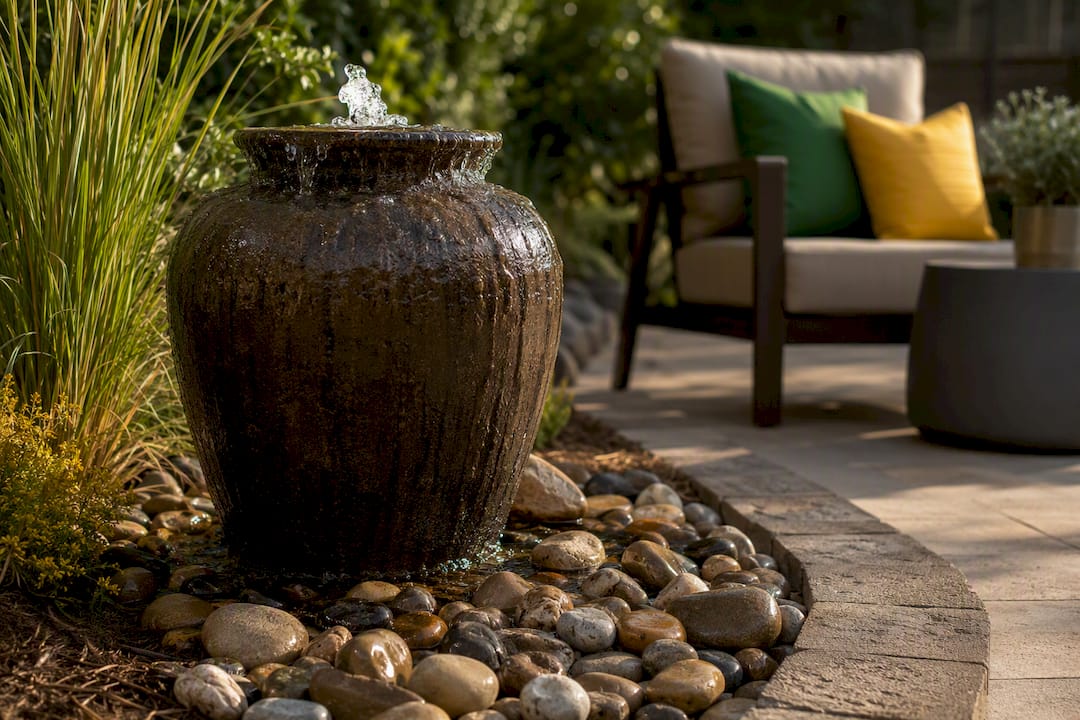
Position any water feature where you’ll actually hear and see it, near a patio or a window you look through often, rather than tucked in a far corner where it becomes an afterthought. Keep it out of direct fall line from deciduous trees, since leaf litter turns pump maintenance into a weekly chore instead of a seasonal one.
Budget realistically: a basic fountain kit runs in the low hundreds, while a designed pondless waterfall with proper plumbing and rockwork moves into the same cost tier as a moderate hardscape project. Electrical work for a pump, especially anything requiring a new outdoor circuit, is worth handing to a licensed electrician rather than running an extension cord across the yard as a permanent solution.
Keeping Your Backyard Looking Good Year After Year
A backyard landscape holds up over time through a handful of consistent habits rather than occasional big pushes.
Water deeply and infrequently rather than lightly and often. This trains plant roots to grow deeper, which makes them more drought resilient and reduces how often you need to run irrigation. Mulch beds twice a year, spring and fall, to suppress weeds, retain soil moisture, and moderate soil temperature around root zones.
Prune shrubs and trees on a schedule that matches their bloom time, since pruning at the wrong point in the season can cut off next year’s flowers. Reapply joint sand on paver patios every couple of years as it washes out from rain and foot traffic, and check for any pavers that have started to shift or sink so small problems get fixed before they spread.
Inspect drainage paths each spring after snowmelt or heavy rain, looking for new erosion channels or spots where water is starting to pool that weren’t a problem the year before. Landscape lighting fixtures benefit from a seasonal check too, clearing dirt from lenses and confirming timers still match sunset times as they shift through the year.
Rotate seasonal container plantings rather than letting pots sit empty or overgrown, since containers are one of the cheapest ways to keep a backyard looking intentional between bigger renovation phases.
Prioritize Usability Over Trends
Chasing trends leads to a backyard full of features that look sharp in photos but never quite fit how you actually live. The better move is designing around your own habits, then treating the yard as a work in progress rather than a single finished product.
Live with a space before committing money to it. Set up a folding table where you think the dining zone should go, spend a week actually using it, then decide. Phasing isn’t a compromise, it’s how you learn what the yard needs before you spend on the wrong thing.
— Trew Landscape LLC
Let Trew Landscape LLC Handle the Parts That Can’t Fail
A DIY paver path is forgiving. A patio with bad base prep, a retaining wall that violates a permit threshold, or drainage that dumps water toward your foundation instead of away from it, those mistakes cost far more to fix than to do right the first time. That’s the gap Trew Landscape LLC fills for Kansas City homeowners: the structural work where getting it wrong is expensive, and getting it right the first time actually saves money over the life of the project.
Trew Landscape LLC handles landscape design, paver patio installation, drainage and grading correction, landscape lighting, sod installation, and full hardscape construction, all under one crew instead of coordinating separate contractors for each piece. That matters most on projects with interdependent parts, a patio that needs proper grading underneath it, or a retaining wall that needs to meet local code before the rest of the yard gets built around it. If you’re ready to move a backyard landscaping idea from sketch to something built to last, start with the full range of services or head straight to the landscape design page to request a consultation on your yard’s layout.
Sources
For more on organizing a yard by use and priority, see the backyard planning and zoning guide from LandscapingUniverse. Yardcast’s step-by-step landscaping guide covers material costs in more depth, and Garden Design’s backyard section offers plant selection guidance by region. For a broader visual reference, Houzz’s backyard photo galleries are worth browsing once your plan is set. For site assessment specifics, Roberto’s Stump Grinding’s landscape planning guide walks through measuring and mapping a yard before design begins.
- Backyard Landscaping Ideas - Garden Design
- How to Landscape a Backyard: Complete Step-by-Step Guide (2026) — Yardcast Blog
- Landscapinguniverse
FAQ
What’s the cheapest way to improve a backyard fast?
Mulch beds, container gardens, string lights, and a gravel path deliver visible change for under a few hundred dollars, all doable in a weekend without professional help.
How much does a paver patio cost compared to poured concrete?
Concrete pavers typically cost more upfront than poured concrete but require less repair over time since individual pavers can be replaced, while concrete cracks are hard to fix invisibly.
What slope do I need for backyard drainage?
Grade the ground to fall at least a quarter inch per foot away from your home’s foundation to prevent water pooling against the structure or under a patio.
How do I landscape a small backyard on a budget?
Focus on vertical gardens, a micro patio sized for actual use, foldaway furniture, and tiered planters, all low-cost ways to maximize function without more square footage.
When should I hire a professional instead of doing it myself?
Bring in a pro for major grading, retaining walls near your local permit height threshold, electrical work for lighting, and any excavation near utility lines. For paver patios and drainage work specifically, Trew Landscape LLC handles the base prep and grading details that most DIY installs get wrong.
How much does Trew Landscape LLC charge for a backyard project?
Pricing depends on project scope and current material costs, and isn’t published as a flat rate; request a quote through the Trew Landscape LLC website for an estimate specific to your yard.