
Trew Landscape Blog
The Best Fence for Dogs in Kansas City: 2026 Guide
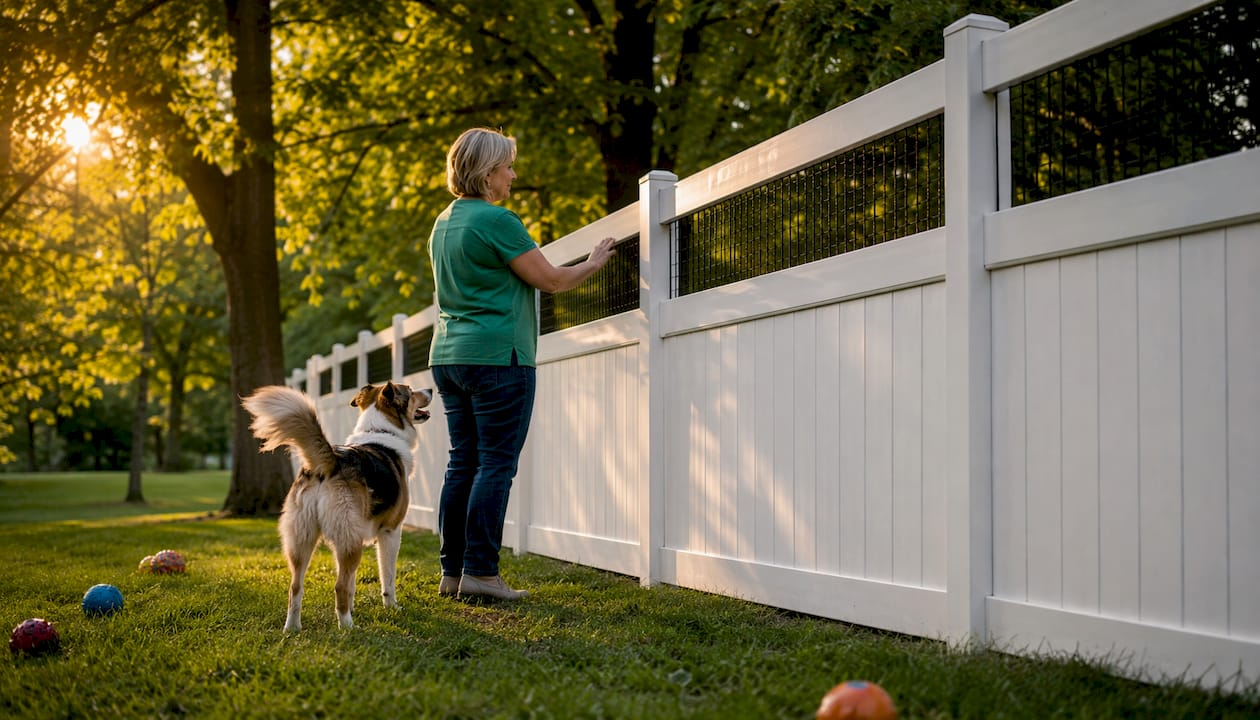
The Best Fence for Dogs in Kansas City: 2026 Guide ! Woman and dog in backyard with vinyl fence For most Kansas City dogs, a solid vinyl privacy fence or solid-board wood fence is the right call.
The Best Fence for Dogs in Kansas City: 2026 Guide
For most Kansas City dogs, a solid vinyl privacy fence or solid-board wood fence is the right call. Anxious, reactive, and jumping dogs need full visual blockage to stay calm and contained. Solid-board wood and vinyl privacy fences are specifically recommended for reactive or anxious dogs because they eliminate visual triggers entirely. For small breeds, aluminum fencing with puppy pickets closes the gaps that standard aluminum leaves open. Chain-link works on a budget for calm, low-reactivity dogs, but it offers zero privacy and can overstimulate dogs that react to foot traffic or neighborhood animals.
Before you pick a material, identify your dog’s primary behavior: jumper, digger, chewer, anxious/reactive, or small-breed escape artist. That single decision narrows your options faster than any other factor.
- Anxious/reactive or jumpers: solid vinyl or wood privacy fence of appropriate height
- Small dogs: aluminum with puppy pickets (2-inch spacing or less)
- Budget-conscious, calm dogs: galvanized chain-link fence at a suitable height
- Diggers: any of the above, plus an anti-dig footer or buried wire apron
On invisible fencing: veterinarians and animal behaviorists caution against relying on it as a primary barrier because it cannot stop other animals or people from entering your yard. Use it as a supplement to a physical fence, not a replacement. Contact Trewlandscape for a local quote before you order a single post.
Pro Tip: GPS-based wireless systems lose accuracy near trees and buildings, which is a real problem on the wooded lots common in Kansas City’s older neighborhoods.
Table of Contents
- Which fence material is right for your dog?
- How do you stop a dog from escaping under or over the fence?
- Should you hire a pro or install it yourself?
- What drives installation cost and timeline?
- Local rules you need to know before you install
- How do you choose the right local fence installer?
- Trewlandscape installs dog-safe fences across Kansas City
- Key Takeaways
Which fence material is right for your dog?
| Material | Best for | Privacy | Escape resistance | Maintenance | Approx. cost/linear ft. |
|---|---|---|---|---|---|
| Vinyl privacy | Reactive, anxious, jumpers | Full | High | Low (no painting) | — |
| Solid-board wood | Reactive, anxious, jumpers | Full | High | Moderate (stain/seal) | — |
| Chain-link | Calm, low-reactivity dogs | None | Moderate | Low | — |
| Aluminum w/ puppy pickets | Small breeds | Open | High for small dogs | Very low | — |
| Wrought iron | Aesthetic priority | Open | Moderate | Low-moderate | — |
Vinyl privacy fences resist Kansas City’s freeze-thaw cycles without warping, rotting, or needing annual sealing. Wood looks great but demands staining every 2–3 years. Aluminum and wrought iron offer style and durability but fail reactive or small dogs because of open sightlines and wide gaps.
How do you stop a dog from escaping under or over the fence?
Height matters most for jumpers: a fence height that generally prevents most jumping breeds, though athletic dogs like Huskies or Belgian Malinois may need coyote rollers added at the top. For diggers, concrete footers, buried wire aprons, or welded-wire ground barriers are the standard fix. Ask your installer to include one of these as a line item, not an afterthought.
Gate hardware is where many dog-safe fences fail; consider the right dog containment and home-safety products to improve security and comfort for your pet. Use a self-closing hinge, a gravity latch, and a secondary padlock-style clip. Picket spacing should be 2 inches or less for small breeds.
Should you hire a pro or install it yourself?
DIY kits like freestanding welded-wire systems work for temporary containment or staged projects, but they vary widely in height and structural strength. For a permanent fence on a Kansas City residential or commercial property, hire a licensed contractor. A pro handles post depth (critical in Missouri’s clay soil), utility clearance, permit paperwork, and gate alignment. Ask any installer: Are you licensed and insured? Do you pull permits? What’s the warranty on labor and materials?
Red flags: no written estimate, vague timelines, no mention of utility marking, or pressure to skip the permit step.
What drives installation cost and timeline?
Lot size, material choice, terrain, and gate count are the four main cost drivers. Rocky or heavily sloped yards in areas like Brookside or Waldo add labor time. A typical residential installation generally takes a few days once materials arrive. Lead times on vinyl and aluminum panels may vary and sometimes extend several weeks, so schedule early, especially heading into spring when demand spikes across Kansas City.
Local rules you need to know before you install
Call 811 before any post goes in the ground. Missouri law requires utility marking before digging, and Kansas City enforces it. Most residential zones cap fence height at 6 feet in backyards and 4 feet in front yards, but HOA covenants can be stricter on materials and color. Check with your HOA and the Kansas City, MO Development Services department before ordering materials. Property line disputes are common when fences go up without a survey, so confirm your boundary markers first.
How do you choose the right local fence installer?
Look for a contractor who is licensed, insured, and can show a local project portfolio. Ask for two written quotes that include material specs, post depth, gate hardware, warranty terms, and a permit confirmation. A contractor who cannot answer those questions clearly is a red flag. Check Google reviews specifically for fence projects, not just general landscaping work.
Trewlandscape installs dog-safe fences across Kansas City

Trewlandscape is a licensed and insured Kansas City contractor that installs vinyl privacy fences, solid-board wood, aluminum with puppy pickets, and anti-dig concrete footings. Their fencing services cover residential and commercial properties, and every project comes with a written estimate, clear timeline, and warranty on labor and materials. Their Kansas City project portfolio shows completed dog-friendly enclosures across a range of lot sizes and styles. For properties that need more than just a fence, Trewlandscape also handles landscape design and hardscaping in the same project scope.
To get a quote: share your property size, your dog’s primary behavior, and a few site photos. Request a written estimate that includes timeline, post specs, and warranty. Then compare two written quotes and confirm permits and utility marking are included before signing.
Get a fence quote from Trewlandscape and have a dog-safe yard ready before summer.
Key Takeaways
A solid vinyl or wood privacy fence is the most effective dog containment solution for anxious, reactive, or jumping dogs in Kansas City, and physical fencing always outperforms invisible alternatives as a primary barrier.
| Point | Details |
|---|---|
| Match fence to behavior | Identify jumper, digger, chewer, or reactive dog before choosing material or height. |
| Vinyl and wood for reactivity | Full visual blockage from solid vinyl or wood reduces barking, lunging, and stress. |
| Small dogs need puppy pickets | Aluminum with 2-inch or smaller spacing prevents small-breed escapes through standard gaps. |
| Anti-dig measures matter | Concrete footers or buried wire aprons are standard upgrades for digger breeds. |
| Trewlandscape for local installs | Licensed, insured, and portfolio-backed fence installation across Kansas City for residential and commercial properties. |