
Trew Landscape Blog
Sod for Shade: Which Grass Actually Survives Low Light
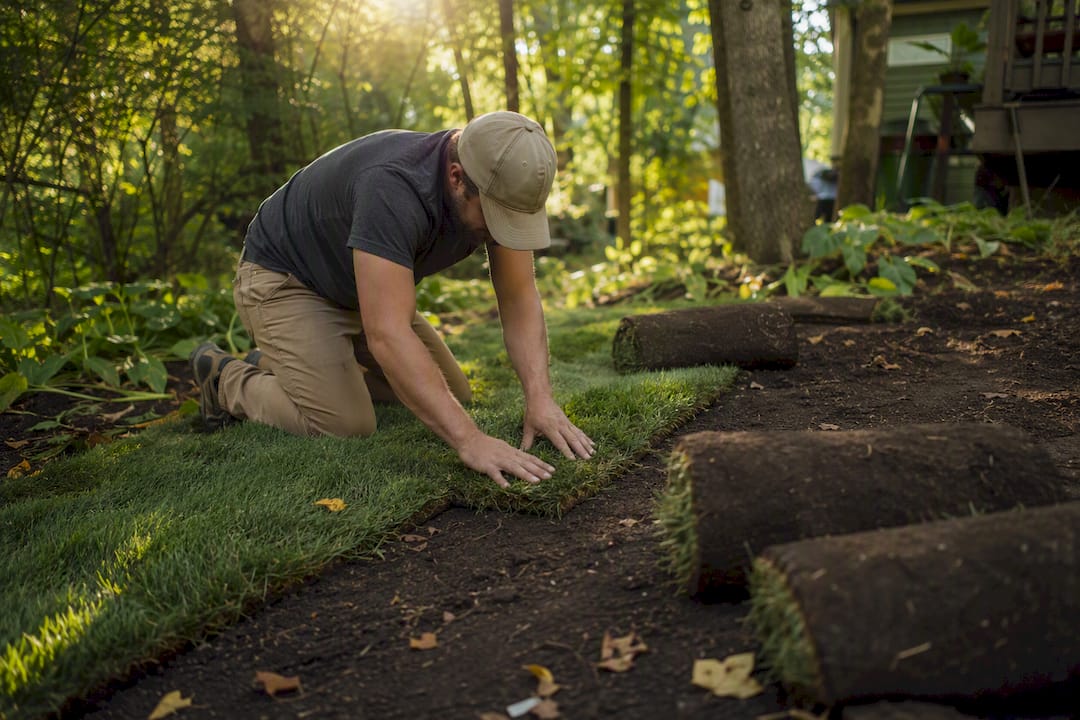
Sod for Shade: Which Grass Actually Survives Low Light ! Hands laying sod in shaded backyard For most cool-season yards, fine or tall fescue blends are your best sod for shade.
Sod for Shade: Which Grass Actually Survives Low Light
For most cool-season yards, fine or tall fescue blends are your best sod for shade. In warm-season regions, St. Augustine and select zoysia cultivars hold up better than anything else you can buy on a pallet. The catch: none of these will survive on less than about 3 to 4 hours of direct sun or high-quality filtered light each day. Below that threshold, sod is a losing bet no matter how shade-tolerant the label claims.
Before you order a single pallet:
- Time your yard’s actual sun exposure over a full day, not a guess
- Test soil compaction and drainage where roots compete with nearby trees
- If light comes in under 3 hours, start planning alternatives instead of turf
Pro Tip: Sod starts dying the moment it’s cut. Order it for same-day delivery and installation, and if it has to wait, keep the pallet in shade and lightly damp.
Key Takeaways
Shade-tolerant sod only survives long term with roughly 3 to 4 hours of quality light daily, correct species selection for your climate, and proper soil prep before installation.
| Point | Details |
|---|---|
| Match species to climate | Choose fine or tall fescue in cool-season zones, St. Augustine or shade zoysia in warm-season zones. |
| Measure light before buying | Confirm the site gets at least 3 to 4 hours of direct or high-quality filtered sun daily. |
| Prep soil, don’t skip it | Loosen the top 2 to 3 inches and amend compacted ground before laying any sod. |
| Adjust care for shade | Mow higher, water early and less often, and cut nitrogen rates compared to sunny turf. |
| Call in a pro for borderline sites | Trew Landscape LLC diagnoses light, soil, and root competition together before recommending a species or installation plan. |
Table of Contents
- Best Shade Tolerant Sod Types by Climate
- When Should You Skip Sod and Choose Something Else?
- Sod vs. Seed vs. Plugs: Which Fits a Shady Yard?
- How Do You Prepare and Install Sod in Shade?
- Care and Maintenance Adjustments for Shady Lawns
- Why Is My Shade Grass Thinning, Mossy, or Diseased?
- What Does It Cost and How Long Until a Shade Lawn Fills In?
- When Should You Hire a Pro for a Shaded Sod Install?
- Matching Sod Choices to Your Climate Zone
- How Do You Decide Between Sod, Seed, and Plugs for Shade?
- Why Shade Projects Benefit From a Professional Eye
- Get Expert Help With Your Shaded Lawn Project
- Sources
- FAQ
Best Shade Tolerant Sod Types by Climate
Your region decides which grass family you’re choosing within, cool-season or warm-season, and shade tolerance varies a lot even inside those categories.
Cool-season options (Northern and transition zones):
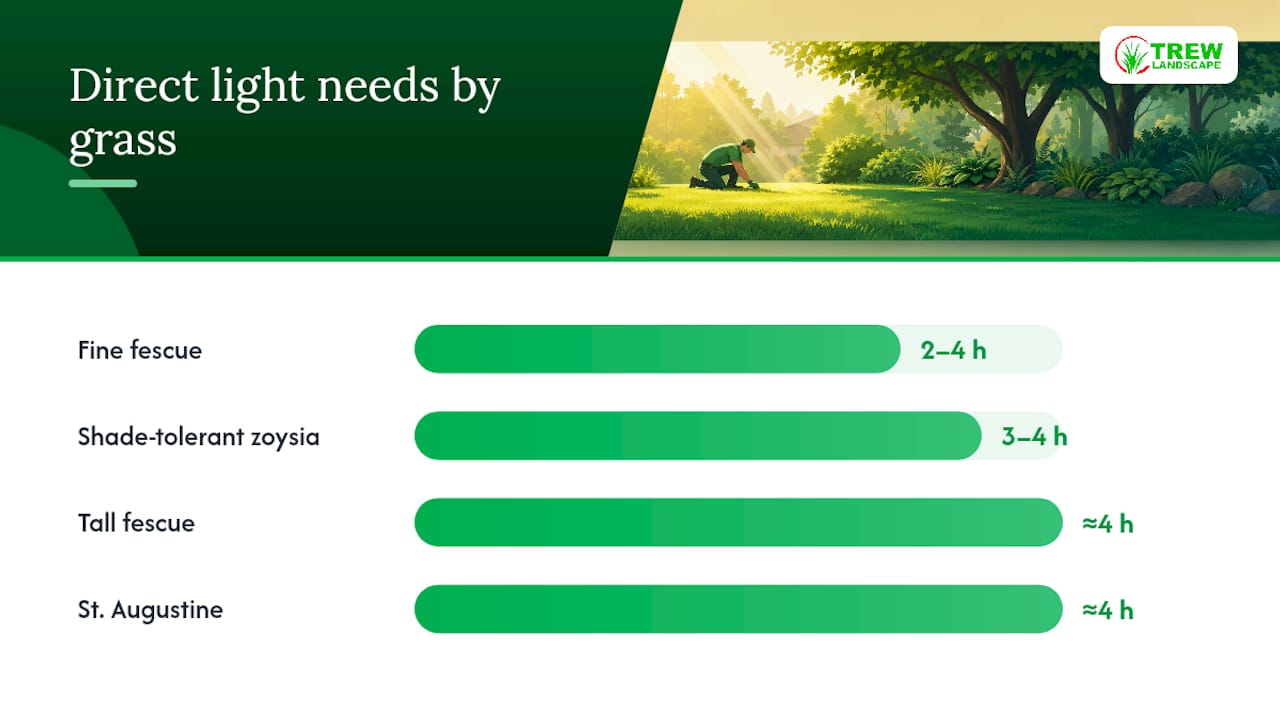
- Fine fescue blends tolerate the deepest shade of any common lawn grass, holding on with as little as 2 to 4 hours of light. Fine texture, low traffic tolerance, usually sold as seed more often than sod.
- Tall fescue (including “Black Beauty” type cultivars) needs closer to 4 hours of direct sun to stay dense. Coarser blade, much better traffic tolerance than fine fescue, widely available as sod.
Warm-season options (Southern and transition zones):
- St. Augustinegrass is the most shade-tolerant warm-season turf available, generally needing about 4 hours of direct sunlight or a full day of strong filtered light. Broad blade, moderate traffic tolerance, sold as sod or plugs.
- Shade-tolerant zoysia cultivars can handle slightly less, some reportedly surviving on 3 to 4 hours. Dense, fine to medium texture, slow to establish but tough once rooted.
- Microclover isn’t a grass at all, but it’s often blended into shade seed mixes for its tolerance of lower light and its ability to fix nitrogen. Not typically sold as sod on its own.
If you’re north of the transition zone, fescue blends are your realistic ceiling. South of it, St. Augustine or zoysia are where the real shade tolerance lives. In the transition zone itself, either family can work depending on summer heat and winter cold, which is why a local nursery or Trew Landscape LLC is worth a call before you commit to a species.
Sod gives you instant coverage; plugs and seed cost less but take longer and carry more risk under a canopy.
When Should You Skip Sod and Choose Something Else?
Turf, even the shade-tolerant kind, is a light-hungry plant. Below roughly 3 to 4 hours of direct sun a day, grass simply can’t photosynthesize enough to sustain itself, and sod laid there thins out and dies within a season or two regardless of how well you water it.
Run this quick check: time your direct sun hours, look at how aggressively nearby tree roots are competing for water, and test whether the soil stays compacted and damp. If two or more of those come back unfavorable, skip turf entirely. Better options include:
- Mulched beds under heavy canopy
- Shade groundcovers like pachysandra, vinca, or sweet woodruff
- Sedge lawns bred for low light
- Artificial turf where foot traffic still matters
- A patio or path through hardscaping instead of grass
Sod vs. Seed vs. Plugs: Which Fits a Shady Yard?
Sod gives you an instant, mature lawn and the strongest early weed resistance, but it’s expensive and perishable, and it still needs enough light to root and hold. Seed costs far less and lets you dial in a shade-specific fescue blend, but it germinates slowly and often needs a follow-up overseed the next season. Plugs sit in between: practical for spreading St. Augustine across a warm-season yard, slower to fill in than sod, yet capable of working under a lighter canopy where full sod might struggle to establish.
Shade slows everything down. Roots take longer to knit into the soil, and the ground stays wetter, so newly laid sod needs less frequent but more careful watering than a sunny install.
Pro Tip: Sod is highly perishable in transit. In summer heat, ask your supplier for same-day delivery and don’t let pallets sit in the sun.
How Do You Prepare and Install Sod in Shade?
Getting shade sod to root well comes down to prep, sequencing, and speed. Laying sod directly on unprepared dirt commonly fails within three to six weeks, so don’t skip the groundwork.
- Measure direct sunlight hours across the site to confirm the area clears the 3 to 4 hour minimum.
- Clear existing vegetation, weeds, and debris down to bare soil.
- Loosen the top 2 to 3 inches of soil so roots can penetrate.
- Work in topsoil or compost if the existing soil is thin, compacted, or heavy clay.
- Grade the area smooth and lightly water the soil before delivery.
- Lay sod in staggered rows, pressing seams tight with no gaps.
- Roll the new sod to remove air pockets and ensure solid soil contact.
- Water immediately and deeply within 30 minutes of laying the last piece.
Cool-season fescue sod goes down best in early fall or early spring. Warm-season St. Augustine and zoysia establish fastest in late spring through midsummer, once soil temperatures have warmed. For the first 14 days, water daily, ideally in the early morning, since shaded soil dries more slowly than sunny turf and overwatering invites root rot.
Pro Tip: Stage pallets in shade the moment they arrive and plan to have every roll down the same day. Sod that sits stacked and warm for 24 hours can suffer irreversible damage before it ever touches soil.
Care and Maintenance Adjustments for Shady Lawns
Shade sod needs a different maintenance rhythm than turf growing in full sun, and getting this wrong is the fastest way to watch a healthy install thin out over a single summer.
- Mow higher. Raise your cutting height by 0.5 to 1 inch compared to sunny areas, and never remove more than a third of the blade at once. Taller blades capture more of the limited light available.
- Water early, water less. Irrigate in the early morning to cut down leaf wetness duration, and reduce total irrigation once the lawn is established since shaded soil holds moisture far longer.
- Cut back nitrogen. Shaded turf grows slower and needs less fertilizer than sunny areas; heavy nitrogen pushes soft, disease-prone growth the grass can’t support.
- Open up the canopy. Pruning lower tree limbs is often the single easiest way to buy shaded turf another hour of usable light, and better airflow cuts fungal pressure.
- Route around it. Reduce foot and vehicle traffic across shaded turf, and consider a mulched path or stepping stones along tree drip lines instead.
Shade is rarely a single problem; low light, root competition, and poor airflow usually compound each other, so fixing only one factor often isn’t enough to keep a shaded lawn thick.
Why Is My Shade Grass Thinning, Mossy, or Diseased?
- Thinning turf: Recheck actual light hours first, then overseed with a fine fescue blend or interplant microclover to fill gaps.
- Moss taking over: Test soil pH and drainage; moss usually signals excess moisture and shade beyond what any grass can handle, so a groundcover swap may beat fighting it.
- Fungal patches: Improve airflow through pruning, shift watering to early morning, and use a targeted fungicide only if cultural fixes don’t clear it up.
Call a professional if thinning persists after two full growing seasons, tree roots are visibly outcompeting the lawn, or disease keeps returning despite watering and mowing changes.
What Does It Cost and How Long Until a Shade Lawn Fills In?
Budget for a longer runway than a sunny sod install. Fescue and St. Augustine sod both root within 2 to 3 weeks under good conditions, but shaded turf typically needs 6 to 8 weeks before it can handle regular foot traffic, and a full season, sometimes two, before density matches what you’d expect from a sunny lawn. Shade simply slows the growth engine down; even well-rooted sod fills in gaps more gradually because photosynthesis is capped by available light.
Costs break into a few buckets: site prep (clearing, grading, soil amendment), the sod itself, delivery, and labor if you’re not installing it yourself. Shaded sites often add expense on the prep side, since compacted soil under mature trees usually needs more topsoil or compost than an open, sunny yard. Ongoing costs run higher too, expect more frequent overseeding in thin spots and possibly a fungicide application or two in the first year while the lawn adjusts. If you want current, itemized numbers for your specific yard, a sod installation cost breakdown is a faster starting point than guessing from national averages, since shade, soil condition, and square footage all move the number significantly.
The honest expectation to set: a shaded lawn rarely looks “finished” the way a sunny install does by the end of year one. Give it a second growing season before judging whether the species choice was right.
When Should You Hire a Pro for a Shaded Sod Install?
Borderline sites, those sitting right around the 3 to 4 hour light threshold, are exactly where a professional eye earns its cost. It’s easy to misjudge filtered light, and a wrong call means paying for sod twice.
Bring in a professional installer when tree root competition is heavy enough that you can’t tell if it’s a soil problem or a light problem, when the yard has multiple shade zones needing different species, or when previous DIY attempts have failed more than once. A qualified installer should be able to answer specific questions: What’s the actual measured sun exposure on this site? Which cultivar are you recommending and why, not just “shade mix”? What’s the soil prep plan, and does it include amending compacted areas near roots? What’s the watering schedule for the first two weeks?
Red flags to watch for: a quote that skips soil testing entirely, a crew that can’t name the specific grass variety they’re laying, or same-day sod delivery promises that don’t match the size of your order (a sign the sod may sit staged too long before installation). A professional sod installation service worth hiring will walk your property, measure light at different times of day, and tell you plainly if part of your yard isn’t a good candidate for turf at all, rather than selling you sod that’s likely to fail.
Matching Sod Choices to Your Climate Zone
Species selection isn’t just about shade tolerance in isolation, it has to match your regional climate first, then get filtered by light level.
In Northern and upper transition zones (roughly USDA zones 3 through 6), cool-season fescues are your realistic options. Fine fescue blends handle the deepest shade in this range, while tall fescue needs closer to that 4 hour minimum and rewards you with better traffic tolerance if kids or pets use the yard.
In the transition zone (roughly zones 6 through 7), both cool-season and warm-season grasses can survive, but neither thrives at the extremes of the other’s range. This is the trickiest zone for shade decisions, since a fescue lawn may scorch in a hot, humid summer while zoysia struggles through a hard winter. Local soil and microclimate matter more here than in either extreme.
In warm-season zones (roughly zones 7 through 10), St. Augustine is the strongest shade performer available, with select zoysia cultivars close behind. Bermudagrass, common in full sun across these zones, is a poor shade choice and shouldn’t be considered for anything under partial canopy.
If you’re near a zone boundary or dealing with a yard that has both sunny and shaded sections, that’s usually a sign to get a site-specific recommendation rather than relying on a general zone map alone.
How Do You Decide Between Sod, Seed, and Plugs for Shade?
Weigh four factors before choosing a planting method: how much light the site actually gets, your timeline, your budget, and how much risk you’re willing to take on establishment failure.
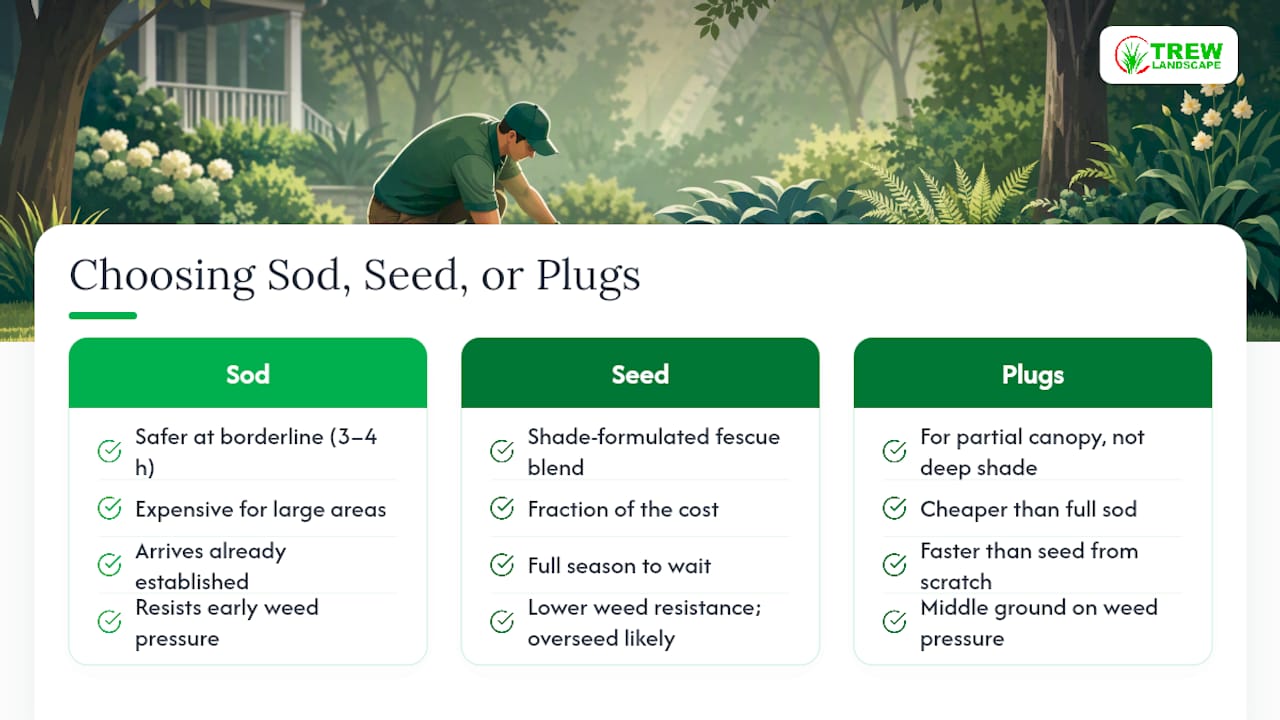
If light is borderline (right at that 3 to 4 hour line) and you need the area usable soon, sod is the safer bet because it arrives already established and resists early weed pressure better than seed. If budget is the bigger constraint and you have a full season to wait, seed lets you use a precise shade-formulated fescue blend at a fraction of the cost, though you’ll likely need a follow-up overseed. If you’re working with St. Augustine in a warm-season yard and the site has partial canopy rather than deep shade, plugs can be a reasonable middle ground, cheaper than full sod, faster than seed from scratch.
The site itself should override personal preference here. A steeply sloped shaded yard, for instance, favors sod because seed and plugs wash out before they root. A large, flat area with moderate shade and a flexible timeline often favors seed simply because covering thousands of square feet in sod gets expensive fast. When in doubt, or when the light reading is close to the failure threshold, get a second opinion before ordering material you can’t return.
Why Shade Projects Benefit From a Professional Eye
Most failed shade lawns we see share the same root problem: someone measured light wrong, ignored tree root competition, or skipped soil prep to save time. Our approach starts with diagnosing all three factors together, light, soil, and roots, before recommending a species. On a borderline site, that diagnosis is worth more than the sod itself, because it’s the difference between a lawn that lasts and one you’re replacing again next year.
Get Expert Help With Your Shaded Lawn Project
If your yard sits right at that gray zone, not quite dark enough for a mulch bed, not quite bright enough for a guaranteed lawn, guessing is expensive. Trew Landscape LLC handles the full process for Kansas City homeowners: measuring actual light exposure, picking the right shade-tolerant species for your soil and climate, prepping compacted ground properly, and coordinating canopy pruning where an extra hour of sun would make the difference.
Here’s what that looks like in practice: a site visit to assess light, soil, and root competition, a written quote with the species and prep plan spelled out, an installation timeline built around sod’s perishability, and a follow-up visit to check establishment. No guessing which cultivar to order or whether your soil needs amending first.
If you’re ready to find out whether your yard can support real turf or whether an alternative makes more sense, request a sod installation estimate and we’ll walk the site with you before you spend a dollar on material.
Sources
- Sod Installation and Maintenance | Mississippi State University Extension Service
- Growing grass in shade | Home & Garden Information Center (Clemson University)
- Growing lawns under shaded conditions | UConn Soil Testing & Research
FAQ
What kind of sod grows best in the shade?
Fine and tall fescue blends perform best in cool-season regions, while St. Augustinegrass and select shade-tolerant zoysia cultivars perform best in warm-season regions, provided the site gets at least 3 to 4 hours of quality light daily.
Can you plant sod in shade at all?
Yes, but only if the area receives roughly 3 to 4 hours of direct sun or strong filtered light; below that threshold, sod typically thins and fails within a season or two regardless of species.
Can I just lay sod over dirt?
No. Laying sod on unprepared, compacted dirt commonly fails within three to six weeks; loosen the top 2 to 3 inches, remove debris, and amend poor soil with topsoil or compost first.
What’s the best grass alternative for shady areas?
For sites too dark for any turf, shade groundcovers like pachysandra or vinca, sedge lawns, mulched beds, or artificial turf all outperform natural grass under heavy canopy.
How long does shade sod take to fully establish?
Most shade sod roots within 2 to 3 weeks but needs 6 to 8 weeks before handling regular traffic, and often a full growing season before density matches a sunny lawn.