
Trew Landscape Blog
Fall Core Aeration for Kansas City Lawns: Timing, Costs, Local Tips
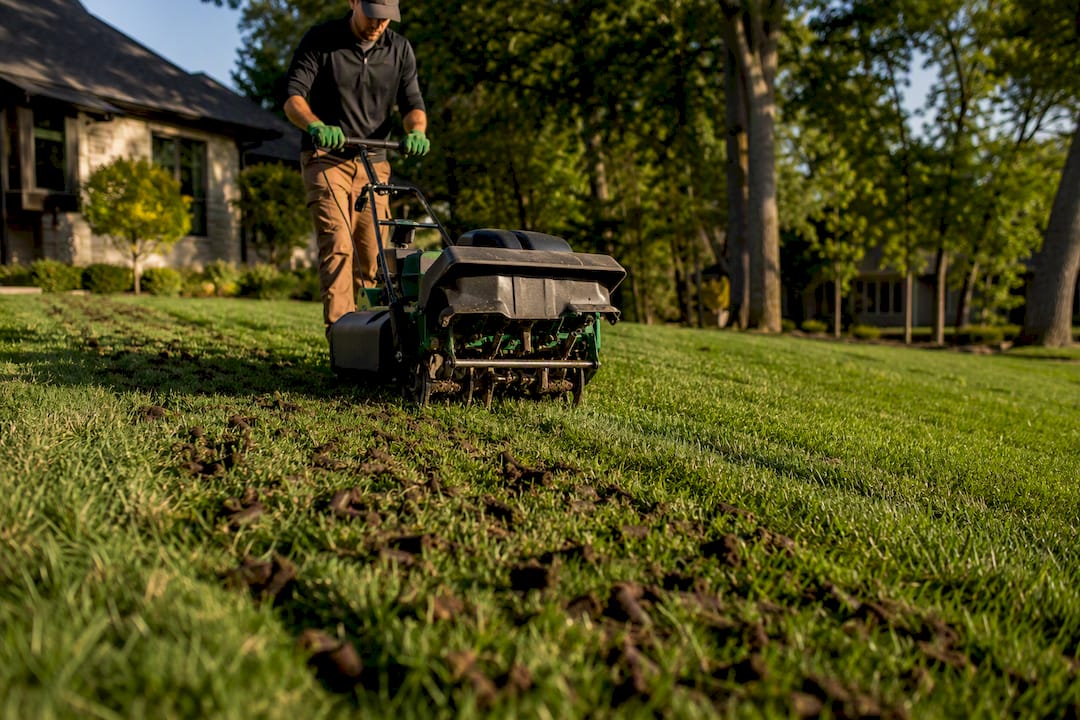
Fall Core Aeration for Kansas City Lawns: Timing, Costs, Local Tips ! Core aerator working across fall lawn For most Kansas City lawns, the answer is early fall core aeration paired with overseeding, timed for late August through mid-October on cool season grass.
Fall Core Aeration for Kansas City Lawns: Timing, Costs, Local Tips
For most Kansas City lawns, the answer is early fall core aeration paired with overseeding, timed for late August through mid-October on cool season grass. Core aeration is the right call for the clay-heavy soil common across the metro, and you should skip it entirely if the ground isn’t actually compacted. Expect the yard to look rough with dirt plugs scattered everywhere for a couple of weeks. That’s normal, and it’s the lawn recovering, not falling apart.
TL;DR:
- Core aeration is essential for clay-heavy Kansas City soils, especially when the soil is compacted, as it allows roots, water, and nutrients to penetrate effectively.
- The optimal timing for cool season grass aeration is late August to mid-October, with September being the peak window, to maximize recovery before winter dormancy.
- Mechanical core aeration surpasses spike aeration in clay soils, as it removes plugs that improve water movement and reduce soil glazing, unlike spike methods that can worsen compaction.
- Overseeding immediately after aeration significantly boosts seed germination rates by ensuring contact with open soil channels, unlike broadcasting on unbroken turf.
- Renting equipment costs $55 to $120 daily, but professional services, offering proper depth and cleanup, generally charge between $75 and $205 per visit depending on lawn size.
Table of Contents
- Why Aerate, and How to Tell if Your Lawn Needs It
- When Is the Best Time to Aerate a Lawn in Kansas City?
- Core vs. Spike Aeration: Which One Actually Works?
- Should You Overseed Right After Aeration?
- What Does Aeration Cost in Kansas City?
- Local Tips From a Kansas City Lawn Crew
- What to Expect the Weeks After Aerating
- Get Fall Aeration Done Right the First Time
- Sources
- FAQ
Why Aerate, and How to Tell if Your Lawn Needs It
Compacted soil chokes a lawn slowly. Roots can’t push down, water sits on top instead of soaking in, and fertilizer never makes it past the first half inch of dirt. Core aeration punches that open again, pulling small plugs of soil out of the ground so air, water, and nutrients reach root zones that have been sealed off for a year or more.
The benefits stack up fast once the compaction is relieved:
- Water and fertilizer reach the root zone instead of running off or pooling on the surface
- Roots grow deeper, which makes the grass more drought tolerant the following summer
- Overseeded grass germinates at much higher rates when seed lands in open channels instead of on packed turf
- Thatch breaks down faster once air and microbial activity increase near the surface
Not every lawn needs it, though. Push a screwdriver into the soil. If it slides in with light pressure, you’re fine. If you have to lean on it, that’s compaction. Check thatch depth too. Anything past half an inch of that spongy brown layer between soil and grass blades is a sign your lawn is struggling to breathe. Water that puddles for more than a few minutes after a good soaking, or grass that pulls up easily with shallow, stubby roots, both point to the same problem.
Pro Tip: If your lawn passes the screwdriver test easily in most spots, don’t aerate just because a neighbor is. Aerating healthy, loose soil wastes money and stresses grass for no gain.
Once you commit to aerating, expect the yard to look messy for a stretch. K-State Research & Extension notes that lawns typically stay visibly disrupted for 2 to 4 weeks while the plugs break down and work back into the soil.
When Is the Best Time to Aerate a Lawn in Kansas City?
Timing depends almost entirely on grass type, and Kansas City sits squarely in cool season territory for most residential lawns, meaning tall fescue and Kentucky bluegrass dominate. For those grasses, late August through October is the widely recommended window, with early to mid September often cited as the sweet spot.
Fall beats spring for a simple reason: cool season grass enters its strongest growth phase just as summer heat backs off. It recovers from the stress of aeration fast and has months of mild weather to fill in before winter dormancy. Spring aeration works in a pinch, but it competes with weed pressure and a shorter recovery window before summer heat sets back in.
If you’re managing a warm season lawn, zoysia or bermuda, the calendar flips. Aerate in late spring through early summer, roughly May through July, while the grass is actively growing and can heal quickly.
A few practical cues to nail the timing:
- Soil temperature around 50 to 65 degrees Fahrenheit at a 2 inch depth signals good conditions for cool season aeration and seed germination
- Finish aeration and overseeding several weeks before the first hard frost so new grass has time to establish
- Skip aeration entirely on dormant, drought stressed, or frozen ground
| Grass type | Best window | Why it works |
|---|---|---|
| Cool season (fescue, bluegrass) | Late August to mid October | Peak growth phase, mild recovery weather |
| Warm season (zoysia, bermuda) | May to July | Active growth allows fast healing |
| Any grass type | Avoid dormant or frozen soil | Tines can’t penetrate, roots can’t respond |
Core vs. Spike Aeration: Which One Actually Works?
Core aerators pull small plugs of soil out of the lawn and leave them on the surface to break down. Spike aerators just poke holes with a solid tine, pushing soil sideways instead of removing it. That distinction matters more in Kansas City than in sandier climates, because our clay-heavy soil compacts around spike holes rather than opening up, sometimes glazing the punctured walls in a way that actually blocks water movement instead of improving it.
Spike aeration isn’t useless. It has a place on sandy, loose soil where compaction is mild, or as a quick touch up between core aeration cycles. But on the dense clay found through most of the metro, core aeration is the method extension experts and landscapers both point to for real compaction relief.
Equipment options range from manual core tools you push by hand, to walk-behind rentals, to tow-behind units for larger properties. Manual tools work fine on small patches but wear you out fast on anything over a couple thousand square feet. Walk-behind rentals are the middle ground most homeowners land on.
| Method | Best for | Watch out for |
|---|---|---|
| Manual core tool | Small spots, tight budgets | Slow, physically demanding |
| Walk-behind rental | Most residential lawns | Requires a vehicle to haul, some learning curve |
| Tow-behind unit | Large lots, riding mowers | Needs a tractor or ATV to pull |
| Spike aerator | Sandy soil, light upkeep | Can worsen compaction in clay |
Liquid “aeration” products marketed as sprays cannot physically remove soil the way core aeration does. Some surfactants improve surface water infiltration, but they don’t replace mechanical plug removal in dense clay.
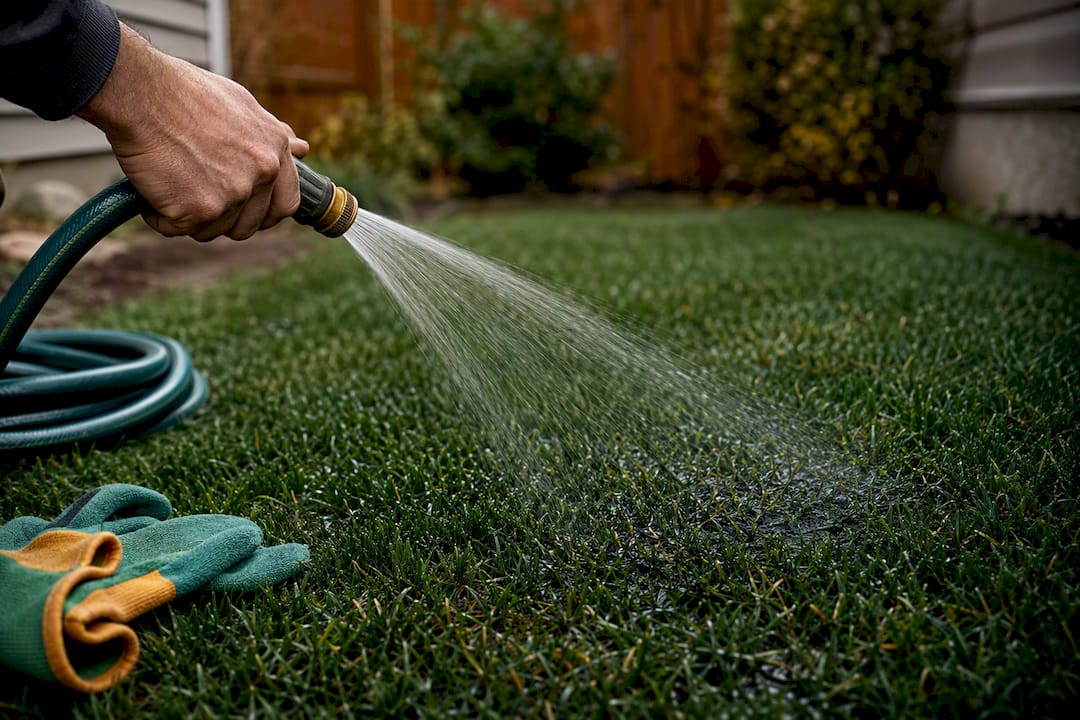
Pro Tip: Water your lawn 1 to 2 days before aerating. Tines need moist soil to reach a full 3 inches deep, and dry, hard clay will just bounce the machine instead of penetrating it, per K-State Extension.
Should You Overseed Right After Aeration?
Yes, and skipping this step is the single biggest missed opportunity homeowners make. Seed dropped into open aeration channels germinates at roughly 40 to 60 percent higher rates than seed broadcast over unbroken turf, because the seed actually makes contact with soil instead of sitting on top of thatch where it dries out and never sprouts.
The sequence matters:
- Aerate the full lawn, running two passes over problem areas if compaction is severe
- Topdress with compost if you’re rebuilding thin or bare patches
- Overseed immediately while the channels are still open
- Apply a starter fertilizer formulated for new seed, not a general lawn feed
- Water lightly and frequently, once or twice a day, until seedlings emerge
- Shift to deeper, less frequent watering once grass reaches an inch or two
Leave the plugs where they land. They break down naturally and return organic matter to the soil instead of getting bagged and hauled off. Hold off on mowing until new grass hits about 3 inches, and skip any pre-emergent herbicide for several weeks so it doesn’t kill your new seed along with the weeds.
Most lawns on clay soil with regular foot traffic do well with aeration once a year. Lighter traffic or sandier pockets of soil can often stretch that to every other year.
What Does Aeration Cost in Kansas City?
Renting equipment yourself typically runs $55 to $120 per day, depending on machine size and rental company. Hiring a professional crew commonly falls between $75 and $205 per visit, with most companies pricing by square footage and applying a minimum charge for smaller lots.
Renting makes sense if your lawn is small, you’re comfortable operating equipment, and you have a vehicle that can haul a walk-behind unit. Hiring a pro is the better call for larger lots, heavy compaction that needs multiple passes, or if you simply don’t want to deal with hauling a 200 pound machine.
A fair quote from any aeration service should spell out a few things clearly:
- Core aeration method, not spike, unless you specifically want spike work on sandy soil
- Whether overseeding and starter fertilizer are included or billed separately
- Clean up expectations, since plugs are meant to stay but debris and clippings shouldn’t
- A clear minimum charge if your lot is on the smaller side
Ask any contractor how many passes they run over compacted zones and what tine depth their equipment reaches. Anything short of 3 inches isn’t doing the job.
Local Tips From a Kansas City Lawn Crew
Clay soil dominates most yards across the metro, from Johnson County to North Kansas City, and that’s the whole reason core aeration wins here over spike tools. We water target lawns a day or two ahead of a visit whenever the schedule allows, because dry clay in August can be nearly as hard as concrete.
The most common mistake we see is homeowners aerating bone dry lawns in the middle of a heat wave, which barely scratches the surface and wastes the trip. On heavily compacted lawns we’ll often run two passes in a crisscross pattern rather than one, since a single pass on dense clay leaves gaps between plug rows that miss a lot of root zone. If your lawn needs more than aeration, a broader look at landscaping ideas for Kansas City lots can help you plan a fuller renovation.
What to Expect the Weeks After Aerating
Our crews book fall aeration jobs in tight windows, usually stacking them through September before soil temperatures drop too far. Expect plugs to break down over 2 to 4 weeks, and if you overseeded, look for the first seedlings in about 7 to 21 days depending on watering and grass type. If drainage is still poor months later, or bare patches keep coming back no matter what you seed, that’s usually a sign of a deeper grading or renovation issue worth a professional look.
— Trew Landscape LLC
Get Fall Aeration Done Right the First Time
Renting equipment saves money upfront, but a lot of homeowners end up with shallow passes, missed spots, or a rental truck fee that eats the savings anyway. Professional lawn renovation services handle core aeration and overseeding to ensure proper tine depth, appropriate seed mix for local soil conditions, and cleanup without homeowner hassle.

Fall is booking up fast for aeration and overseeding work, and the September to October window is the one that actually gets results on cool season lawns. If your yard needs more than a quick pass, from thin patches that need sod installation to a full landscape design overhaul, our team can walk the property and tell you straight whether aeration alone will fix it or whether you need something bigger. Visit Trew Landscape to request an estimate before the fall window closes.
Sources
- September: Core aerate the lawn | K-State Research & Extension
- Spike vs Plug Aerators: Which one is better for your lawn? — Landscape & Leisure
- Measure Lawn — Lawn aeration timing and 2026 cost guidance
FAQ
What Is the Average Cost to Aerate a Yard?
Renting a core aerator typically costs $55 to $120 per day, while hiring a professional crew usually runs $75 to $205 per visit depending on lot size. Most pros price by square footage and apply a minimum charge for smaller properties.
When Should I Aerate My Lawn in Kansas City?
Late August through mid October is the best window for cool season grasses like fescue and bluegrass, which cover most Kansas City lawns. Warm season grasses such as zoysia should be aerated in late spring through early summer instead, while soil is actively growing.
What Are the Downsides to Aerating?
The main downside is temporary appearance. Lawns look disrupted with visible soil plugs for about 2 to 4 weeks after aeration while they break down and recover. Aerating a lawn that isn’t actually compacted also wastes money since there’s no compaction to relieve.
When Should I Aerate My Lawn in Missouri?
Across most of Missouri, including the Kansas City metro, early fall is the recommended window for cool season lawns, generally late August into October. Warm season grass in southern parts of the state follows the same late spring to early summer rule as Kansas City’s warm season lawns.
Does Trew Landscape LLC Handle Both Aeration and Overseeding?
Yes, Trew Landscape LLC offers lawn renovation work that pairs core aeration with overseeding for Kansas City homeowners. Current pricing details are available directly through the company’s service pages since costs vary by lot size and condition.