
Trew Landscape Blog
Cut Yard Work: Kansas City Landscaping Ideas for North KC
Cut Yard Work: Kansas City Landscaping Ideas for North KC ! Native plants in a low-maintenance Kansas City yard The best approach for North Kansas City is a native, low-maintenance landscape design that groups plants by water need, fixes soil and drainage before anything else, and phases the work to fit your budget.
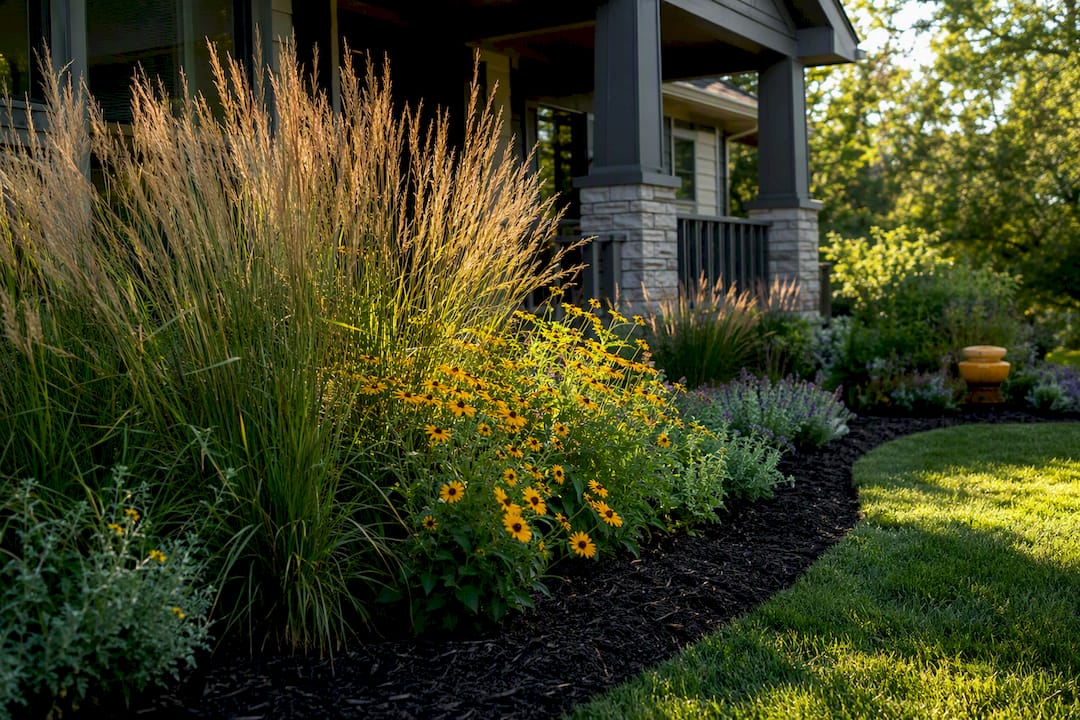
Cut Yard Work: Kansas City Landscaping Ideas for North KC
The best approach for North Kansas City is a native, low-maintenance landscape design that groups plants by water need, fixes soil and drainage before anything else, and phases the work to fit your budget. That means fewer inputs, less mowing, and a yard that actually holds up through zone 6b’s swings between drought and downpour. What follows covers the plant picks, design tactics, seasonal timing, and phased budgets that make it work.
TL;DR:
- Native plants like purple coneflower and bee balm handle Kansas City’s clay soil and humidity, yielding the best long-term performance with minimal intervention.
- Grouping plants by water need, using drip irrigation, and applying mulch deeply reduce watering, weeding, and fungal issues, especially in drought-prone areas.
- Addressing drainage and soil quality before planting ensures landscape durability and prevents costly rework, with raised beds and dry creek beds as effective solutions for wet spots.
- Phasing projects by fixing foundational issues first allows homeowners to expand with native plantings gradually, keeping costs manageable and results visible each season.
- Native species and smart design choices lower maintenance over time, with many plants thriving on deep roots and minimal supplemental watering once established.
Table of Contents
- Kansas City Landscaping Ideas That Cut Maintenance Fast
- Which Native Plants Actually Thrive in Kansas City?
- Design Moves That Actually Reduce Yard Work
- Fixing Kansas City’s Clay Soil Before You Plant
- When to Plant: A Zone 6b Calendar for KC Yards
- Phasing Your Landscape Project on a Budget
- Drought-Tolerant Landscaping for Kansas City’s Swings
- Matching Your Landscape to KC’s Architecture and Neighborhoods
- Managing Pests and Weeds Without Constant Chemical Use
- Trew Landscape’s Take on Building for the Long Haul
- Ready to Put These Ideas to Work in Your Yard?
- Sources
- FAQ
Kansas City Landscaping Ideas That Cut Maintenance Fast
Some fixes pay off within a single season. Others take a year or two to fill in, but they all reduce the hours you spend fighting your yard instead of enjoying it.
- Shrink your turf footprint. Replace marginal grass strips, side yards, and other low-visibility zones with native meadow plantings or clump grasses like little bluestem. Less lawn means less mowing, period.
- Handle runoff with a rain garden. If you’ve got a low spot that stays soggy after storms, turn it into a shallow bioswale planted with moisture-tolerant natives instead of fighting it with more drainage pipe.
- Build a foundation bed that doesn’t need babysitting. Native perennials and shrubs paired with 2 to 3 inches of mulch outcompete weeds and cut hand-weeding dramatically compared to a bare mulch bed or high-maintenance annuals.
- Plant one good tree. A Serviceberry or Bur Oak gives structure, seasonal color, and wildlife value that a row of shrubs never will. One well-placed specimen tree does more for curb appeal than five small purchases.
- Swap solid walkways for permeable paths. Decomposed granite or permeable pavers reduce runoff and shrink the grass you have to trim around.
If you’re focused on the front of the house first, a front yard landscaping refresh is usually where homeowners see the fastest curb-appeal return. Every one of these moves works better together than alone. A rain garden without native plants just becomes a mud pit; a foundation bed without mulch just becomes a weed bed.
Which Native Plants Actually Thrive in Kansas City?
Purple Coneflower, Smooth Aster, Bee Balm, Lanceleaf Coreopsis, Bur Oak, and Serviceberry are the backbone of a reliable KC native planting, according to Kansas City’s own native plant guidance. These species show up again and again in local recommendations because they handle KC’s clay soil, summer humidity, and winter swings without constant intervention.
- Purple Coneflower (Echinacea purpurea) — border plant, magnet for pollinators, blooms most summer.
- Smooth Aster (Symphyotrichum laeve) — fall color when everything else is fading, also pollinator-friendly.
- Bee Balm (Monarda) — one of the best plants for attracting hummingbirds and bees to a small bed.
- Lanceleaf Coreopsis — tough, drought-tolerant, works well along prairie-style edges.
- Little Bluestem — a native grass that gives winter structure long after perennials die back.
- Bur Oak and Serviceberry — your tree layer, both tolerant of KC’s alkaline clay.
Keystone species like oaks disproportionately support caterpillar and bird populations compared to ornamental non-natives, which is one reason regional keystone-species research pushes homeowners toward oaks and asters over imported cultivars.
One caution: not every native behaves in a small yard. Powell Gardens’ regional plant lists flag certain Black Locust and Persimmon strains as thicket-forming, meaning they sucker and spread aggressively in tight residential lots. If your lot is under a quarter acre, skip those and lean on clump-forming natives like Bee Balm or Lanceleaf Coreopsis instead.
Pro Tip: Pair little bluestem, coneflower, and smooth aster in the same bed. You get structure in winter, blooms in summer, and color in fall from three plants that all want the same amount of water.
For drier beds near pavement or slopes, favor coreopsis and little bluestem. For mesic (moderately moist) low spots, bee balm and asters do better.
Design Moves That Actually Reduce Yard Work
Hydrozoning is the single biggest lever most homeowners skip. It just means grouping plants by how much water they need instead of scattering thirsty and drought-tolerant species across the same bed.
- Zone your beds by water need. Put coreopsis, little bluestem, and other drought-tolerant natives together in your driest, sunniest spots. Keep bee balm and asters where soil holds moisture longer, like near downspouts.
- Switch to drip irrigation in beds. Overhead sprinklers waste water on foliage and invite fungal problems. Drip lines deliver water to roots, and deep, infrequent watering trains roots to grow deeper rather than staying shallow.
- Mulch 2 to 4 inches deep, pulled back from trunks and stems. This single habit cuts weeding time more than almost anything else you can do, and it moderates soil temperature swings.
- Choose hardscape that doesn’t fight your drainage. Permeable pavers and decomposed granite paths let water through instead of channeling it toward your foundation.
These aren’t cosmetic choices. Local extension guidance consistently points to design fundamentals like hydrozoning and mulch depth as bigger maintenance-reduction levers than which specific cultivar you plant.
Fixing Kansas City’s Clay Soil Before You Plant
Most yards in the metro sit on heavy clay with a pH between 7.0 and 7.5, slightly alkaline. That single fact rules out some plants before you ever pick up a shovel. Trying to grow acid-loving species like blueberries here means constant soil amendment just to keep them alive. It’s rarely worth the ongoing effort for a homeowner who wants a low-maintenance yard.
Start with a simple test: dig a hole, fill it with water, and see how fast it drains. If water sits for more than a few hours, you’ve got drainage to fix before you plant anything permanent. A basic soil pH test kit from a garden center will confirm whether you’re in that typical 7.0 to 7.5 range.
- Work 2 to 3 inches of compost into new beds rather than trying to change your soil’s fundamental pH.
- Build mounded or raised beds where drainage is genuinely poor instead of fighting standing water year after year.
- Consider a dry creek bed feature for chronic wet spots. It solves drainage and adds visual interest at the same time.
- Call a professional when you’re dealing with major regrading, foundation-adjacent drainage, or a yard that floods after every storm. A drainage installation contractor can assess grade and existing pipe before you spend money on plants that will just wash out.
When to Plant: A Zone 6b Calendar for KC Yards
North Kansas City’s last spring frost lands around early April, with the first fall frost arriving around early November, giving most yards a growing season of typical local length, based on local frost-date data. USDA hardiness zone 6b tells you about winter cold, but it says nothing about the humidity and fungal pressure that hit KC yards every summer, which is why extension experts stress summer stress factors as much as cold tolerance when picking plants.
- Spring (April to May): Plant bare-root trees and perennials once frost risk passes. Switch to drip irrigation as temperatures climb.
- Summer (June to August): Prune for airflow to prevent fungal disease, and water early morning rather than evening to avoid leaving foliage wet overnight.
- Fall (September to October): Second-best planting window of the year. Cooler soil and steady rain help roots establish before winter.
- Winter (November to March): Leave seed heads and grasses standing for wildlife and winter structure. Plan next year’s beds now.
Phasing Your Landscape Project on a Budget
Fix drainage and soil first. Everything you plant afterward depends on getting water and grading right, and skipping this step means redoing work later at double the cost.
Once that groundwork is solid, focus spending on the zones you see every day: the entry walk, the patio, the view from your kitchen window. Expand into meadow plantings or larger native beds in phase two, once the focal areas are established and you know what’s working.
- Buy native plugs or seed mixes instead of mature specimens. They cost a fraction as much and establish just as well over a season or two.
- Check for municipal native-plant sales or extension plant swaps before buying everything retail.
- Top up mulch annually rather than replacing entire beds. It’s the cheapest maintenance dollar you’ll spend.
- If a full professional redesign makes more sense for your timeline, financing options let you spread the cost of a pro-managed project rather than delaying it indefinitely.
Phasing projects this way is the most common strategy homeowners use to spread cost while still seeing visible progress each season.
Drought-Tolerant Landscaping for Kansas City’s Swings
KC’s climate doesn’t stay in one lane. You get soaking spring rain followed by weeks of summer heat that can stress even established beds. Drought tolerance here isn’t about desert landscaping. It’s about choosing plants with deep root systems that don’t need rescuing every time August gets dry.
Native species like little bluestem and coreopsis develop root systems that reach several feet down, letting them pull moisture long after shallow-rooted turf grass has browned out. That’s the real mechanism behind lower water bills: deep roots access water that surface irrigation never reaches. Pair that plant selection with rainwater harvesting, even something as simple as a rain barrel under a downspout, and you’ve got a backup water source for the driest stretches without running your hose constantly.
Grouping drought-tolerant plants together (the hydrozoning principle again) means you’re not overwatering tough plants just because they’re sitting next to thirsty ones. And skip the temptation to over-irrigate newly planted natives past their first season. Established native root systems are the entire point. Watering heavily forever defeats the purpose of choosing them.
If part of your yard bakes in full afternoon sun against a south-facing wall, that’s exactly where coreopsis, little bluestem, and other prairie natives belong. Save your irrigation budget for the parts of the yard that genuinely need it.
Matching Your Landscape to KC’s Architecture and Neighborhoods
A native meadow bed looks intentional next to a Craftsman bungalow in a historic North Kansas City block, but it can look neglected if it’s not framed correctly. The fix is simple: keep a clean mowed or mulched edge between naturalized areas and the rest of your lawn. That single line of definition is what separates “designed” from “overgrown” in a neighbor’s eyes.
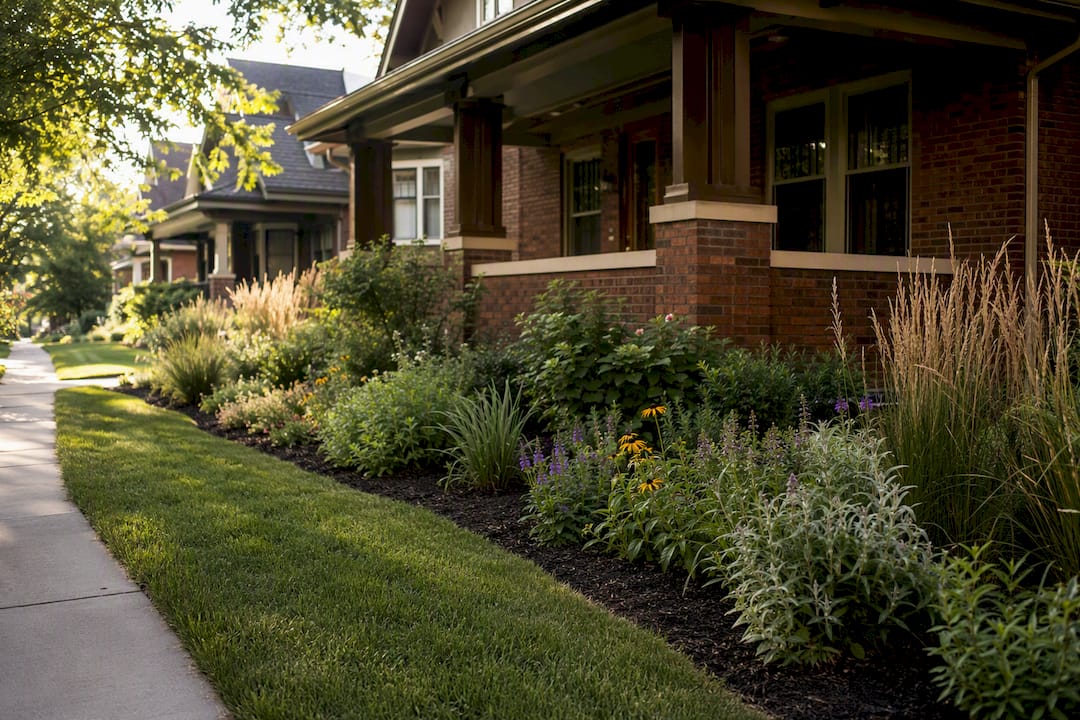
Older brick and Craftsman-style homes in the area tend to pair well with structured foundation beds using native shrubs and perennials, then a looser, taller native planting further back in the yard. Newer subdivisions with more open sightlines often have more room for meadow-style plantings along fence lines or property edges without disrupting neighborhood sightlines.
If you’re in KCMO proper and considering a larger naturalized area, check the managed natural landscapes ordinance and any setback requirements before you plant. Some municipalities have specific rules about height and distance from sidewalks for naturalized beds, and knowing them upfront saves you from redoing a planting after the fact.
Hardscape choices matter here too. A permeable paver patio or a simple retaining wall using materials that echo your home’s brick or stone tends to read as intentional, while mismatched materials make even a well-planted yard look disjointed.
Managing Pests and Weeds Without Constant Chemical Use
Native plantings generally need fewer pesticides and less fertilizer once established, because they’re adapted to local pest pressure and soil conditions rather than fighting against them. That’s a meaningful maintenance win, but it doesn’t mean zero intervention.
Japanese beetles and squash bugs are common summer pests in KC vegetable and ornamental beds. Hand-picking beetles in the early morning, when they’re sluggish, controls small infestations without spraying. For weeds, a thick mulch layer (2 to 4 inches) does more preventive work than any post-emergent herbicide, because it blocks the light weed seeds need to germinate in the first place.
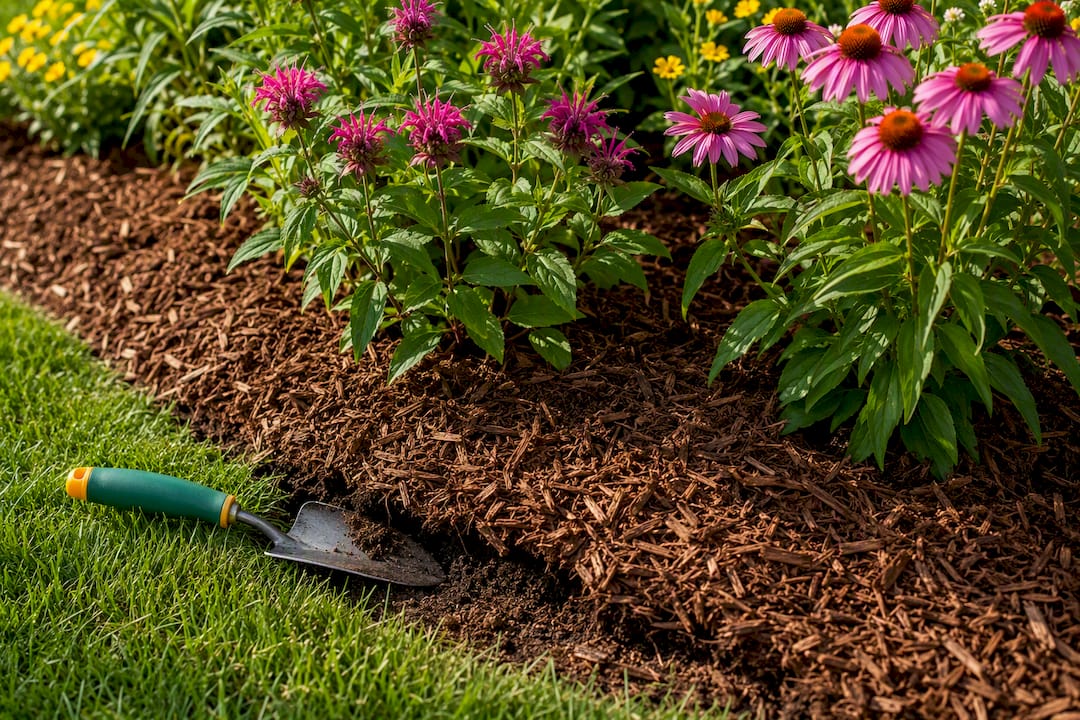
Crabgrass and bindweed are the two most persistent weed problems in area lawns and beds. Pulling bindweed before it sets seed, and doing it repeatedly through the season, is more effective long-term than a single herbicide application, since the root systems regenerate from fragments left behind.
Avoid broad-spectrum pesticide use in beds with native pollinator plants like bee balm and coneflower. Killing off the pests also kills the pollinators those plants are there to attract, defeating the purpose of planting them in the first place.
Trew Landscape’s Take on Building for the Long Haul
Trew Landscape LLC approaches every North Kansas City project the same way this article does: fix the ground first, choose plants that belong here, and build in phases that match a homeowner’s budget and timeline. Durability and aesthetics aren’t separate goals. A well-graded, well-planted yard holds its look for years, not one season. You can see how these principles play out in real yards through our native front yard design guidance.
— Trew Landscape LLC
Ready to Put These Ideas to Work in Your Yard?
Every idea in this guide, from native plant selection to drainage fixes to phased budgets, can be handled directly for North Kansas City homeowners. We offer full landscape design, native plant installation, drainage correction, hardscaping, sod and artificial turf, and landscape lighting, all under one roof instead of juggling separate contractors for each piece.
If a full redesign feels like a bigger investment than you want to make in one season, our financing options let you phase the work exactly the way this guide recommends: drainage and soil first, focal zones next, expansion later. Request a free estimate and we’ll walk your property with you, point out what’s already working, and build a plan around your actual budget instead of a generic template.
Sources
- KCMO native plants
- K‑State Research & Extension: Native gardens
- Powell Gardens — Regional native plants for landscapes
- ZonePlant Kansas City planting calendar
FAQ
What Grows Well in Kansas City?
Native perennials like Purple Coneflower, Smooth Aster, and Bee Balm thrive in KC’s clay, alkaline soil, along with native trees like Bur Oak and Serviceberry. These species tolerate the region’s summer heat and humidity better than many imported ornamentals.
What Is the 70/30 Rule in Gardening?
The 70/30 rule generally refers to designing a landscape with roughly 70% structural or foundational plants (shrubs, grasses, evergreens) and 30% seasonal color or accent plants (blooming perennials, annuals). Definitions vary by source, so treat it as a rough planning ratio rather than a fixed formula.
What Are Some Budget-Friendly Landscaping Ideas?
Start with native plugs or seed mixes instead of mature plants, top up existing mulch rather than replacing beds entirely, and phase your project by fixing drainage first, then focal areas, then expanding. Financing a professional-managed project is also an option if you’d rather spread cost over time than DIY every phase.
Which Side of Kansas City Is Nicer?
“Nicer” depends entirely on what you’re looking for. North Kansas City offers established, tree-lined residential blocks with a mix of historic and newer homes, and the right landscaping approach depends more on your specific lot’s soil, sun exposure, and architecture than which side of the metro you’re on.
Do Native Plants Really Need Less Maintenance?
Yes, once established, native plants typically need less supplemental watering and fewer chemical inputs than non-native ornamentals, because their root systems and growth habits are adapted to local rainfall and soil patterns.