
Trew Landscape Blog
Costs, Permits, and DIY: 5 Covered Deck Ideas for Homeowners
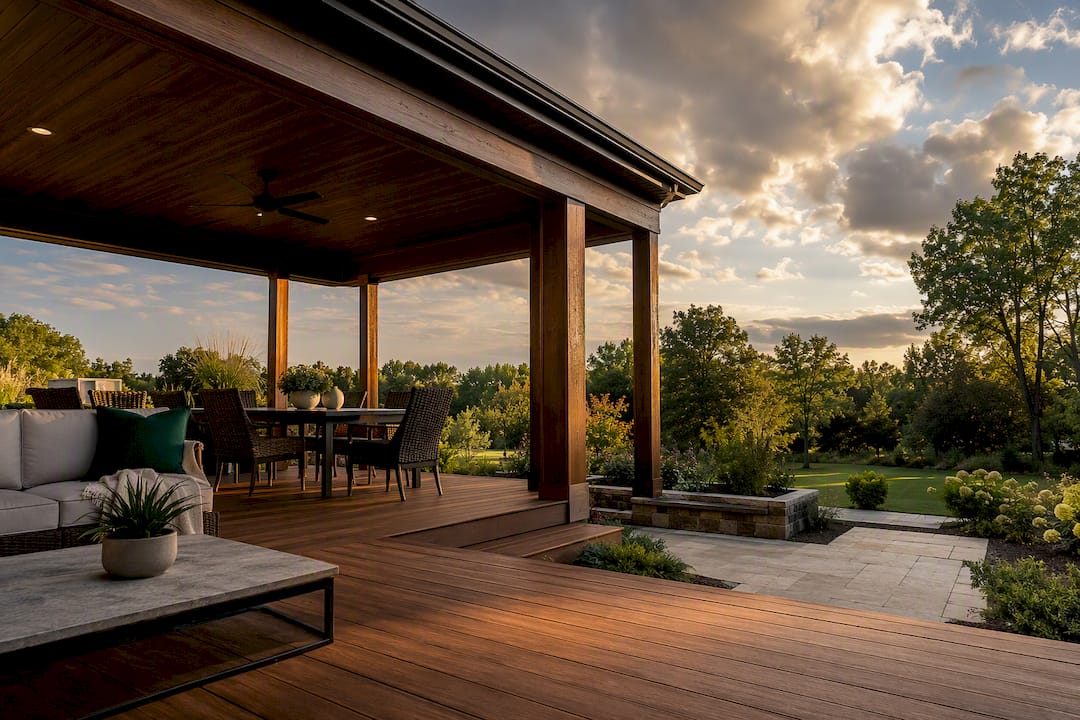
Costs, Permits, and DIY: 5 Covered Deck Ideas for Homeowners ! Covered deck overlooking a landscaped backyard The five main ways to cover a deck are a pergola, a louvered pergola, a retractable awning, a solid roof extension, and a freestanding pavilion.
Costs, Permits, and DIY: 5 Covered Deck Ideas for Homeowners
The five main ways to cover a deck are a pergola, a louvered pergola, a retractable awning, a solid roof extension, and a freestanding pavilion. Pick a pergola for style and airflow, a louvered pergola for adjustable shade, an awning for flexible budget coverage, and a solid roof for full weatherproofing. Before you fall for a look, confirm your deck’s framing can carry the load and check your local permit rules. For ideas on maximizing natural light while adding privacy and style, consider the impact of glass interior doors in your home.
TL;DR:
- Installing a louvered pergola costs more due to motorized or manual slats, but it provides both shade and rain protection with proper maintenance.
- Solid roof extensions are the most expensive option, ranging from $5,000 to over $15,000, and require structural reinforcement and permits.
- Most deck reinforcements for roof attachments cost between $1,500 and $5,000, depending on existing framing, footing upgrades, and regional permit fees.
- Basic shade sails and pergola kits are affordable, do not typically need permits, and can be DIY projects but offer limited weather protection.
- Decks must be evaluated for load capacity and proper flashing to prevent water damage, especially when attaching permanent covers or roofs.
Table of Contents
- Covered Deck Ideas Worth Considering
- What a Covered Deck Actually Costs
- How to Choose the Right Cover for Your Deck
- DIY vs. Hiring a Pro for Your Deck Cover
- Choosing Materials That Hold Up
- Permits and Structural Checks You Shouldn’t Skip
- How Pros Prepare a Deck for a Roof
- What We See Homeowners Get Wrong
- Get a Covered Deck Built Right the First Time
- Sources
- FAQ
Covered Deck Ideas Worth Considering
Not every covered deck idea solves the same problem, and that’s the part most galleries skip. Here’s what each option actually does once it’s built.
1. Standard Pergola
An open-lattice frame that filters sunlight without blocking airflow. It cuts glare and takes the edge off midday heat but does nothing for rain. Pergolas look best attached to the house on a deck that already reads as an outdoor room. Best for: homeowners who want style and shade without losing the breeze.
2. Louvered Pergola
Same frame, motorized or hand-cranked slats. Close them during a downpour, open them for full sun. The trade-off is cost and moving parts that eventually need maintenance. Best for: anyone who wants one structure to handle both sun and rain.
3. Retractable Awning
Fabric that extends from the house wall on a frame, retracts when you don’t need it. Great rain and sun protection when deployed, zero protection when it’s rolled up in a storm. Best for: decks where you want shade on demand without a permanent structure overhead.
4. Solid Roof Extension
A true roof, often tied into the house’s existing roofline. This is the only option built for year round use in rain, snow, and harsh sun, but it blocks light to nearby windows and demands the most from your deck’s structure. Best for: homeowners who want an actual outdoor room, not just shade.
5. Freestanding Pavilion
A standalone roofed structure near, but not attached to, the deck or house. It skips ledger-board complications entirely and works well when your house wall isn’t a good attachment point. Best for: yards where you want the cover placed for the view, not the wall.
Budget-conscious options like shade sails, canvas canopies, and pergola kits round out the lower end of the price spectrum and let you test a layout before committing to anything permanent.
What a Covered Deck Actually Costs
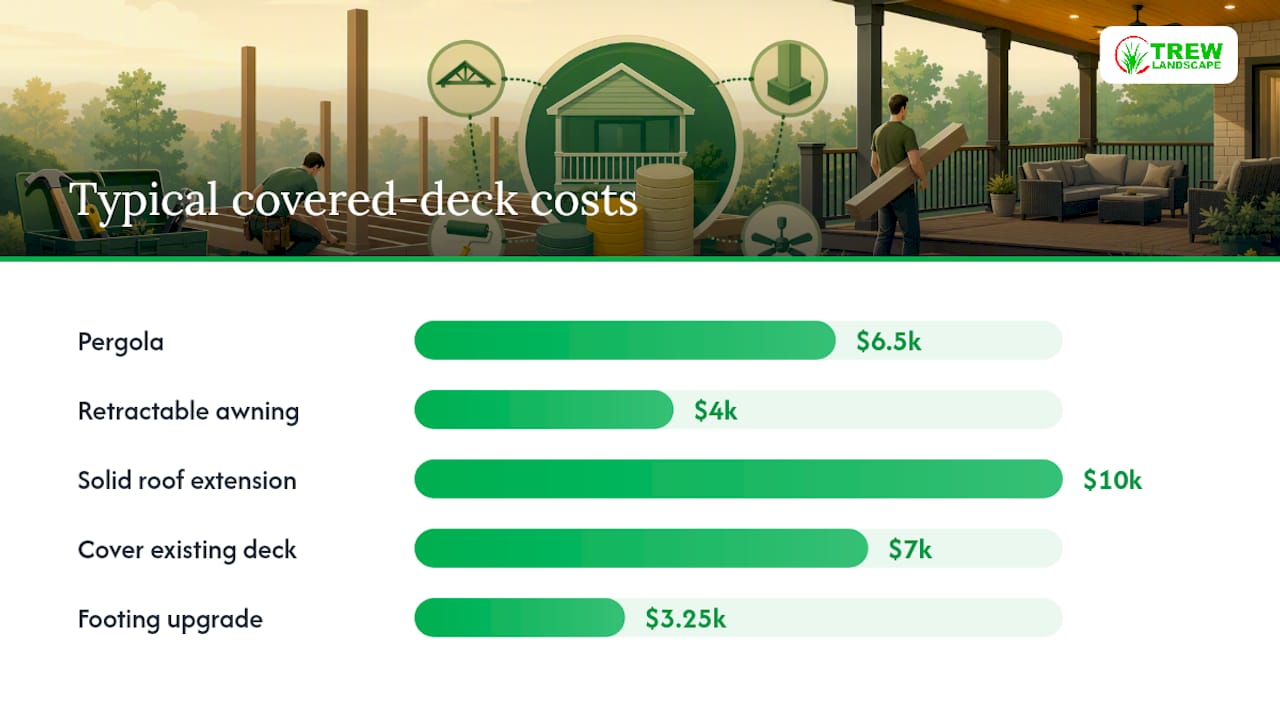
Price swings depend almost entirely on which structure you pick and how much your existing deck needs reinforced. A standard pergola typically runs $3,000 to $10,000; a louvered version costs more because of the moving hardware and motor. Retractable awnings usually land at $2,000 to $6,000 installed, according to DeckMath’s cost breakdown. Solid roof extensions are the priciest at $5,000 to $15,000 or higher.
On a per-square-foot basis, The Roofing Brief puts a deck roof at $10 to $60 per square foot, and HomeGuide reports complex roof extensions climbing as high as $60 to $155 per square foot depending on style and materials.
Cost check: Covering an existing deck runs $2,000 to $12,000 on average, but that range hides one big variable: footing upgrades. Retrofitting a deck to carry a roof can add $1,500 to $5,000 or more, per The Roofing Brief.
Watch for these cost drivers before you set a budget:
- Deck size and the roofing material you choose
- Whether the cover attaches to the house or stands freestanding
- Footing and ledger upgrades if your existing deck wasn’t built for roof weight
- Local permit and inspection fees
- Labor rates, which vary by region and contractor availability
How to Choose the Right Cover for Your Deck
Start with one question: what do you actually need this cover to do? Shade for afternoon sun, dry space for rain, a true year-round room, or just a frame that makes the deck feel finished? That answer narrows your options fast.
- Check your deck’s load capacity. A deck built for furniture and foot traffic isn’t automatically ready for roof weight.
- Look up your HOA and neighbor setbacks. Solid roofs and freestanding pavilions often trigger review that a fabric awning never will.
- Match the cover to your climate. Snow load and wind exposure matter more in some regions than others.
- Set a real budget band, including footings. A $5,000 roof can become an $8,500 project once structural work is added.
- Plan drainage and lighting at the same time, not as an afterthought once framing is done.
When you interview contractors, ask directly: can the existing deck carry a roof without reinforcement? Will you need new footings? How will you flash the ledger board where the roof meets the house? What’s the realistic timeline, and what warranty covers the work?
Pro Tip: Ask every contractor to walk you through their ledger flashing method before you sign anything. Poor flashing is the number one cause of water damage behind covered decks, and it’s invisible until the rot shows up two years later.
DIY vs. Hiring a Pro for Your Deck Cover
Shade sails, freestanding umbrellas, and simple pergola kits are realistic weekend DIY projects for most homeowners. Attachable awnings and corrugated panel roofing sit in the middle: doable if you’re comfortable with framing, riskier if you’re not. Roof extensions, ledger attachment, reframing, and any electrical work belong with a licensed pro.
- Low-skill DIY: shade sails, umbrellas, basic pergola kits
- Mid-skill: attachable awnings, corrugated panels, simple add-on framing
- High-skill, hire a pro: roof extensions, ledger and flashing work, reframing, electrical
Never add roof weight to a deck without verifying the framing first. Footing upgrades, code compliance, and finish flashing work are where hiring deck installation professionals pays for itself.
Choosing Materials That Hold Up
Wood pergolas look warm and traditional but need regular staining or sealing. Composite and PVC skip most of that upkeep at a higher upfront cost. Aluminum and metal frames handle wind and snow load well and pair naturally with a louvered system. Polycarbonate panels let light through while blocking rain, a middle ground between open lattice and solid roofing. Fabric, whether on an awning or a shade sail, is the lightest option but wears fastest in direct sun.
Deck material itself affects your total project cost too: NerdWallet notes that a deck build alone runs roughly $25 to $60 per square foot depending on whether you choose pressure-treated wood, composite, or PVC.
- Wood: attractive, affordable upfront, highest maintenance
- Composite/PVC: low maintenance, higher initial cost, long lifespan
- Aluminum/metal: durable in harsh weather, works well with louvered systems
- Polycarbonate panels: lets in light, blocks rain, moderate cost
- Fabric: lowest cost, shortest lifespan in full sun
Gutters, integrated lighting, ceiling fans, and screens extend usable season more than most homeowners expect, especially paired with good landscape lighting placement.
Permits and Structural Checks You Shouldn’t Skip
Solid roofs and anything attaching new posts or ledger boards to your house almost always need a permit. Freestanding pergola kits and fabric covers sometimes skip that requirement, but rules vary by jurisdiction, so check your local building department before you buy materials.
- Footing enlargement or replacement if the deck wasn’t rated for roof load
- Ledger and joist upgrades to handle new weight and flashing
- Full reframing in older decks, adding $5,000 to $12,000 or more
- Snow and wind load code requirements, which vary heavily by region
- Permit and inspection fees that scale with total project value
How Pros Prepare a Deck for a Roof
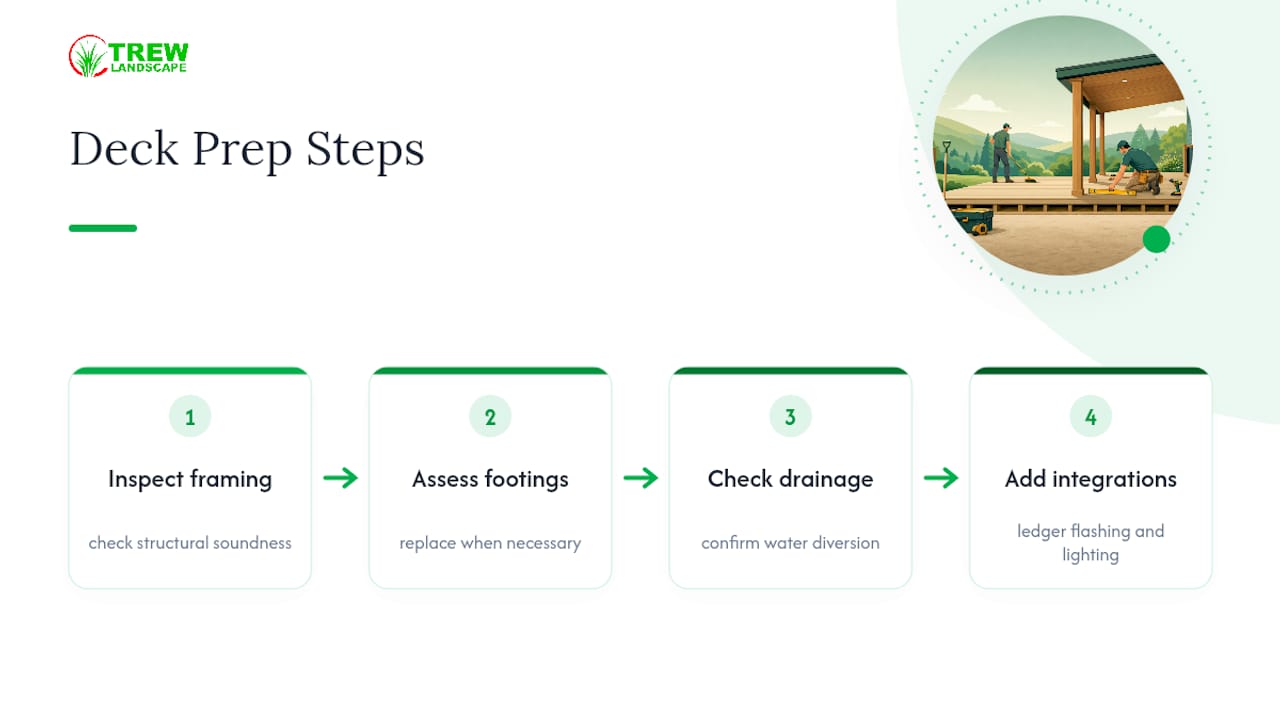
Before any cover goes up, a contractor checks framing, footings, and drainage. Trew Landscape LLC’s deck installation and hardscape design work often includes footing replacement, ledger flashing, and integrated lighting as part of the same project.
What We See Homeowners Get Wrong
Function should come before style every time, and most homeowners flip that order. The most common mistake we see is skipping the structural review because the cover “looks simple” in a photo. Before you fall in love with a design, evaluate your deck’s framing, get two or three quotes, and consider having a professional company walk the site with you first.
— Trew Landscape LLC
Get a Covered Deck Built Right the First Time
A rushed cover job on a deck that was never checked for load capacity is how homeowners end up paying twice: once for the structure, again for the repair. Experienced deck contractors start every covered deck project with a framing and footing evaluation, not a sales pitch, so you know exactly what your deck can carry before any lumber goes up.
When you reach out, expect a straightforward first conversation: a look at your current deck, an honest read on whether it needs structural work, and guidance on what your local permit process will require. From there, next steps typically include a site visit, a written estimate, and a realistic timeline.
If you’re planning a full outdoor living upgrade rather than just a roof, our landscape design team can fold the cover into a larger patio, lighting, or hardscape plan so everything gets built once, correctly. Schedule a site evaluation and get a real quote before you commit to a design.
Sources
- Pergola vs Deck Cover — DeckMath
- Cost to Add a Roof Over a Deck — The Roofing Brief
- How much does a covered deck cost? — HomeGuide
FAQ
What is the most inexpensive way to cover a deck?
Shade sails, fabric canopies, and simple pergola kits are the cheapest options, often avoiding heavy permitting since they don’t require new posts tied to a roof structure.
How much does a 14x20 covered deck cost?
At $10 to $60 per square foot for the cover alone, costs vary widely depending on deck size and cover type, with solid roof extensions pushing toward the higher end.
What are the best options for covering my deck?
A pergola suits style and airflow, a louvered pergola handles both sun and rain, a retractable awning offers flexible on-demand shade, and a solid roof extension delivers full year-round weather protection.
How much would it cost to build a covered deck?
Covering an existing deck typically runs $2,000 to $12,000, while building a new deck with a cover included can run $5,000 to $18,000 depending on size and material.
Do I need a permit to add a roof to my deck?
Solid roofs and any structure attaching new posts or ledger boards to your house almost always require a permit, so check with your local building department before starting work.