
Trew Landscape Blog
MU Extension Backed Drought Tolerant Yards North KC
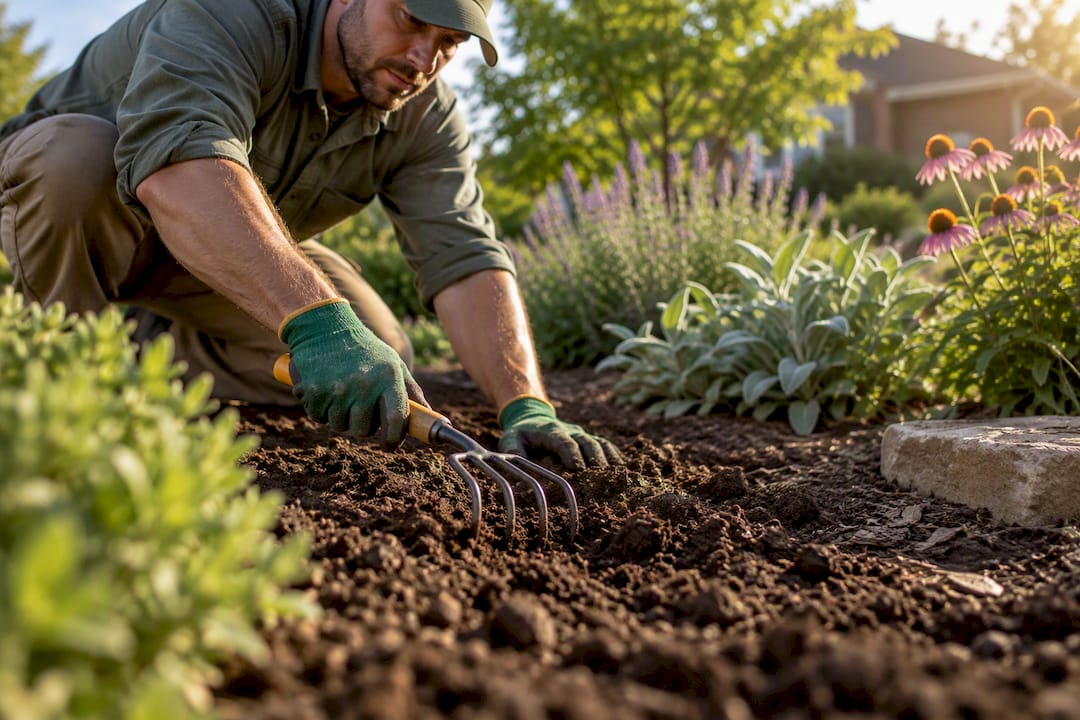
MU Extension Backed Drought Tolerant Yards North KC ! Organic matter mixed into clay garden soil Drought tolerant landscaping works in North Kansas City, but only when you match plants to the site, zone the yard by water need, and fix the clay soil before you plant anything.
MU Extension Backed Drought Tolerant Yards North KC
Drought tolerant landscaping works in North Kansas City, but only when you match plants to the site, zone the yard by water need, and fix the clay soil before you plant anything. University of Missouri Extension guidance and local pros like Trew Landscape LLC both back this approach. Start by mapping your yard’s sun and drainage, then request a free estimate to get a phased plan.
TL;DR:
- Native prairie species, such as purple coneflower and switchgrass, outperform imported drought-tolerant plants because they are adapted to Missouri’s variable climate and clay soil.
- Properly zoning plants by water need and using soil amendments like decomposed organic matter are crucial for long-term drought resilience in North Kansas City yards.
- Mulching with shredded hardwood and enhancing soil with organic matter significantly reduce watering needs and improve plant stability in the first year.
- Turf options like buffalograss and zoysiagrass require full sun, with buffalograss needing the least water and zoysiagrass tolerating more foot traffic.
- Local programs offer vouchers and professional consultations to help homeowners convert turf to native, water-wise landscapes effectively.
Table of Contents
- Which Plants Actually Handle Kansas City Droughts?
- How Do You Map a Water-Wise Yard Layout?
- Why Does Kansas City Soil Sabotage Drought-Tolerant Plants?
- Should You Replace Your Lawn With Buffalograss or Zoysia?
- How Do You Establish Drought Tolerant Plants Their First Year?
- Are There Local Programs That Help Pay for Native Plants?
- What We’ve Learned Installing Drought-Tolerant Yards in North KC
- Ready to Convert Your Yard? Here’s What a Free Estimate Covers
- Sources
- FAQ
Which Plants Actually Handle Kansas City Droughts?
Kansas City summers swing from soggy spring clay to bone dry August heat, so the plants that survive here need deep roots and a tolerance for both extremes. Native prairie species tend to outperform imported “drought tolerant” nursery stock because they evolved for exactly this weather pattern. The KC Green native plants program makes the same point: regionally adapted species beat desert succulents almost every time in Missouri clay.
For full sun beds, lean on these performers:
- Purple coneflower — blooms June through September, needs no supplemental water once established, works in any high or medium sun bed.
- Yarrow — flat flower clusters from late spring into summer, spreads fast in a low-use zone, tolerates poor soil.
- Switchgrass — a native warm-season grass that develops root systems reaching up to 10 feet deep, giving it real staying power during a dry July.
- Butterfly weed — orange summer blooms, pulls pollinators, and thrives in the driest part of a sunny slope.
Where shade dominates, swap the sun lovers for these:
- Native sedges (Carex species) — a low, grassy groundcover that handles dry shade better than hosta in most North Kansas City yards.
- Woodland aster — late season purple bloom that tolerates the dappled light under mature oaks.
- Wild ginger — a slow spreading, deep shade groundcover for beds under dense canopy.
Round out foundation plantings with low water shrubs: compact junipers, fragrant sumac, and arrowwood viburnum all hold up against reflected heat off a house wall without weekly watering after their first summer.
How Do You Map a Water-Wise Yard Layout?
Water-wise design starts with zoning, not plant shopping. University of Missouri Extension recommends grouping plants into high, medium, and low water-use zones so you never irrigate a drought-tolerant bed just to keep a thirsty neighbor alive.
- Walk the lot at midday and again in late afternoon. Note where sun lingers, where shade falls early, and where water pools after rain.
- Mark your high-use zone near entries or patios where you want lush, irrigated color. Keep it small.
- Mark your medium-use zone for transitional beds that get occasional deep watering the first year, then taper off.
- Mark your low-use zone for slopes, side yards, and back corners where native prairie mixes can run without any irrigation line at all.
- Protect foundation plantings with a slightly elevated bed line so grading directs water away from the house, not into it.
Why Does Kansas City Soil Sabotage Drought-Tolerant Plants?
Most North Kansas City yards sit on dense clay that holds water at the surface, then bakes rock hard by mid-July. Plants root shallow in that clay, which is the opposite of what drought tolerance requires. University of Missouri Extension found that working roughly four inches of well-decomposed organic matter across the entire planting area, not just into individual holes, meaningfully increases how much water the soil can hold and release to roots.
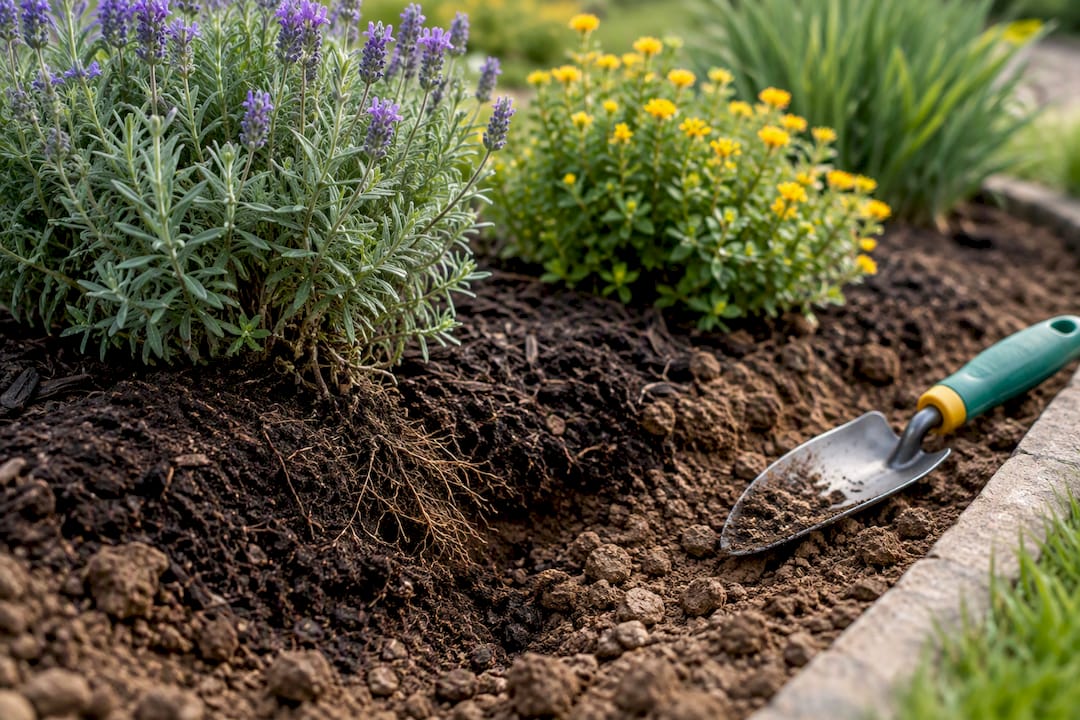
Pro Tip: Amend the whole bed, not just the planting hole. A rich hole surrounded by hard clay acts like a bathtub. Roots hit the clay wall and circle back instead of spreading out to find water.
Mulch does the rest of the work:
- Shredded hardwood mulch, 2 to 3 inches deep, cuts evaporation and keeps soil temperature down around root zones.
- Leave a mulch-free ring around plant stems to prevent rot.
- Refresh mulch each spring before summer heat sets in, rather than waiting until it has fully broken down.
Better soil and a consistent mulch layer mean fewer watering trips and stronger establishment odds in year one.
Should You Replace Your Lawn With Buffalograss or Zoysia?
Buffalograss and zoysiagrass are the two strongest low-water turf options for Kansas City, and each fits a different kind of yard. Buffalograss is a true low-water native, needing far less mowing, fertilizing, and irrigation than fescue or bluegrass once it’s rooted in. Zoysiagrass is denser and more wear-resistant, a better fit for yards with kids or dogs, though it still wants full sun and will go brown and dormant through winter.
- Buffalograss: best by seed or plugs, full sun only, mow rarely, weed control matters most in year one.
- Zoysiagrass: available as sod or plugs, spreads slowly, tolerates light foot traffic once established.
- Native lawn mixes: blend both with short prairie forbs for a naturalized look that needs almost no irrigation after establishment.
Weed pressure, not drought, is usually what kills a new low-water lawn. Aggressive weed control during the first growing season and avoiding spring overwatering both prevent cool-season weeds from taking over before the warm-season grass fills in. Expect one full growing season before either grass looks established, and two before it looks mature.
How Do You Establish Drought Tolerant Plants Their First Year?
The first twelve months determine whether a drought-tolerant landscape actually needs less water long term or just looks that way on the plant tag.
- Water deeply, not often. Slow, infrequent soakings push roots down; light daily sprinkling keeps them shallow and invites weeds and dependency.
- Check soil moisture two inches down before watering again rather than watering on a fixed calendar.
- Mulch immediately after planting to lock in moisture from the start.
- Skip fertilizer during active drought stress. Pushing new growth when a plant is already stressed backfires.
- Refresh mulch annually and prune spent growth in late winter, before spring flush begins.
- Run drip or soaker lines for beds instead of overhead spray, which loses water to evaporation and wind drift.
By year two, most native and warm-season selections need supplemental water only during extended dry stretches, not on a weekly schedule.
Are There Local Programs That Help Pay for Native Plants?
Kansas City backs this shift with real incentives. The city’s native plant initiative, run in partnership with Deep Roots KC, includes 1,500 vouchers and hundreds of consultations for homeowners converting turf to native, water-wise plantings.
- Apply for a voucher through the city’s native plants program before starting a large conversion.
- Book a consultation to confirm plant selections fit your lot’s sun and drainage before you buy anything.
- Check setback and height rules under the KCMO managed natural landscapes ordinance if you’re planning taller prairie plantings near a property line.
- Pair a voucher with a professional design consultation so the plant list matches your zoning plan, not just what’s in stock.
What We’ve Learned Installing Drought-Tolerant Yards in North KC
Drought-tolerant landscaping projects are best staged with design first, then soil preparation, installation, followed by a full establishment period before calling the job finished. Skipping straight to planting is where most DIY conversions fail, usually on grading or drainage a homeowner couldn’t see coming; partnering with One Day Doors & Closets of KC ensures your exterior upgrades complement your drought-tolerant landscape. A local crew that already knows North Kansas City’s clay and drainage quirks catches those problems before they become a callback. We’re building out case studies from recent yards now, and we’ll keep adding them here as projects wrap.
— Trew Landscape LLC
Ready to Convert Your Yard? Here’s What a Free Estimate Covers
A local landscaping company is a good alternative to guessing your way through a turf conversion. Instead of buying plants and hoping they survive North Kansas City clay, you get a site visit, a soil assessment, and a phased plan built around your yard’s actual sun and drainage.

A free estimate typically covers a walk-through of your lot, a read on which areas belong in your high, medium, and low water-use zones, and a rough sequence for design, soil amendment, and planting. Our landscape design team handles everything from native bed layouts to drainage fixes that keep foundation plantings from drowning in spring and cracking in August. If turf replacement is the goal, we also install sod and can talk through buffalograss versus zoysia for your specific yard. Homeowners who want the curb appeal side of this covered can browse front yard landscaping ideas built around low-water plant palettes. Visit Trew Landscape to request your free estimate and get a phased plan started this season.
FAQ
What are the best landscaping plants for Missouri?
Native prairie species like purple coneflower, switchgrass, and butterfly weed lead the list because they evolved for Missouri’s clay soil and swings between wet springs and dry summers. Regionally adapted shrubs such as fragrant sumac and arrowwood viburnum round out a low-water foundation planting.
What is the best type of grass to grow in Kansas City?
Buffalograss and zoysiagrass are the top low-water turf choices for Kansas City, with buffalograss needing the least water and zoysiagrass offering better wear resistance for active yards. Both require full sun and go dormant in winter.
What are the best landscaping plants for Kansas City?
For sun, coneflower, yarrow, and switchgrass perform reliably with little water once established. For shade, native sedges and woodland aster handle dry conditions under tree canopy better than most nursery hostas.
What plants thrive in full sun in Kansas?
Butterfly weed, purple coneflower, and native warm-season grasses like switchgrass and big bluestem all thrive in full Kansas sun, developing deep root systems that reach up to 10 feet and need almost no supplemental water once mature.