
Trew Landscape Blog
Homeowners: 6 Deck Railing Styles That Match View, Budget, and Code
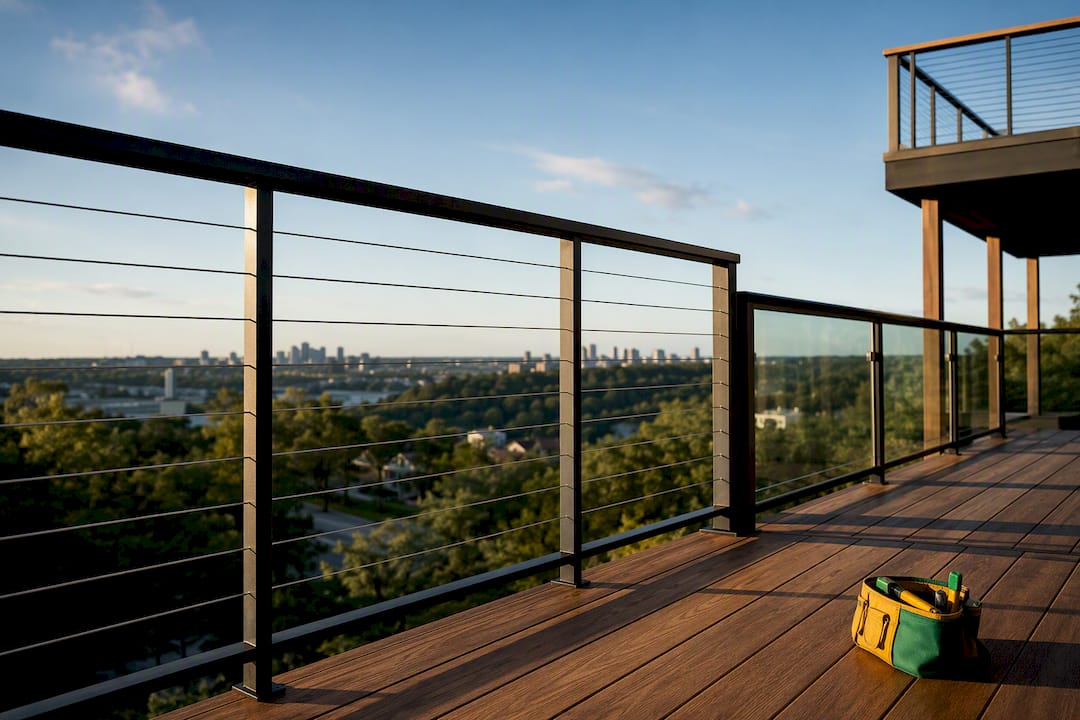
Homeowners: 6 Deck Railing Styles That Match View, Budget, and Code ! Deck railing framing a scenic backyard view Cable railing wins on unobstructed views and modern looks at a moderate price.
Homeowners: 6 Deck Railing Styles That Match View, Budget, and Code
Cable railing wins on unobstructed views and modern looks at a moderate price. Glass panel railing beats every other style for pure sightline preservation, at the highest cost. Aluminum and metal offer the best durability-to-maintenance ratio. Composite and vinyl cost less to own over ten years. Wood and wrought iron win when your house architecture demands a traditional look. Get the style right, then get the code details right: guard height and baluster spacing aren’t optional.
TL;DR:
- Cable railings offer near-invisible sightlines and handle wind better but require regular tensioning and are less safe for small children or pets due to ladder-like gaps.
- Frameless glass panels provide unmatched views and wind protection but are the most expensive and require precise installation to prevent costly replacements.
- Aluminum and metal railings are highly durable, low maintenance, and suitable for a variety of architectural styles, with costs typically ranging from $30 to $60 per linear foot.
- Composite and vinyl railings offer long-lasting, low-maintenance options with warranties of 20 to 25 years, generally costing between $25 and $55 per linear foot.
- The 2026 trend favors minimalist profiles and integrated lighting, which require careful planning during installation and coordination with electrical work.
Table of Contents
- What Are the Main Deck Railing Styles?
- Cable Railing: How the System Works and What It Costs
- Glass Panel Railing: Framed, Semi-Frameless, and Frameless
- Aluminum and Metal Railings: Finishes and Long-Term Durability
- Composite and Vinyl Railing: Built for Low Maintenance
- Wood and Decorative Iron: Classic Looks, Real Upkeep
- Mixing Materials: Horizontal, Vertical, and Layered Design
- How to Choose a Deck Railing: Checklist and Red Flags
- Deck Railing Codes: Height, Spacing, and the 4-Inch Sphere Test
- Maintenance, Lifespan, and Realistic Cost Ranges
- 2026 Design Trends: Minimalist Profiles and Integrated Lighting
- How Trew Landscape Approaches Railing Installation
- What Homeowners Get Wrong About Railing Choices
- Ready to Plan Your Deck Railing Project?
- Sources
- FAQ
What Are the Main Deck Railing Styles?
Six categories cover almost every residential deck built today. Each one solves a different problem, and none of them is the “best” railing in any universal sense. The right pick depends on your view, your budget, your climate, and how much upkeep you’re willing to do every spring.
- Cable railing: Stainless steel cables strung horizontally or vertically between posts. Near-invisible sightlines, moderate maintenance, mid-range cost. Weak fit for households with small kids or determined dogs, since horizontal runs can be climbed like a ladder.
- Glass panel railing: Tempered glass in framed, semi-frameless, or frameless systems. Best view preservation of any material, highest cost, and regular cleaning is non-negotiable.
- Aluminum and metal railing: Powder-coated aluminum or steel/wrought-iron designs. Excellent durability, low maintenance, wide style range from minimalist to ornamental.
- Composite and vinyl railing: Engineered material built to match composite decking. Very low maintenance, moderate cost, limited to the manufacturer’s color and profile options.
- Wood railing: Cedar, redwood, or pressure-treated pine with traditional balusters. Warmest look, but it demands the most recurring maintenance of any style here.
- Wrought iron and decorative steel: Ornamental scrollwork or classic pickets. Strong architectural statement, moderate to high cost depending on custom fabrication.
A poolside deck usually leans toward glass or aluminum for splash resistance and easy wipe-downs. Elevated view decks favor cable or glass to protect the payoff you built the deck for in the first place. Ground-level decks tolerate wood or vinyl just fine since fall risk and view priority both drop. Multi-level decks often mix materials by tier, and front porches tend to stay traditional with wood or wrought iron to match the house facade.
Cable Railing: How the System Works and What It Costs
A cable railing system runs stainless steel cable, typically 1/8 inch to 3/16 inch diameter, horizontally between posts under tension. Some designs run cable vertically instead, which changes the safety profile significantly. Posts carry the structural load, and each cable threads through drilled holes or surface-mounted fittings, then gets tensioned with a hand tool or a built-in tensioner at one end.
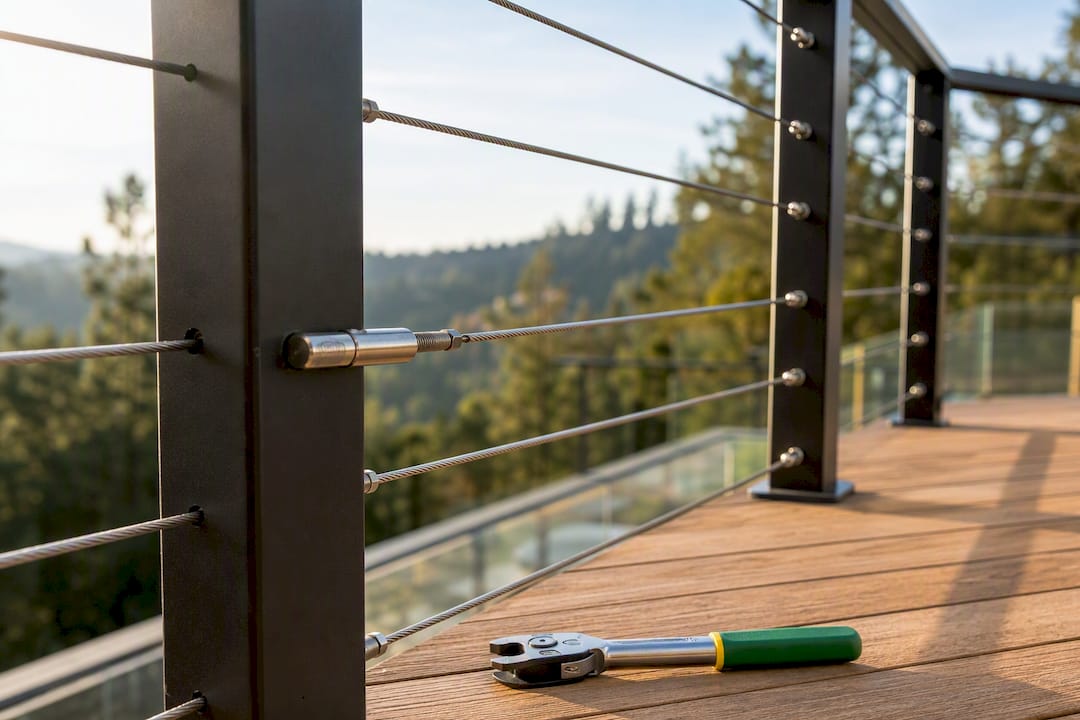
A solid installer proposal should specify post material and spacing, cable gauge, tensioning hardware brand, and how often re-tensioning is recommended. If a quote skips any of those four items, ask before signing.
Cable’s biggest advantage is what it doesn’t block. On a hillside or lakefront deck, horizontal cable disappears into the view in a way that pickets never do, and it costs noticeably less than glass while delivering a similar sense of openness. It also handles wind loads better than solid panels, which matters on exposed sites.
The tradeoffs are real. Horizontal cable runs create an inadvertent ladder, which makes many code officials and safety-conscious parents uneasy around small children or agile pets. Cable also stretches slightly over time and needs periodic re-tensioning, usually once a year, to stay within code-required deflection limits. Expect installed costs in the range of $40 to $80 per linear foot depending on post material and cable spacing.
Pro Tip: Ask your installer about swaged versus field-swaged cable ends. Factory-swaged cables hold tension longer and are worth the small upcharge over DIY field swaging.
Glass Panel Railing: Framed, Semi-Frameless, and Frameless
Glass railing exists in three basic configurations, and the difference between them isn’t cosmetic. Framed systems hold glass panels inside a metal or composite channel top and bottom, which is the most affordable and forgiving to install. Semi-frameless systems clamp the glass at the base only, with a slim top cap for handrail support. Frameless systems use structural glass held entirely by base shoes, with no visible top rail at all, for the cleanest possible sightline.
Most residential installations use tempered glass between 3/8 inch and 1/2 inch thick. Frameless designs often step up to 1/2 inch or laminated glass for added strength since the glass itself carries more of the structural load.
- View preservation: Unmatched. No other material comes close to a fully unobstructed sightline.
- Wind protection: Solid panels block wind on exposed decks, which cable and open picket designs can’t do.
- Cleaning: Fingerprints, pollen, and water spots show constantly, especially on frameless systems near a pool.
- Cost: The highest of any common railing style, often 1.5 to 2 times the price of comparable aluminum.
- Glare: South- or west-facing glass decks can turn into an unexpected hot spot on summer afternoons.
Before installation, confirm your glass is tempered and code-stamped, ask what happens if a panel cracks (replacement lead time varies widely by supplier), and verify the base shoe attachment method matches your deck framing. A gap here is one of the more expensive mistakes a homeowner can make on a railing project, since replacing a whole panel system after the fact is far costlier than getting the spec right up front.
Aluminum and Metal Railings: Finishes and Long-Term Durability
Powder-coated aluminum has become the default recommendation for homeowners who want a modern look without babysitting their railing every season. The finish resists chipping, doesn’t rust, and holds color for years, which is why the matte black and graphite finishes have become the dominant look in new residential specs.
- Aluminum: Lightweight, rust-proof, and available in dozens of powder-coat colors; the practical choice for most climates.
- Stainless steel accents: Often paired with aluminum or cable for hardware, caps, and connectors that need extra corrosion resistance.
- Wrought iron and steel: Heavier, more ornamental, but requires re-painting or re-coating over time unless it’s factory powder-coated.
Coastal properties should specify marine-grade aluminum or a higher-grade powder coat, since salt air accelerates corrosion on standard finishes and hardware. Inland homeowners have more flexibility and can prioritize looks over corrosion resistance.
Maintenance is minimal: an occasional hose-down and a check of fastener tightness once a year covers most aluminum systems. Installed costs typically run $30 to $60 per linear foot for standard aluminum, climbing toward $70 to $100 for decorative wrought-iron-style steel with custom scrollwork. Metal railing fits almost any architecture, from a boxy modern build to a traditional two-story colonial, which is part of why it shows up so often in architects’ 2026 specifications.
Composite and Vinyl Railing: Built for Low Maintenance
Composite railing is made from a wood-fiber and plastic blend, engineered to visually match composite decking brands. Vinyl railing is pure PVC, usually a bit less expensive and available in fewer color options, mostly white, tan, and gray.
- Appearance matching: Composite railing often comes from the same manufacturer as your decking, so the cap color and grain texture line up intentionally.
- Durability: Neither material rots, splinters, or attracts insects, and both hold up well against UV fading compared to unfinished wood.
- Cleaning: Soap and water twice a year is typically enough; no staining, sealing, or sanding required.
- Warranty: Many manufacturers back composite and vinyl railing with 20 to 25 year limited warranties, longer than most wood products.
Composite and vinyl work best for homeowners who already chose a composite decking product and want visual continuity without a second maintenance schedule to track. If you’re weighing brand-specific composite decking options, a side-by-side comparison like Trex versus TimberTech is worth reading before you commit to a railing line, since some railing systems are only sold to match a specific decking brand. Installed cost generally runs $25 to $55 per linear foot, cheaper than glass or ornamental metal but a bit higher than basic pressure-treated wood.
Wood and Decorative Iron: Classic Looks, Real Upkeep
Wood railing remains the most recognizable style in American residential architecture, and for good reason. Cedar and redwood age to an attractive silver-gray if left unfinished, or hold rich color with periodic staining. Pressure-treated pine costs less upfront but needs more diligent sealing to avoid warping and checking.
- Cedar and redwood: Naturally rot-resistant, premium look, higher material cost.
- Pressure-treated pine: Budget-friendly, but requires sealing every one to two years to prevent splitting.
- Real wrought iron: Hand-forged, heavy, expensive, and it will need re-painting every several years unless professionally powder-coated.
- Powder-coated steel alternatives: Mimic the ornamental wrought-iron look at a lower long-term maintenance cost.
Wood makes sense architecturally on farmhouse, craftsman, and traditional colonial homes where a glass or cable railing would look out of place; learn how to choose the right style for your home in How Do I Choose An Interior Door Style?. Wrought-iron-style railing pairs naturally with Mediterranean, French country, or historic urban rowhouse facades. Both styles ask homeowners to accept more recurring cost over a ten-year window than aluminum, composite, or vinyl, largely due to refinishing labor rather than material replacement.
Mixing Materials: Horizontal, Vertical, and Layered Design
Pairing materials well comes down to a short set of rules that hold up across most house styles.
- Combine a structural material with a visual material. Aluminum or wood posts paired with cable or glass infill is the most common successful pairing, since the post carries the load while the infill carries the view.
- Match infill direction to the architecture. Horizontal cable and horizontal cable rails read as modern; vertical pickets read as traditional. Mixing the two on the same elevation usually looks like an unfinished decision rather than a style.
- Use mesh infill as a middle ground. Mesh and screen infill is gaining ground as a semi-transparent option that adds texture and shadow play without fully blocking the view, a useful compromise when full glass is out of budget but you still want more privacy than cable offers.
- Respect horizontal-run safety rules. Many jurisdictions restrict or ban horizontal infill specifically because it’s climbable; confirm local code before finalizing a horizontal cable or picket design if kids will be around the deck.
- Anchor the palette to one dominant material. A deck with black aluminum posts, cable infill, and a composite cap rail works because aluminum and cable share a finish logic. Adding a third unrelated material, like ornate wrought iron accents, usually clutters the look rather than elevating it.
How to Choose a Deck Railing: Checklist and Red Flags
Start by ranking your priorities, because no single style wins on every criterion at once. View, maintenance tolerance, budget, and code triggers pull in different directions, and the honest answer is you’re picking which tradeoff you can live with.
Quick decision checklist:
- Is an unobstructed view the top priority? Lean toward cable or frameless glass.
- Is low maintenance the top priority? Lean toward aluminum, composite, or vinyl.
- Is budget the tightest constraint? Pressure-treated wood or standard aluminum usually wins.
- Is the deck above 30 inches or near a pool? Confirm code triggers before choosing infill type.
- Are young kids or pets using the deck regularly? Avoid horizontal cable and wide picket spacing.
When you’re collecting quotes, ask installers these specific questions rather than accepting a general price:
- What’s the warranty on materials versus labor, and does it cover finish fading separately from structural failure?
- For glass systems, what thickness and tempering standard is specified, and is it code-stamped?
- How is each post attached to the deck framing, through-bolted or surface-mounted, and is blocking required underneath?
- For cable systems, what’s the cable gauge, and what’s the recommended re-tensioning interval?
A few red flags should make you pause before signing anything. A quote with no mention of post spacing or attachment method is incomplete. A glass proposal that doesn’t specify glass thickness or tempering standard is a liability waiting to surface later. And any installer who can’t answer a straightforward question about local guard height or baluster spacing probably hasn’t pulled a permit for this kind of project recently.
Pro Tip: Ask your installer to measure and confirm guard height at the deck’s lowest point, not the average or highest point. Inspectors check the low point, and a rail that passes at one end can fail at the other if the deck isn’t perfectly level.
Use a simple flow to narrow things down fast: eliminate any style that fails your top safety constraint first, then eliminate anything outside your budget range, then choose between what’s left based on maintenance appetite. Two or three options usually survive that filter, and at that point it’s a genuine style preference rather than a technical decision.
Deck Railing Codes: Height, Spacing, and the 4-Inch Sphere Test
The two numbers that matter most on almost every residential deck railing project are guard height and infill spacing, and both get checked closely at inspection.
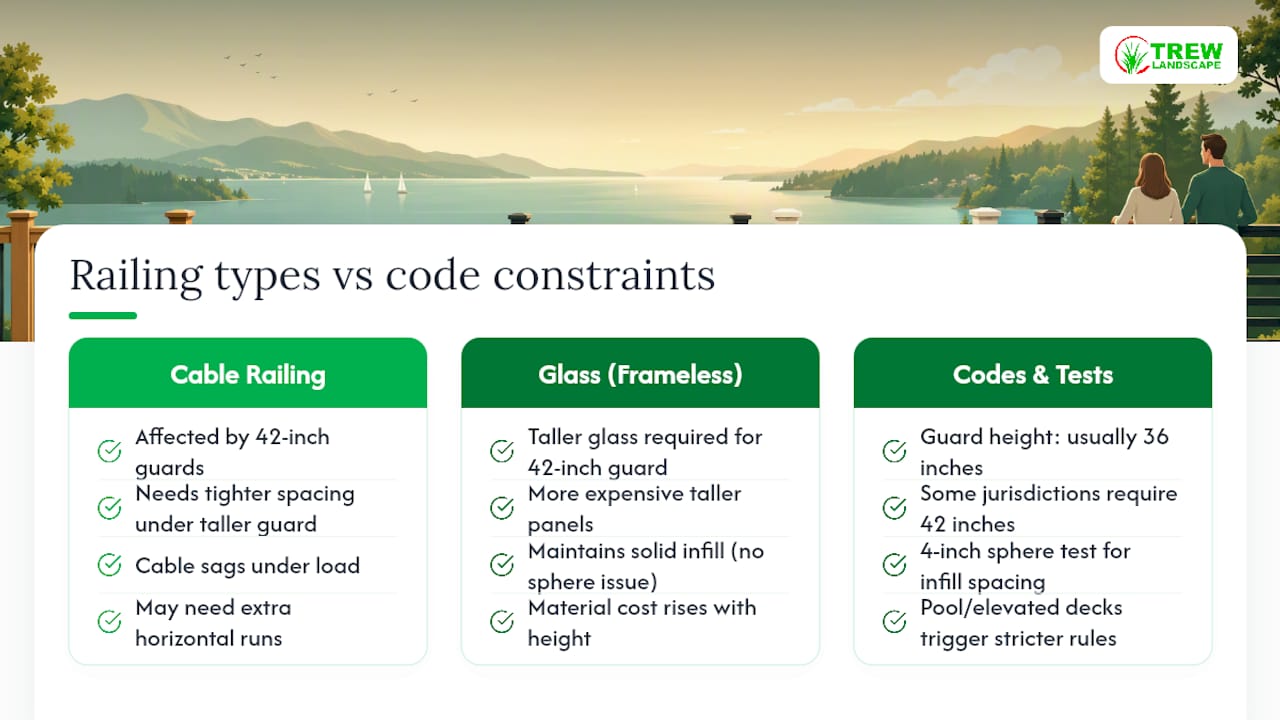
Guard height typically needs to hit 36 inches on most residential decks, though some jurisdictions require 42 inches, particularly for decks above a certain elevation or near commercial-adjacent zoning. Baluster and infill spacing must pass a sphere test in virtually every US jurisdiction to prevent a small sphere from passing through any gap in the railing system.
Inspectors apply that sphere test literally, and it’s one of the most common reasons a deck fails inspection on the first pass. Cable systems in particular need careful spacing calculations, since cable sags slightly under load and gaps that pass the sphere test when installed can widen over time if tension isn’t maintained.
Pool decks and elevated decks often trigger stricter barrier requirements beyond the standard guard height, including self-closing gate mechanisms where a railing gate provides pool access. Height above grade is the usual trigger: many jurisdictions increase requirements once a deck surface is elevated sufficiently above the ground below.
These code constraints genuinely shape material choice. If your local code requires 42-inch guards, a frameless glass system needs taller, more expensive glass panels, and a cable system needs an extra horizontal run or two to keep spacing tight across a taller opening. Check your local building department before finalizing a design, since these thresholds vary by state and even by municipality.
Maintenance, Lifespan, and Realistic Cost Ranges
Budgeting for a railing project means thinking past the installation invoice to what it costs to own over the next decade.
- Cable: Annual re-tensioning check; stainless components last 20+ years with minimal issue.
- Glass: Cleaning every one to two weeks in high-use areas; panels themselves can last decades if not cracked.
- Aluminum: Occasional rinse; powder coat typically holds 15 to 20 years before touch-ups are needed.
- Composite/vinyl: Soap and water twice yearly; 20 to 25 year warranties are standard.
- Wood: Re-sealing every one to two years; expect 10 to 15 years before major boards need replacing.
- Wrought iron/steel: Re-coating every five to ten years unless factory powder-coated, which extends that interval significantly.
Installed cost per linear foot runs roughly $25 to $55 for wood and vinyl, $30 to $60 for standard aluminum, $40 to $80 for cable, and $80 to $150 or more for glass and heavily custom ornamental ironwork. The biggest cost drivers within each tier are post material, custom fabrication, and glass thickness. You can reduce lifecycle cost meaningfully by choosing factory-finished metal over field-painted steel, and by planning any integrated lighting during the design phase rather than retrofitting wiring into finished railing later, which almost always costs more than doing it right the first time.
2026 Design Trends: Minimalist Profiles and Integrated Lighting
The clearest theme in 2026 railing design is restraint. Architects and designers are specifying minimalist metal systems, cable, and glass as deliberate architectural statements rather than an afterthought bolted on after the deck is framed.
- Minimalist profiles: Slim aluminum posts in matte black or graphite, thin cable runs, and frameless glass all share the same goal, getting the railing out of the way visually.
- Mixed materials: Composite or wood posts paired with metal or cable infill are the fastest-growing combination among regional installers.
- Mesh and screen infill: A semi-transparent alternative that adds texture and shadow without the maintenance of glass.
- Integrated LED lighting: Low-voltage post-cap and handrail lighting is now a standard request rather than a novelty upgrade, and it’s one of the defining 2026 outdoor living trends.
The catch with integrated lighting is timing. Wiring needs to route through posts and along the railing structure before the deck is finished, so retrofitting it after installation usually means exposed conduit or a full section rebuild. The same goes for shade structures like pergolas that share footings or ledger connections with the deck. If a trend feature depends on electrical work, loop in an electrician during the design phase, not after the railing goes up. Poolside decks pair especially well with frameless glass and post-cap lighting, while elevated view decks benefit most from cable and a single continuous LED handrail strip that guides foot traffic without competing with the view.
How Trew Landscape Approaches Railing Installation
Every railing project starts with the same three questions on site: what’s the view priority, what code triggers apply at this deck’s height and location, and how much upkeep does the homeowner actually want to commit to. Those answers shape material recommendations more than personal style preference does, at least at the outset.
Installer proposals typically spell out post material and spacing, anchor and attachment method into the existing deck framing, and finish sequencing so that staining, sealing, or powder coating happens in the right order relative to installation. Coordination with the deck’s ledger board and joist layout matters more than most homeowners expect, since a railing post placed without checking blocking underneath can create a soft spot that shows up as a wobble years later.
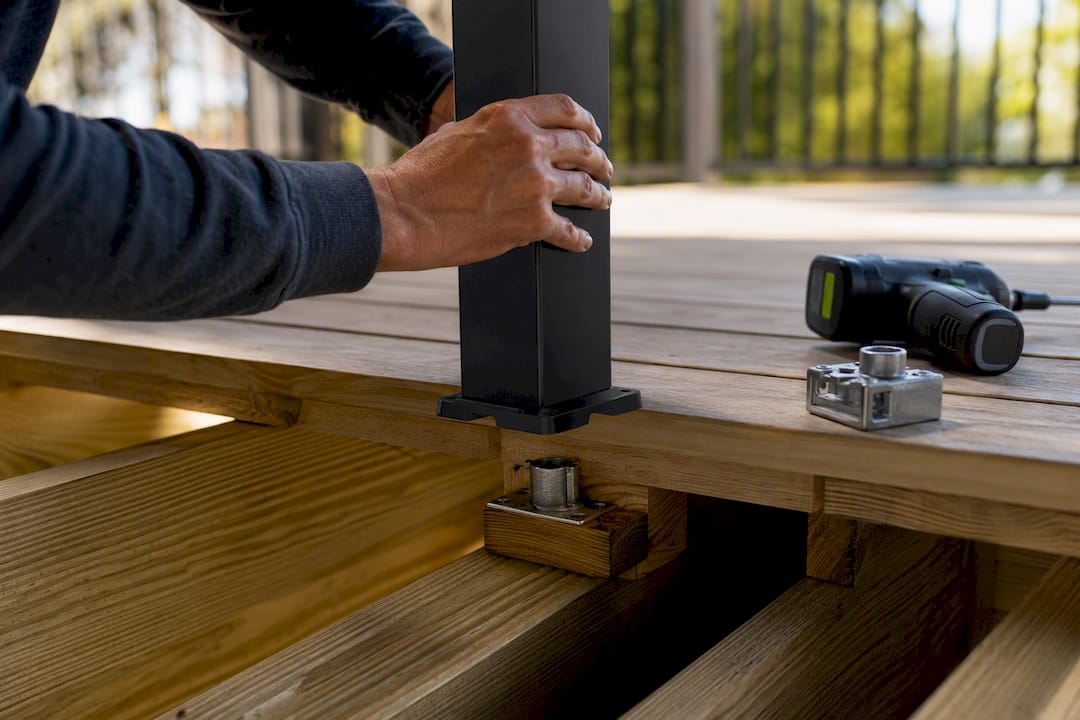
A few installer-level details worth flagging: post spacing should be finalized before decking boards go down, not after, since retrofitting post locations into finished decking is disruptive and expensive. Ledger coordination matters for elevated decks especially, where the railing’s structural load ties directly into how the deck itself is fastened to the house. Finish sequencing, meaning staining wood before or after installation, affects both appearance and how well the finish holds up over the following seasons.
What Homeowners Get Wrong About Railing Choices
Most guides treat railing selection as a beauty contest between materials, and that misses the actual decision most homeowners are making. The real tradeoff is between view, upkeep, and code compliance, and those three constraints will overrule your aesthetic preference more often than not.
The conventional advice to “pick what matches your deck” undersells how much code triggers narrow your options before style ever enters the conversation. A deck 32 inches off the ground with young kids in the house has already ruled out horizontal cable before anyone discusses finish colors. That’s not a limitation to work around. It’s the actual starting point for a good decision.
If there’s one thing to prioritize first, it’s honesty about maintenance tolerance. Homeowners consistently underestimate how often wood needs resealing and overestimate how much upkeep aluminum or composite actually requires. Get that assessment right, and the 2026 push toward minimalist profiles and integrated lighting becomes a genuine upgrade rather than a trend you’ll regret maintaining in five years.
**
Ready to Plan Your Deck Railing Project?
Trew Landscape LLC handles deck and railing installation as part of a broader outdoor build, which means your railing gets coordinated with framing, lighting, and any hardscape work on the same site instead of being treated as a separate afterthought project.
A consultation typically covers a site walk to check deck height and code triggers, a review of material options based on your view and maintenance preferences, and a straightforward cost estimate before any commitment. Most residential railing projects move from design approval to finished installation within a few weeks, depending on material lead times, especially for custom glass or ornamental steel. If you’re also weighing a broader outdoor lighting plan alongside your railing, it’s worth discussing both at once so wiring gets planned into the structure rather than added later. Visit the deck installation page to see the full scope of services and request a project estimate.
Sources
- What Architects & Designers Are Specifying in 2026 - Feeney, Inc.
- 2026 Outdoor Living Trends: Minimalist Railings and Multi-Zone Decks - Senmit
- Railing, baluster, deck & stair building code guide - MisterBaluster
- Deck guardrail and stair code requirements: height, spacing, and strength rules - Build-Construct
FAQ
What Are the Current Deck Railing Trends?
Minimalist metal profiles, cable and frameless glass, mixed-material combinations, and integrated LED handrail lighting define 2026 design direction, with mesh infill emerging as a textured alternative to plain glass.
What Are the Different Types of Deck Railings?
The main categories are cable, glass panel (framed, semi-frameless, or frameless), aluminum and metal, composite and vinyl, wood, and wrought iron or decorative steel, each with different maintenance and cost profiles.
What Type of Deck Railing Is Most Popular?
Cable railing is currently the most requested style in many regional markets, valued for its modern look and sightline preservation, with powder-coated aluminum close behind for its low maintenance.
What Are Some Stylish Wood Deck Railing Styles?
Cedar and redwood railings with clean vertical pickets suit craftsman and farmhouse homes, while horizontal wood slats paired with metal posts give a more contemporary look without abandoning the warmth of natural wood.
How Much Does Deck Railing Cost per Linear Foot?
Wood and vinyl typically run $25 to $55 per linear foot, aluminum runs $30 to $60, cable runs $40 to $80, and glass or custom ornamental ironwork can reach $80 to $150 or more depending on thickness and fabrication.