
Trew Landscape Blog
Homeowners: Save 25–42% with a Practical Drought Tolerant Landscaping Plan
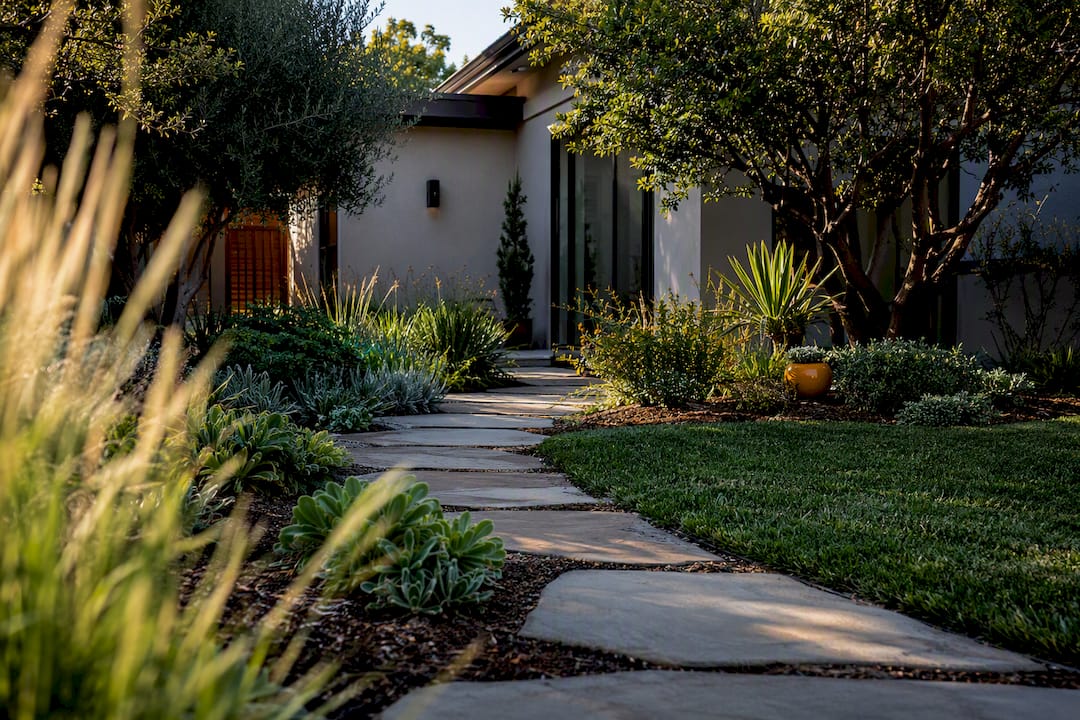
Homeowners: Save 25–42% with a Practical Drought Tolerant Landscaping Plan ! Drought tolerant residential courtyard planting Drought tolerant landscaping, often called xeriscaping, means designing yards around plants and layouts that thrive on minimal water once established.
Homeowners: Save 25–42% with a Practical Drought Tolerant Landscaping Plan
Drought tolerant landscaping, often called xeriscaping, means designing yards around plants and layouts that thrive on minimal water once established. The single most effective move you can make right now is to plan before you plant: shrink your irrigated turf, group plants by water need, and accept that even the toughest new plantings need consistent watering for their first year or two.
TL;DR:
- Proper planning and soil preparation are essential, as poor grading and drainage are common causes of failure in drought-tolerant landscapes.
- Watering should be deep and infrequent during establishment, with irrigation zones grouped by similar water needs to optimize efficiency.
- Plant choices vary by site conditions, with grasses, succulents, and native species suited to full sun, shade, or microclimates, but some groundcovers may be invasive.
- Costs fluctuate based on project scope, with rebates often available for turf replacement that can reduce overall expenses.
- Maintenance requires regular mulching, irrigation checks, and spot-weeding, but it remains simpler than maintaining traditional lawns.
Table of Contents
- What Is Drought Tolerant Landscaping, Really?
- Which Plants and Ground Covers Work Best for Dry Yards?
- How Do You Prep Soil for a Water-Wise Landscape?
- What’s the Right Way to Water a Drought-Tolerant Landscape?
- Where Should Hardscape and Mulch Fit Into the Design?
- How Much Does Drought Tolerant Landscaping Cost, and Are There Rebates?
- How Do You Maintain a Drought Tolerant Landscape Long-Term?
- What to Expect Working With Trew Landscape LLC
- Ready to Redesign Your Yard? Here’s Where to Start
- Why Water-Wise Landscaping Pays Off Beyond the Water Bill
- Sources
- FAQ
What Is Drought Tolerant Landscaping, Really?
Xeriscaping isn’t a euphemism for a gravel yard with three cacti. It’s a design method built on seven principles: planning and design, soil improvement, practical turf areas, efficient irrigation, appropriate plant selection, mulching and ongoing maintenance, according to New Mexico State University Extension. Skip the planning step and everything downstream costs more water and money.
Start with a bubble drawing. Sketch your yard on paper and circle areas by function: entertaining space, high-traffic paths, planting beds, and turf you’ll actually use. This becomes the backbone for hydrozoning, which we’ll cover in the irrigation section.
Design tips that separate a good xeriscape from a sad one:
- Layer trees, shrubs, perennials, and groundcovers so taller plants shade soil and slow evaporation for the plants beneath them, a technique landscape designers call layered planting.
- Anchor the design with one or two focal points, like a specimen tree or a boulder grouping, instead of scattering small plants evenly.
- Mix textures and heights so the yard doesn’t read as “rock plus a few succulents.”
Which Plants and Ground Covers Work Best for Dry Yards?
Match plant choice to your specific site conditions, not just your region’s average climate. A dry, sun-baked slope and a shady spot under a maple need completely different plant lists.
For full sun and dry soil, look at ornamental grasses, lavender, yarrow, and Russian sage. These handle heat reflected off pavement and fences without wilting by afternoon.
For groundcover in high-traffic or lawn-alternative areas, several options consistently outperform turf on water use:
- Creeping thyme (Thymus serpyllum) tolerates light foot traffic, releases fragrance when stepped on, and handles rocky, thin soil.
- Sedum species spread in mats, store water in their leaves, and work well between pavers or on slopes.
- Buffalo grass (Bouteloua dactyloides) is a native turf alternative that needs far less mowing and roughly half the water of cool-season lawns.
- Kurapia (Phyla nodiflora) stays green in warm regions where bermudagrass would go dormant, but it has firm USDA hardiness limits and needs different weed control than typical turf, per University of Arizona Extension trials.
- Succulents as a general group handle containers, rock gardens, and hot microclimates near driveways or south-facing walls.
For partial shade, try heuchera, coral bells, and native sedges. For pollinator support, add coneflower, milkweed, and native salvias, which extend bloom time and bring in bees without extra irrigation. One caution: some commonly sold “drought tolerant” groundcovers, like certain vinca varieties, are considered invasive in parts of the country, according to a UC ANR overview of groundcover alternatives, so check your state’s invasive plant list before buying.
How Do You Prep Soil for a Water-Wise Landscape?
Soil structure determines whether water soaks in or runs off, so this step pays off more than any plant purchase.
- Test your soil with a simple jar test or a lab kit to identify whether you have heavy clay, fast-draining sand, or something in between.
- Amend clay soil with compost to improve drainage; amend sandy soil with organic matter to improve water retention.
- Grade beds so water flows away from your foundation but pools gently in planting areas rather than rushing off the property. Poor grading is one of the most common reasons new drought-tolerant beds fail in their first year, and it’s worth reviewing grading and excavation basics before you dig.
- Apply mulch at 2 to 4 inches deep. Organic mulch (wood chips, shredded bark) improves soil as it breaks down; rock mulch lasts longer but doesn’t feed the soil.
- Limit turf to areas you actually use, like a kids’ play zone or a dog run, and convert the rest to beds. Persistent drainage problems in low spots often need dedicated fixes; see this guide to landscape drainage installation if water is pooling where you don’t want it.
What’s the Right Way to Water a Drought-Tolerant Landscape?
Hydrozoning means grouping plants with similar water needs onto the same irrigation zone, so you’re not drowning your lavender to keep a nearby fern alive. This single step is what separates a landscape that actually saves water from one that just looks like it should, according to Colorado State University Extension.
Match the system to the zone:
- Drip irrigation for shrub beds and perennials, delivering water slowly at the root zone with minimal evaporation loss.
- Soaker hoses for dense plantings or vegetable-adjacent beds where drip lines are harder to route.
- Smart controllers tied to local weather or evapotranspiration data for larger properties, since they adjust automatically instead of running on a fixed timer.
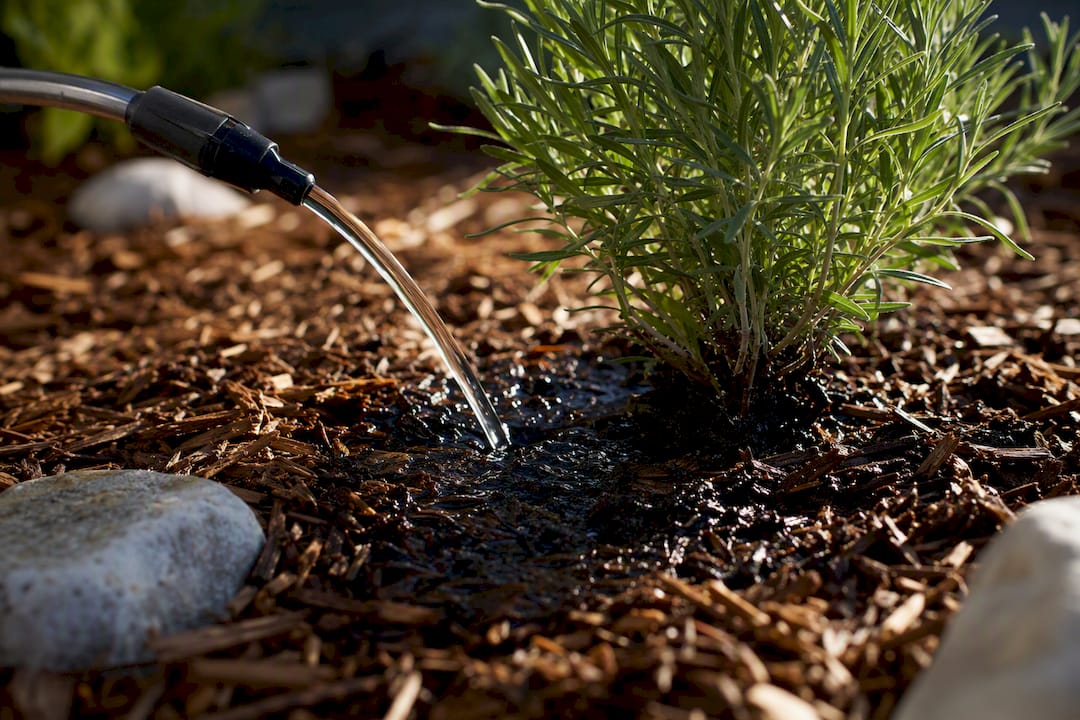
New plantings aren’t drought tolerant on day one. Expect to water deeply and regularly through the first one to two growing seasons while roots establish, per UC Davis Arboretum. After that, most established natives and xeric plants need only occasional supplemental water during extended dry spells.
Pro Tip: Water deeply but less often during establishment. Frequent shallow watering trains roots to stay near the surface, which is the opposite of what makes a plant drought tolerant later.
Where Should Hardscape and Mulch Fit Into the Design?
Hardscape does double duty in a water-wise yard: it reduces irrigated area and defines the beds around it.
- Use gravel or decomposed granite for pathways and dry creek beds where you want drainage and a finished look without organic mulch’s decomposition cycle.
- Reserve organic mulch for planting beds where you want soil-building benefits over time.
- Choose permeable pavers or jointed flagstone for patios and walkways so rainwater soaks into the ground instead of running into the street.
- Let hardscape edges define planting islands, which keeps mulch contained and makes mowing or trimming around beds faster.
Avoid covering large open areas in solid rock with no plant canopy. It looks stark, and without shade, rock surfaces radiate heat back into the yard, working against the cooling effect a well-planted xeriscape provides.
How Much Does Drought Tolerant Landscaping Cost, and Are There Rebates?
Costs vary widely based on scope. A partial retrofit, swapping a side yard’s turf for groundcover and mulch, typically costs far less than a full front-and-back conversion with new irrigation, grading, and hardscape.
Water savings make the investment worth tracking over time. The Southern Nevada Water Authority’s xeriscape conversion study found residential conversions produced average annual water savings in the 25% to 42% range, with some program examples averaging around 30%. That’s meaningful when outdoor use often makes up a large share of a household’s total water consumption.
- Check with your local water utility before starting; many municipalities offer turf-replacement rebates or free landscape surveys, though eligibility rules vary by region and program.
- Ask whether your utility offers a free irrigation audit alongside any rebate.
How Do You Maintain a Drought Tolerant Landscape Long-Term?
Low water doesn’t mean zero maintenance, especially in the first couple of years.
- Refresh mulch annually to maintain the 2 to 4 inch depth that suppresses weeds and holds soil moisture.
- Check irrigation lines each spring for clogged emitters or leaks before the growing season ramps up.
- Spot-weed groundcover areas by hand early, before weeds establish roots deep enough to compete with thyme or sedum mats.
- Prune spent perennial growth in late fall or early spring depending on your climate’s dormancy pattern.
- Dial back irrigation controllers during cooler months and increase run time briefly during heat waves rather than leaving a fixed year-round schedule.
- Call a professional if you’re seeing consistent dead patches, pooling water, or drainage failures. That’s usually a grading or irrigation design issue, not a plant problem.
What to Expect Working With Trew Landscape LLC
Professional landscaping companies handle the pieces homeowners usually can’t DIY well: landscape design, irrigation upgrades, hardscape installation, and sod or artificial turf conversion for properties. Most drought-tolerant projects start with a site walk to assess drainage, sun exposure, and existing turf, followed by a design phase and a phased installation. Homeowners should expect the first growing season to involve active establishment watering regardless of how “low water” the final plant palette is.
Ready to Redesign Your Yard? Here’s Where to Start
If you’ve read this far, you already know the hard part isn’t picking plants, it’s getting the grading, irrigation zones, and soil prep right the first time. That’s where a professional design saves you from the trial-and-error most DIY conversions go through. Trew Landscape LLC’s landscape design service builds hydrozoned beds, efficient irrigation layouts, and turf reduction plans specifically for Kansas City soil and climate conditions, rather than a generic national plant list.
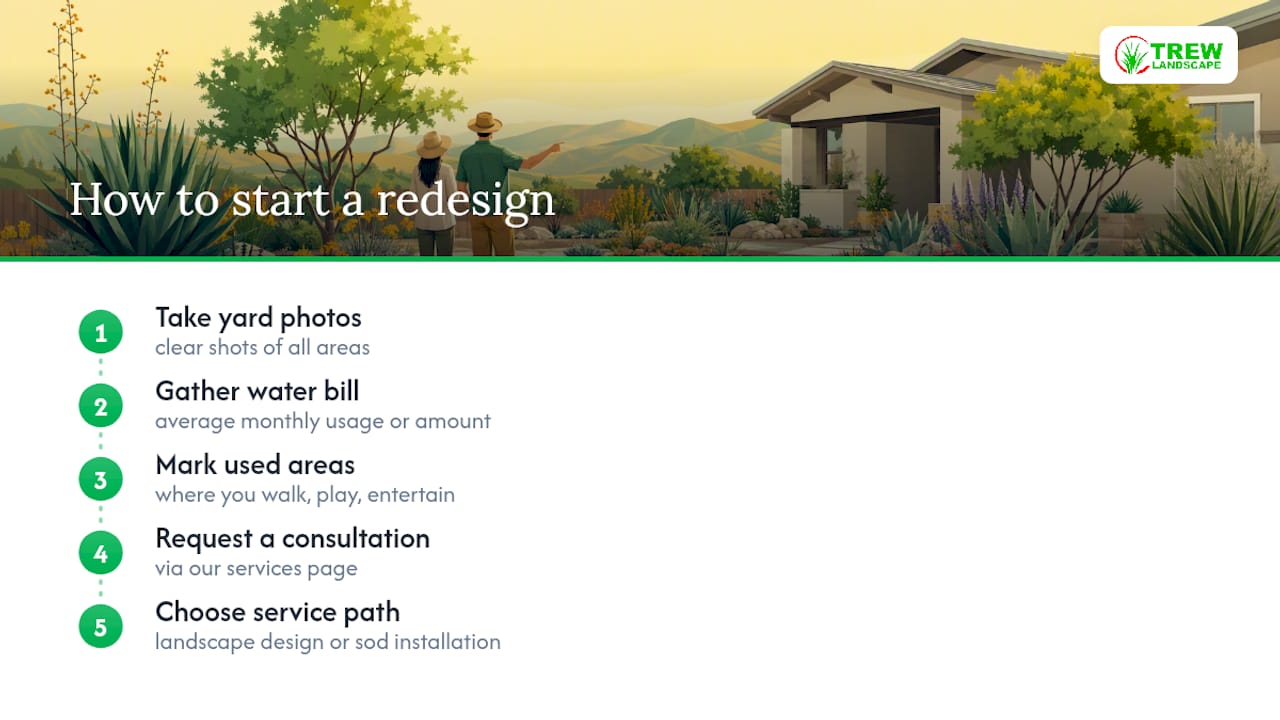
For yards where reducing irrigated turf entirely is the goal, our sod installation team can also help you compare living turf alternatives against synthetic options; if you want to explore artificial turf pros and cons in more depth, this artificial turf guide from a partner resource covers installation considerations well. When you’re ready, bring photos of your yard, your average water bill, and a rough sense of which areas you actually use, and request a consultation through our services page to get a design plan scoped to your property.
Why Water-Wise Landscaping Pays Off Beyond the Water Bill
A well-planned drought tolerant yard costs less to run and holds up better in heat waves than a thirsty lawn. The mistake is swinging too far toward bare rock, which raises yard temperature instead of lowering it. Layer in shade, check for local rebates, and get a professional read before you commit.
— Trew Landscape LLC
Sources
FAQ
How Do I Design a Drought-Tolerant Landscape?
Start with a bubble drawing that groups your yard by function and water need, then apply the seven xeriscape principles: planning, soil improvement, limited turf, efficient irrigation, appropriate plants, mulch, and maintenance.
What Is a Good Drought-Tolerant Ground Cover?
Creeping thyme, sedum, buffalo grass, and Kurapia are all strong options, though Kurapia works best in warm regions and has specific hardiness limits compared to standard turf grasses.
What Is Drought-Resistant Landscaping Called?
It’s most commonly called xeriscaping, a design approach built around seven core principles rather than simply replacing plants with rock.
How Much Does Drought-Tolerant Landscaping Cost?
Costs depend heavily on scope, with partial turf-to-groundcover conversions costing less than full-yard redesigns that include new irrigation and hardscape; many utilities also offer turf-removal rebates that offset part of the expense.