
Trew Landscape Blog
45 Day Rule: Fall Lawn Overseeding for Homeowners
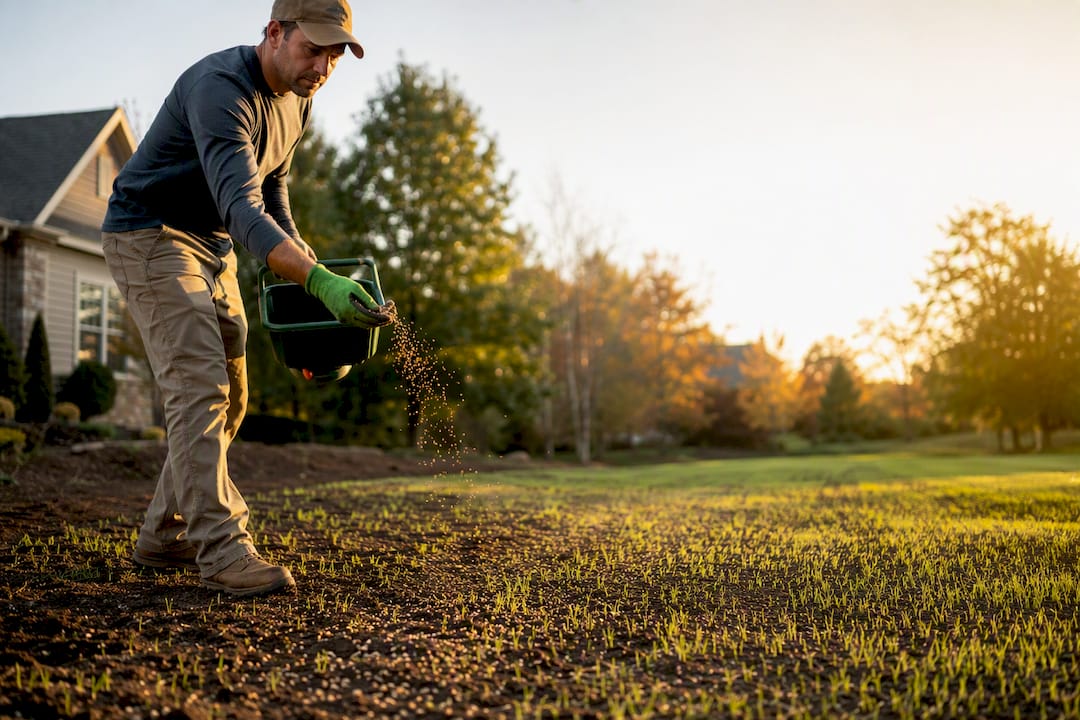
45 Day Rule: Fall Lawn Overseeding for Homeowners ! Homeowner spreading seed on fall lawn If you want a thicker lawn, overseed cool-season grass in early fall, prep the soil, spread seed at the right rate, and keep the surface consistently moist until seedlings take hold.
45 Day Rule: Fall Lawn Overseeding for Homeowners
If you want a thicker lawn, overseed cool-season grass in early fall, prep the soil, spread seed at the right rate, and keep the surface consistently moist until seedlings take hold. Warm-season lawns are the exception: seeding rarely works, so a struggling Bermuda or zoysia yard usually needs plugs or sod instead.
TL;DR:
- Overseeding is most effective in late August to early October, ideally finishing about 45 days before the first hard freeze to ensure seed survival.
- Proper lawn preparation involves mowing low, dethatching if necessary, core aerating within 48 hours, and avoiding pre-emergent herbicides during seeding.
- Selecting the right seed depends on the lawn’s needs; perennial ryegrass germinates fastest, while tall fescue handles shade better, at recommended rates of 4 to 8 pounds per 1,000 square feet.
- Post-seeding watering must keep the top quarter inch of soil moist for 14 days, tapering off afterward, with full establishment taking 2 to 4 weeks depending on species.
- Failing overseeding often results from residual pre-emergent chemicals, seed not touching soil, inconsistent watering, or using the wrong seed for the type of turf.
Table of Contents
- When Is the Best Time for Lawn Overseeding?
- How Do You Prepare a Lawn Before Overseeding?
- Which Grass Seed and Rate Should You Use?
- What Is the Step-by-Step Overseeding Process?
- What’s the Watering and Aftercare Schedule After Overseeding?
- Why Does Overseeding Sometimes Fail?
- When Should You Call a Landscaping Professional Instead?
- How Trew Landscape Handles Lawn Renovation and Seeding
- Sources
- FAQ
When Is the Best Time for Lawn Overseeding?
Timing decides more of your outcome than any other single factor. Cool-season grasses like Kentucky bluegrass, tall fescue, and perennial ryegrass do best when seeded in the window from late August through early October. That stretch gives seedlings warm soil for fast germination and cooling air that keeps young roots from cooking.
The rule worth memorizing is the 45-day window: aim to finish seeding roughly 45 days before your area’s first hard freeze. Count backward from your average first frost date, and that is your last safe seeding date. Miss it, and seedlings won’t build enough root mass to survive winter.
- Cool-season lawns: late August through early October is the primary window; spring (April to early May) is a secondary, less reliable option.
- Warm-season lawns: seeding is generally not recommended for Bermuda or zoysia repairs; late spring works only for annual ryegrass used for temporary winter color.
- Dormant seeding: possible in some regions right before ground freeze, but it’s a gamble that depends heavily on local climate.
If your yard is warm-season turf and thin in patches, seeding is often the wrong tool entirely. Plugs or sod installation fix the problem faster and more reliably.
How Do You Prepare a Lawn Before Overseeding?
Seed dropped on the wrong surface germinates poorly no matter how good the seed is. Preparation is where most DIY overseeding jobs are won or lost.
- Mow low. Cut the lawn to 1.5 to 2 inches the day before seeding and bag the clippings so seed reaches soil, not a mat of grass blades.
- Check thatch depth. Push a screwdriver into the turf. If it slides through less than half an inch of thatch, leave it alone. If it stops on a thicker mat, dethatch first.
- Core aerate. Renting a core aerator or hiring it out pulls plugs of soil and opens channels for seed to reach the root zone. Seed within 48 hours of aerating while those holes are still open.
- Test your soil. A basic soil test flags pH or nutrient problems that no amount of seed can fix on its own.
- Top-dress bare spots. A thin layer of compost or screened topsoil over patchy areas gives seed something better than compacted dirt to root into.
Pro Tip: Rent the aerator for a full day, not an hour. Most homeowners underestimate how long a quarter-acre lawn actually takes to aerate properly, and rushing this step undoes half the benefit.
Which Grass Seed and Rate Should You Use?
Seed choice depends on how fast you need results and what your lawn already grows. Mixing species without a plan usually produces a lawn with mismatched colors and textures.
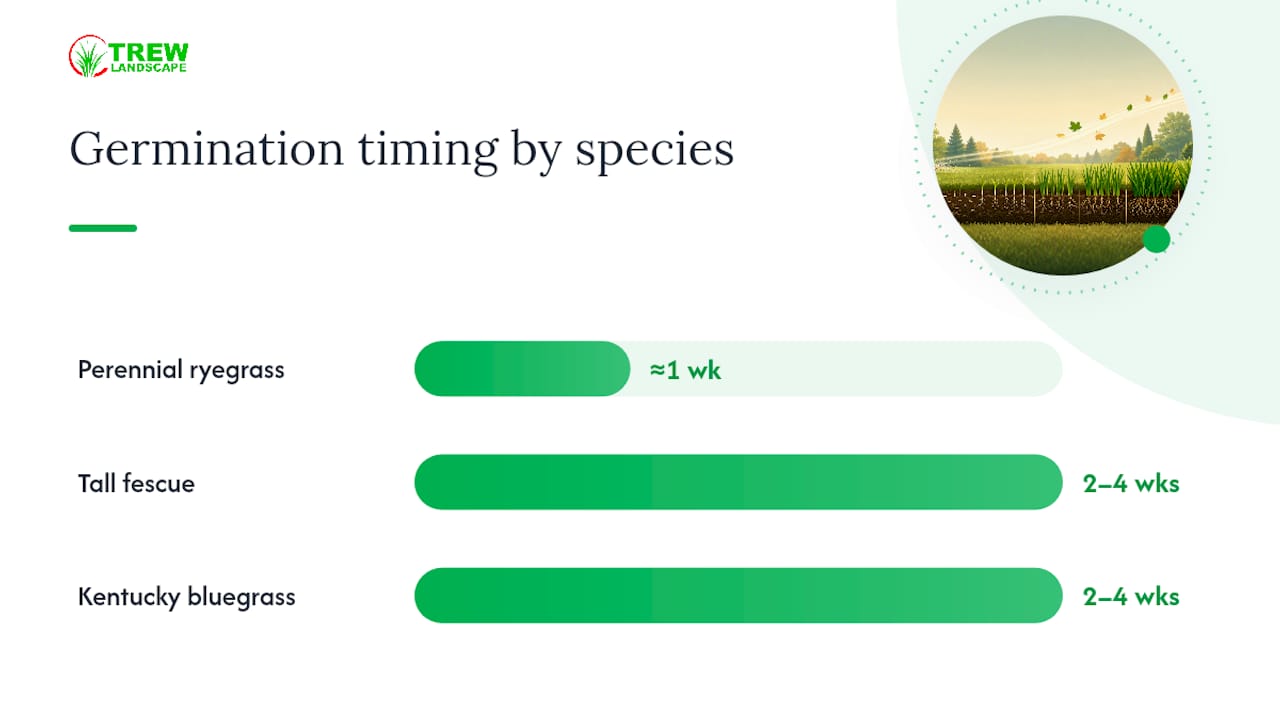
- Perennial ryegrass germinates in 7 to 10 days, making it the fastest option for visible cover, though it’s less heat and drought tolerant long term.
- Tall fescue takes longer to establish but handles shade and traffic well, which makes it a strong all-around choice for most Midwest yards.
- Kentucky bluegrass spreads by rhizomes and fills in bare spots over time, but it germinates slowest of the three.
For rate, most cool-season overseeding calls for 4 to 8 pounds of seed per 1,000 square feet, while a full renovation from bare dirt needs a heavier application. Check the bag. More seed is not better here. Overcrowded seedlings compete for water and light, and germination rates actually drop when you double up trying to get faster results. Buy fresh, certified seed, and if your yard sits mostly in shade, match the blend to that light level rather than grabbing whatever bag is cheapest.
What Is the Step-by-Step Overseeding Process?
Once the lawn is prepped and seed is chosen, the actual spreading takes less than an hour for most residential yards. The order matters, though, and skipping a step here is where results go sideways.
- Load your spreader with half the total seed calculated for your lawn size.
- Walk one direction across the yard in straight, slightly overlapping passes.
- Reload with the second half of the seed and walk perpendicular to your first pass.
- Check seed depth. You want seed sitting about 1/8 to 1/4 inch below the surface, not buried deep or fully exposed.
- Water lightly right after seeding to settle it into place.
The two-pass, cross-hatch technique matters because a single pass in one direction almost always leaves visible streaking where the spreader’s edge didn’t quite overlap. For getting seed to actual soil contact, you have two paths:
- Slit seeding cuts small grooves into the soil and drops seed directly into them, which is the most reliable method on established lawns with no aeration done.
- Broadcast plus top-dress works fine if you already core aerated. Spread seed, then rake a thin layer of compost or topsoil over the top.
One more thing: skip any pre-emergent herbicide application this season. Pre-emergents block germination just as effectively on your new grass seed as they do on weeds.
What’s the Watering and Aftercare Schedule After Overseeding?
The first two weeks after seeding are the most fragile stretch of the entire process, and watering habits here decide whether seed germinates or dries out and dies.
For days 0 through 14, keep the top quarter inch of soil consistently moist, which usually means light waterings once to three times a day depending on heat and wind. From days 14 through 28, taper down to less frequent but deeper watering as roots push further into the soil. Your first mow should wait until grass hits 3 to 4 inches tall, and even then, keep the blade sharp so you’re cutting, not tearing, young seedlings.
- Apply a starter fertilizer 3 to 6 weeks after germination, once seedlings have a few true leaves.
- Hold off on broadleaf herbicides for at least 60 days after seeding.
- Expect full establishment timing to vary by species: perennial ryegrass shows color in about a week, while tall fescue and Kentucky bluegrass can take two to four weeks to emerge fully.
That gap between ryegrass and bluegrass germination is worth planning around. If you’re blending seed types for a thicker lawn, expect a patchy, uneven look for the first few weeks before the slower species catches up.
Why Does Overseeding Sometimes Fail?
Most overseeding failures trace back to one of four repeat offenders, and each has a fix that doesn’t require redoing the entire job.
- Pre-emergent herbicide still active in the soil. If you or a lawn service applied one in the last 60 to 120 days, germination will be blocked regardless of how well you seeded. Check the product label for the reseeding interval before you spread anything.
- Seed never touched soil. Seed sitting on thatch or compacted ground simply washes away or dries out. Core aerate or top-dress, then reseed.
- Inconsistent watering. Letting the surface dry out even once during germination kills sprouting seed, while dumping too much water at once invites fungal disease. Short, frequent sprinklings beat one long soak.
- Wrong seed for the turf. If you’ve tried seeding warm-season grass twice with no results, stop. Switch to plugs or sod instead of fighting biology a third time.
When Should You Call a Landscaping Professional Instead?
DIY overseeding works well for thin, patchy cool-season lawns without major structural problems. Once you’re dealing with severe soil compaction, failing irrigation, a full-yard renovation, or warm-season turf that needs plugs or sod, the math shifts toward hiring it out.
Professional landscapers typically handle core aeration, slit seeding, irrigation adjustments, and sod installation for the jobs that outgrow a weekend project. Weigh your own time and equipment rental costs against a quote before deciding.
— Trew Landscape LLC
How Trew Landscape Handles Lawn Renovation and Seeding
A thin lawn doesn’t always need a full teardown, but sometimes seeding just won’t catch up fast enough, especially on compacted soil, failing irrigation zones, or warm-season turf that never should have been seeded in the first place.

Experienced landscaping crews work yards year-round and can assess which lawns respond to a weekend of aeration and seed and which ones need a heavier hand. Our crews handle sod installation for warm-season repairs where seed simply won’t take, and we tackle full landscape design projects when a lawn’s problems go deeper than what overseeding alone can fix, whether that’s grading issues, irrigation dead zones, or soil that’s been compacted for years. If your DIY overseed attempt has failed twice already, or you’re staring at a warm-season lawn that’s thin no matter what you throw at it, get a quote through our main service page and we’ll tell you honestly whether seeding, sod, or a broader renovation makes more sense for your yard.
Sources
- Establishing turfgrass by seeding (University of Missouri Extension) — G6700
- When to Overseed Your Lawn – Best Timing by Region (LawnBySeason)
- How to Plant Grass Seed on an Existing Lawn (The Spruce)
- A Greener Spring Lawn Means Overseeding This Fall (Oklahoma State University Extension)
- How to Overseed a Lawn: A Full DIY Guide (FixUpFirst)
FAQ
What Is the Best Way to Overseed an Existing Lawn?
Mow short, aerate or dethatch if needed, spread seed in two perpendicular passes at the recommended rate, then keep the top quarter inch of soil moist until seedlings establish. Skipping the seed-to-soil contact step is the most common reason results disappoint.
Can You Just Throw Grass Seed Down?
You can, but broadcasting seed onto unprepared, compacted turf produces poor germination compared to seeding after core aeration. Seed needs direct soil contact to root, so a few minutes of prep work pays off in a noticeably thicker lawn.
What Month Should You Overseed Your Lawn?
For cool-season grasses, late August through early October is the target window, finishing about 45 days before your first hard freeze. Warm-season lawns generally skip seeding altogether and use plugs or sod instead.
Does Grass Seed Need to Be Covered When Overseeding?
Yes. Seed should sit about 1/8 to 1/4 inch below the surface, either through slit seeding or a light top-dress of compost after broadcasting. Seed left fully exposed dries out fast and rarely germinates well.
What Does Trew Landscape Charge for Lawn Renovation or Sod Work?
Pricing depends on yard size and scope, so current rates aren’t published; request a quote through Trew Landscape’s main site for exact numbers. Sod installation and full renovation costs vary based on square footage and site prep needs.