Trew Landscape Blog
$8–$20/sq ft: Artificial Turf Cost Homeowners Must Demand in 2026
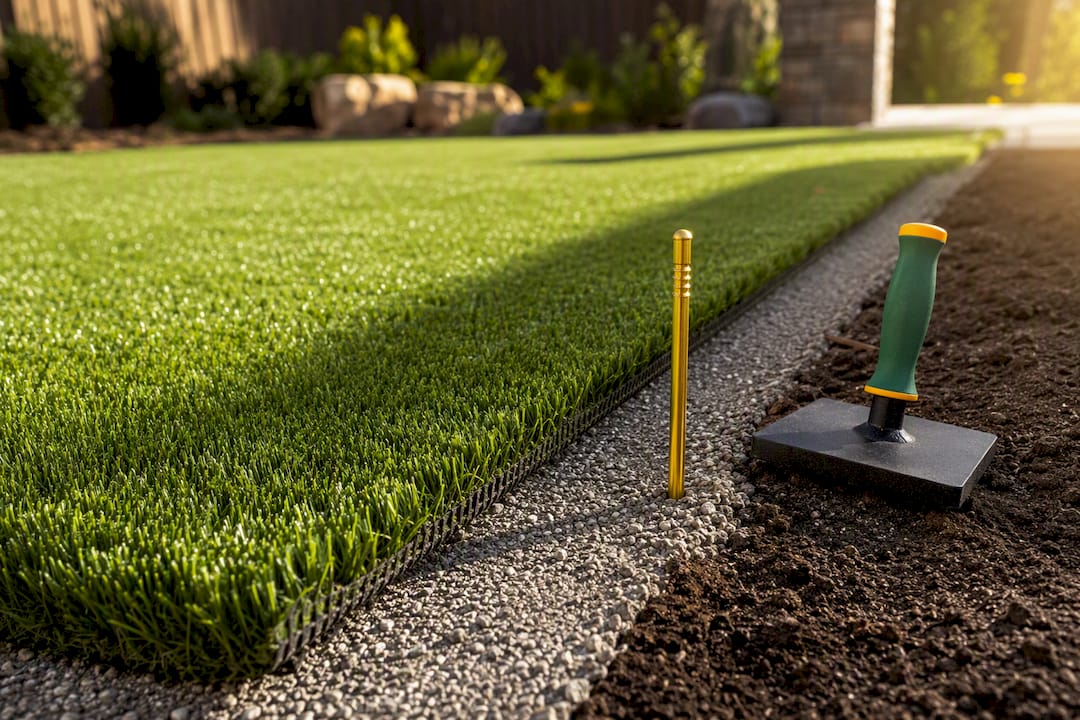
$8–$20/sq ft: Artificial Turf Cost Homeowners Must Demand in 2026 ! Artificial turf installation over prepared yard base Artificial turf cost runs $8 to $20 per square foot installed, with most residential projects landing between $10 and $16 per square foot depending on turf grade and how much site prep the yard needs.
$8–$20/sq ft: Artificial Turf Cost Homeowners Must Demand in 2026
Artificial turf cost runs $8 to $20 per square foot installed, with most residential projects landing between $10 and $16 per square foot depending on turf grade and how much site prep the yard needs. The mid-range average sits at a moderate cost per square foot. Before you request quotes, measure your square footage and note any slopes, drainage problems, or pet use, since those details determine which end of that range you’ll actually pay.
TL;DR:
- Site conditions such as slopes, drainage issues, and pet use can significantly increase the total cost, especially if extra site prep is required.
- The cost breakdown usually involves materials (25-35%), base preparation (15-25%), labor (25-35%), and overhead (15-25%), with base prep often being the largest expense.
- Turf prices vary by type, with landscape turf costing $8 to $14 per square foot, pet turf $10 to $16, and putting greens $14 to $22, depending on specifications.
- Poor access, drainage problems, or regional labor rates can add 10 to 20% to the total project cost, so site assessment is crucial before requesting quotes.
- DIY installation can cost less upfront but risks costly mistakes, especially in base preparation, which can lead to early turf failure and higher repair costs.
Table of Contents
- How Much Does Artificial Turf Cost Per Square Foot?
- What Actually Makes Up Your Turf Quote?
- Does Turf Type Change the Price? (Landscape vs. Pet vs. Putting Green)
- What Site Conditions Push Your Quote Higher?
- Is DIY Artificial Turf Installation Worth It?
- What Does Turf Actually Cost Over 15 Years?
- What Should Be in a Trustworthy Turf Quote?
- Who Actually Benefits Most From Artificial Turf?
- Get an Artificial Turf Quote From Trew Landscape LLC
- Sources
- FAQ
How Much Does Artificial Turf Cost Per Square Foot?
The per-square-foot number you see quoted online rarely tells the whole story. Basic landscape installs on flat, easily accessible ground tend to be at the lower end of cost ranges, while pet yards with drainage improvements or putting greens with shaping usually cost more. According to one artificial turf installation pricing guide, the $8 to $20 band accounts for material grade, base depth, and labor complexity together, not any single factor alone.
Typical installed costs vary significantly by yard size and site conditions, with smaller areas generally costing less overall but more per square foot than larger lots.
Those ranges assume standard base prep. Add a steep grade, poor soil drainage, or a decorative putting green section, and the total climbs toward the high end fast. On the flip side, a large, flat, easy-access commercial lot often lands near the low end per square foot because crews move faster and material orders scale up.
Before you call installers, gather these details so the first quote you get is close to the final one:
- Exact square footage (measure it yourself or have someone confirm it, don’t estimate from memory)
- Current grade or slope of the area
- Whether pets will use the space regularly
- Access for equipment (gate width, distance from the truck to the install area)
- Any existing sprinkler heads, tree roots, or drainage issues in the footprint
Pro Tip: Measure twice and add 5 to 10 percent for waste and seam overlap before you compare quotes. A quote based on your raw square footage will always undercut a quote based on actual material needed.
What Actually Makes Up Your Turf Quote?
Every professional bid breaks into four buckets, and the split between them tells you a lot about whether a quote is realistic. Based on typical cost breakdown data, a fair residential quote allocates roughly:
- Materials (25 to 35% of total): turf itself, backing, seaming tape, nails, infill.
- Base preparation (15 to 25%): excavation, aggregate base, grading, compaction.
- Labor (25 to 35%): crew hours for demo, base work, turf laying, seaming, and finishing.
- Overhead and profit (15 to 25%): permits, insurance, equipment, and business margin.
By the numbers: On a typical job, materials and base prep together often cost as much as labor, and base prep alone frequently dominates the budget once excavation and hauling are factored in, according to installation pricing data.
Turf material itself varies enormously by pile height, backing type, and face weight. Cheap turf runs $1.50 to $3 per square foot wholesale; premium turf built for pet use or realistic landscape appearance runs $3 to $6 or more. The markup between wholesale and installed retail price covers the labor and overhead buckets above, not pure profit padding.
Base prep is where budgets blow up if it’s skipped or shortchanged. A proper base means removing 3 to 4 inches of existing soil, laying and compacting crushed aggregate, and grading for drainage. Skipping this step is the single biggest cause of early turf failure, since poor compaction leads to wrinkles, soft spots, and standing water within a year or two.
Watch for these warning signs on a low quote:
- No mention of excavation depth or aggregate type in the written scope
- A price that seems 30% or more below other bids for the same square footage
- No line item for hauling and disposal of removed soil or old sod
- Infill listed as “included” with no type specified (silica sand behaves very differently from antimicrobial zeolite or rubber infill)
Edging, seaming, and haul-away typically add $1 to $2 per square foot combined. If a bid leaves these out entirely, ask why before you sign.
Does Turf Type Change the Price? (Landscape vs. Pet vs. Putting Green)
Yes, significantly. The turf class you need drives both the material cost and the construction method, so matching the right product to your use case matters as much as comparing per-square-foot numbers across bids.
- Landscape turf ($8 to $14/sq ft installed): standard yards, walkways, and decorative areas. Shorter pile, moderate density, built for looks over heavy traffic.
- Pet turf ($10 to $16/sq ft installed): denser backing and drainage-focused base design to manage urine and odor. Antimicrobial infill and permeable backing add cost but reduce long-term smell issues. Our guide to artificial grass for dogs covers what actually controls odor versus what’s marketing.
- Putting greens ($14 to $22/sq ft installed): precise shaping, multiple turf heights for cups and fringe, and specialized infill for consistent ball roll. This is the most labor-intensive category per square foot.
- Sport and playground turf (commonly $12 to $20/sq ft installed): higher-density fiber, shock-absorbing padding layers for fall protection, and stricter compaction standards to handle concentrated foot traffic.
- Commercial landscape turf (often $6 to $12/sq ft at volume): large flat areas let crews work efficiently and buy material in bulk, which is why large commercial jobs often price lower per square foot than a small residential yard.
Warranty length tends to track turf class. Landscape and pet turf commonly carry 8 to 15 year warranties. Putting green and sport turf, given their heavier construction, often come with similar or longer coverage from reputable manufacturers, but always confirm what’s covered versus what counts as normal wear.
What Site Conditions Push Your Quote Higher?
Two yards with identical square footage can price thousands of dollars apart once you factor in slope, access, and location.
- Poor equipment access (narrow gates, no truck access to the backyard) can add 10 to 20% for manual material hauling.
- HOA design rules or municipal permits may require specific turf colors, pile heights, or drainage specs, adding both cost and lead time.
- Regional labor rates vary meaningfully. The Bureau of Labor Statistics tracks wage differences across metro areas that directly affect installed crew-hour costs, so a quote in a high-cost-of-living region will run higher than the same job in a lower-cost market.
None of these modifiers are red flags on their own. A quote that accounts for your actual slope or access constraints is more trustworthy than one that ignores them.
Is DIY Artificial Turf Installation Worth It?
Materials-only DIY costs run $3 to $7 per square foot for turf, adhesive, nails, and infill, plus $150 to $400 in tool rentals (plate compactor, sod cutter, power broom) for a weekend project. That undercuts professional installed pricing significantly on paper.
The catch is labor and risk. A 500 to 1,000 square foot DIY install typically takes an inexperienced crew 3 to 4 full days across a weekend or two, compared to the 2 to 5 days a professional crew needs for the same or larger area, working faster because of experience and proper equipment.
Common DIY mistakes and what they cost to fix:
- Under-compacted base: leads to wrinkles and low spots within months; repair often means pulling turf and redoing base work, costing more than doing it right the first time.
- Poor seaming: visible seams or separating edges; professional reseaming runs $200 to $500 per repair.
- Wrong infill type or amount: causes odor retention (pet areas) or turf that feels unnaturally hard or soft underfoot.
- Inadequate drainage slope: standing water after rain, which can require full base reconstruction to correct.
Pro Tip: If you’re leaning DIY, at minimum hire a pro for base prep and do the turf laying yourself. Base work is where mistakes become expensive; turf laying is more forgiving. Our DIY installation guide walks through the full process if you want to attempt it yourself.
What Does Turf Actually Cost Over 15 Years?
Artificial turf typically lasts 15 to 20 years with routine upkeep, and the annual maintenance bill is modest compared to natural grass.
- Brushing and debris removal: DIY with a stiff broom, or $50 to $100 per visit if you hire it out a few times a year.
- Infill top-ups: needed roughly every 3 to 5 years, running $0.10 to $0.30 per square foot per top-up.
- Rinsing (pet areas): occasional hosing down, negligible cost beyond water usage.
The 15-year math: A 1,000 sq ft turf install at $12,000 upfront, plus roughly $1,500 to $2,500 in infill top-ups and occasional cleaning over 15 years, lands near $13,500 to $14,500 total. Natural grass over the same period, including seed or sod, weekly mowing, fertilizer, and irrigation water, commonly runs $9,000 to $15,000 or more depending on climate and water costs. Break-even against natural grass typically falls somewhere between year 6 and year 10, depending on local water rates and how much lawn care you were already paying for.
Details on year-by-year upkeep tasks are in our artificial turf maintenance guide.
What Should Be in a Trustworthy Turf Quote?
A proper on-site visit should cover drainage patterns, gate and equipment access, any irrigation lines that need capping or removal, existing slope, and whether tree roots will interfere with excavation. Skipping this walkthrough is how quotes go wrong later.
Insist on these items in writing before you sign anything:
- Aggregate base depth (typically 3 to 4 inches) and compaction standard specified, not just “properly prepared”
- Turf product name, face weight, and pile height, not just “premium turf”
- Infill type and application rate
- Edge and seam detail (nail spacing, adhesive type)
- Written warranty terms covering both material defects and installation workmanship
- Basic maintenance guidance for your specific turf and infill combination
A reputable installer won’t hesitate to put these specs in writing, since documented base specifications reduce warranty claims for everyone involved.
Who Actually Benefits Most From Artificial Turf?
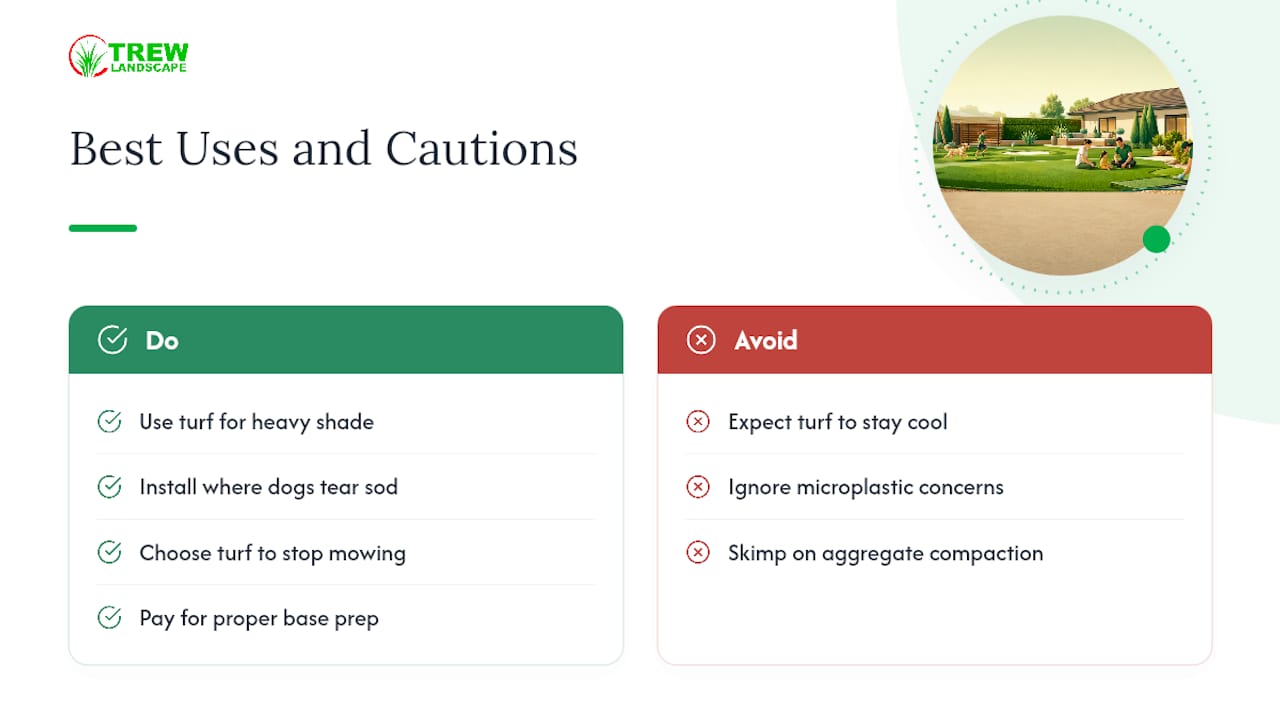
The clients who get the best return are usually dealing with heavy shade where grass won’t grow, dogs that tear up sod, or a simple desire to stop mowing every week. Turf solves those problems well, but it’s not without trade-offs. It runs hotter than grass on sunny afternoons, and long-term concerns about microplastic shedding are worth knowing about, even though the research is still developing. Repairs from tree root heave or storm debris are rare but real.
If we had to give one piece of advice: spend your money on base prep and get every spec in writing. A cheap install with a great warranty on paper still fails when the aggregate wasn’t compacted right.
— Trew Landscape LLC
Get an Artificial Turf Quote From Trew Landscape LLC
We install artificial turf across residential and commercial properties and every quote starts with an on-site walkthrough, not a phone estimate. We look at drainage, access, existing irrigation, and grade before we ever talk price, because that’s what actually determines your final number.
A written quote lays out the base specification, turf and infill selection, project timeline, and warranty terms line by line, so there’s nothing to guess at once work begins. If you’re also weighing turf against fresh sod for part of the yard, or want to fold in a new patio or lighting design around the install, that can be scoped in the same visit. See our full artificial turf installation services and request an on-site estimate to get pricing specific to your yard, not a generic range.
Sources
- Artificial Turf Installation Pricing Guide (2026)
- Artificial Turf Cost Breakdown for U.S. Homes and Businesses 2026 – Current Cost
- Artificial Turf Installation Near Me: 2026 Cost & Guide
- Occupational Employment and Wage Statistics — Bureau of Labor Statistics
FAQ
How much does artificial turf cost per square foot installed?
Installed artificial turf runs $8 to $20 per square foot, with most residential jobs falling between $10 and $16 per square foot depending on turf grade and site prep.
Is artificial turf cheaper than natural grass long-term?
Over 15 years, turf and natural grass often land in a similar total cost range, but turf usually breaks even against grass maintenance costs somewhere between year 6 and year 10.
How long does artificial turf installation take?
Most residential installs take 2 to 5 days on site, depending on yard size, access, and how much base prep the ground needs.
Does pet turf cost more than regular landscape turf?
Yes, pet turf typically runs $10 to $16 per square foot installed versus $8 to $14 for standard landscape turf, due to denser backing and drainage-focused base construction.
Can I install artificial turf myself to save money?
DIY materials cost $3 to $7 per square foot plus tool rentals, but poor base compaction is the most common and costly mistake, so many homeowners hire a professional for base prep at minimum.
What should a written turf quote include?
A trustworthy quote specifies aggregate base depth, compaction standard, turf product details, infill type, seam and edge detail, and clear warranty terms, not vague language like “properly prepared.”